Pilkington has produced detailed installer guidance explaining window condensation by separating the issue into four distinct scenarios and linking each one to glazing performance, environmental conditions, and installation quality.
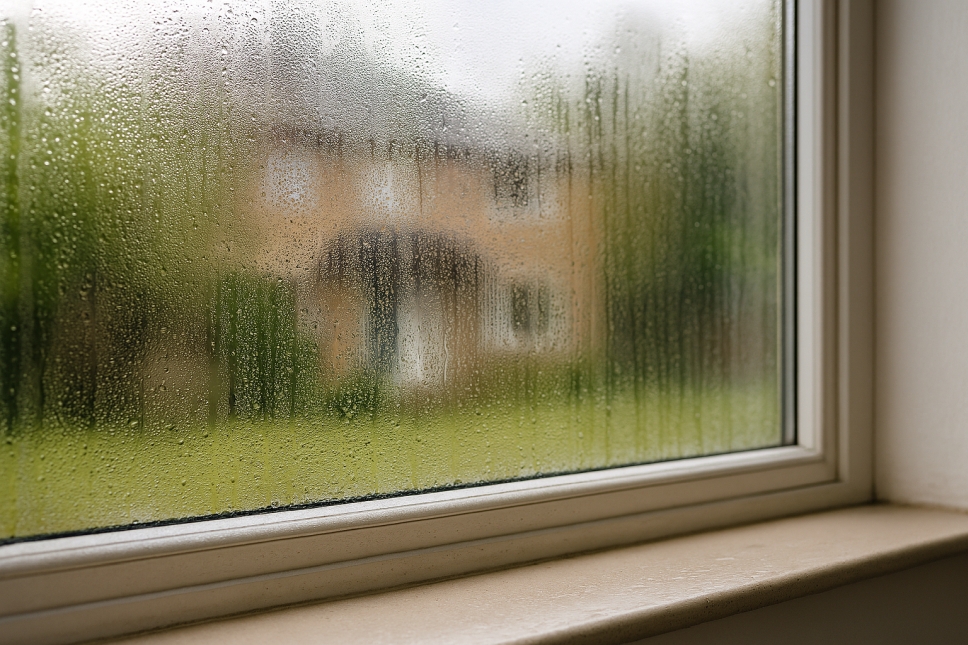
The first topic covered is external condensation, which Pilkington explains is most commonly seen in spring and autumn when night-time temperatures drop sharply. The company links this to the dew point, the temperature at which airborne moisture can no longer remain in vapour form and begins to condense. In modern low-emissivity glazing, the outer pane remains significantly cooler because internal heat is retained inside the building. As a result, the external surface can fall below the dew point overnight, causing temporary misting. Pilkington emphasises that this is not a fault but evidence of high thermal performance.
To address customer concerns, Pilkington references its Anti-condensation glass, a specialist solution designed to reduce or eliminate visible external condensation. This product uses a pyrolytic on-line coating applied to 4 mm glass, which allows it to be used on surface one (external face) due to its durability. It is available in both Lehr End Size (LES) and Jumbo formats and can be processed further, laminated, toughened, bent, or incorporated into insulating glass units (IGUs). The coating also helps improve visibility by reducing moisture retention on the surface.
The guidance then explains why condensation may appear on some panes but not others within the same window. Pilkington attributes this to micro-environmental differences such as shading from nearby trees, building proximity, or wind exposure, all of which alter surface temperature and affect whether condensation forms. 
For condensation between panes, Pilkington identifies IGU seal failure as the primary cause. When the edge seal deteriorates, moist indoor air can enter the cavity between panes, mixing with colder air and creating condensation. The company stresses that IGUs manufactured to EN 1279 standards and installed into properly drained and ventilated frames significantly reduce this risk. It also highlights the added assurance of third-party certification and product warranties.
Finally, internal condensation is linked to elevated indoor humidity levels, particularly in bathrooms, gyms, and food preparation areas. Pilkington notes that while installers cannot fully eliminate this issue, specifying low-emissivity double or triple glazing helps by keeping the inner pane warmer. It also recommends practical measures such as improving extractor fan performance, increasing ventilation, and maintaining consistent room temperatures.
Source: Pilkington with additional information added by Glass Balkan