For Hard Glass Industry, technological investment is not simply about adding new equipment. It is about maintaining process stability, expanding production capability and protecting the quality standards that have established the company as Japan’s domestic market leader in tempered glass doors.
Founded in 1970 and headquartered in Itami, Hyogo Prefecture, Hard Glass Industry integrates design, frame manufacturing and glass processing within a single production operation. This vertically integrated approach gives the company greater control over lead times, customization and quality across complex projects.
Its relationship with Glaston stretches back more than two decades to the former Tamglass era. The company purchased its first Glaston tempering furnace in 2004 and has since built an extensive installed base covering tempering, laminating and autoclave processes.
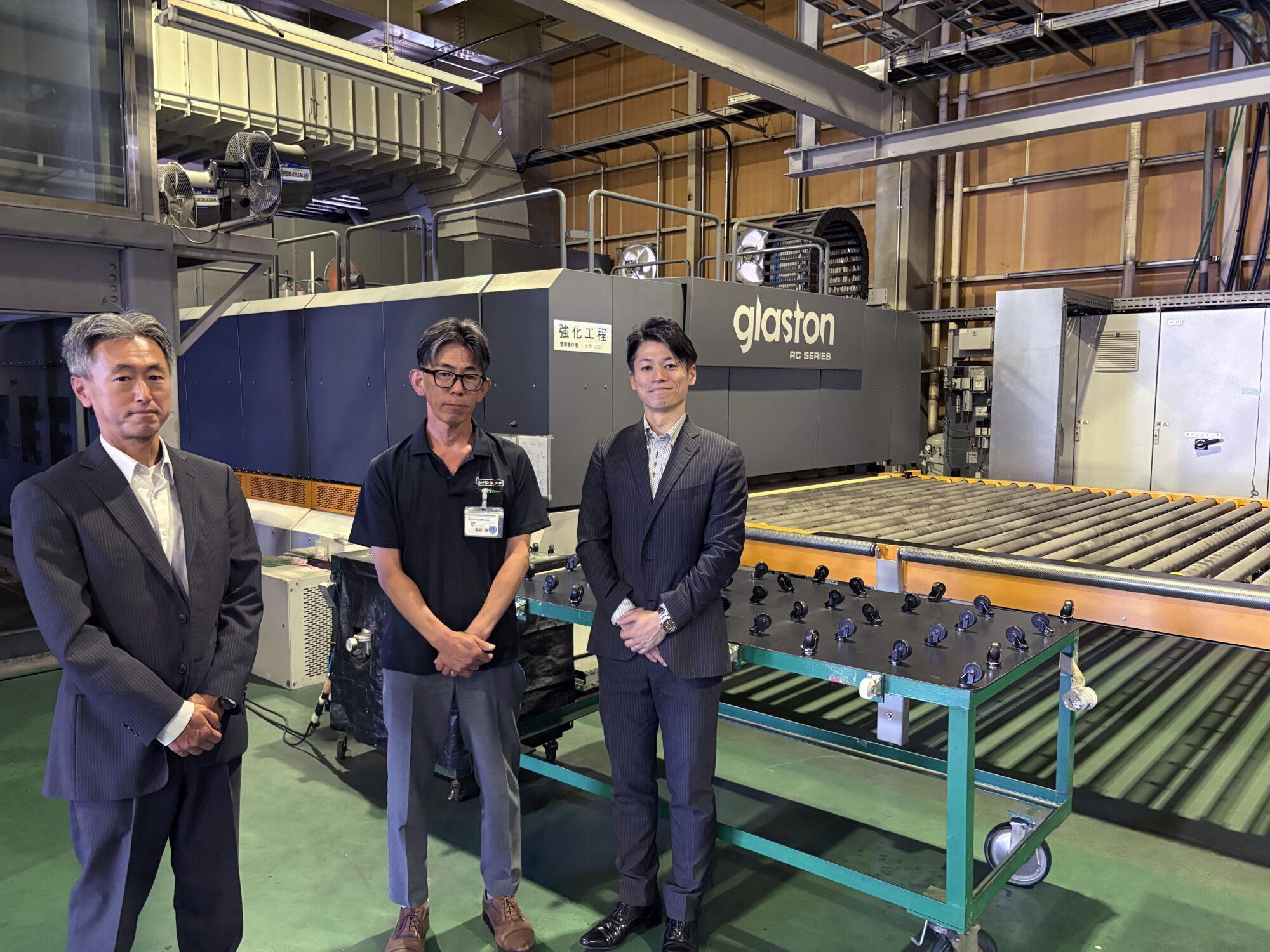
The latest phase of investment includes three RC Series tempering furnaces delivered in 2018, 2021 and 2026. The technology provides the combination of thermal uniformity, flatness and optical quality required for high-specification tempered glass. The newest generation further strengthens heating accuracy and process control, while integrated user management helps preserve critical production parameters during operator handovers. 
Hard Glass Industry has also extended the operational life of its 2004 laminating line through Glaston’s ProL-zone upgrade. Instead of replacing the complete system, the company retained serviceable components while replacing outdated heating chambers. This approach improved the line’s performance without sacrificing the value of the existing investment.
Full-convection heating provides more uniform heat distribution and precise temperature control, while reduced heat loss contributes to lower energy consumption. The upgraded system also enables flexible processing across a wider range of glass types with simplified process control.
Source: Glaston with additional information added by Glass Balkan