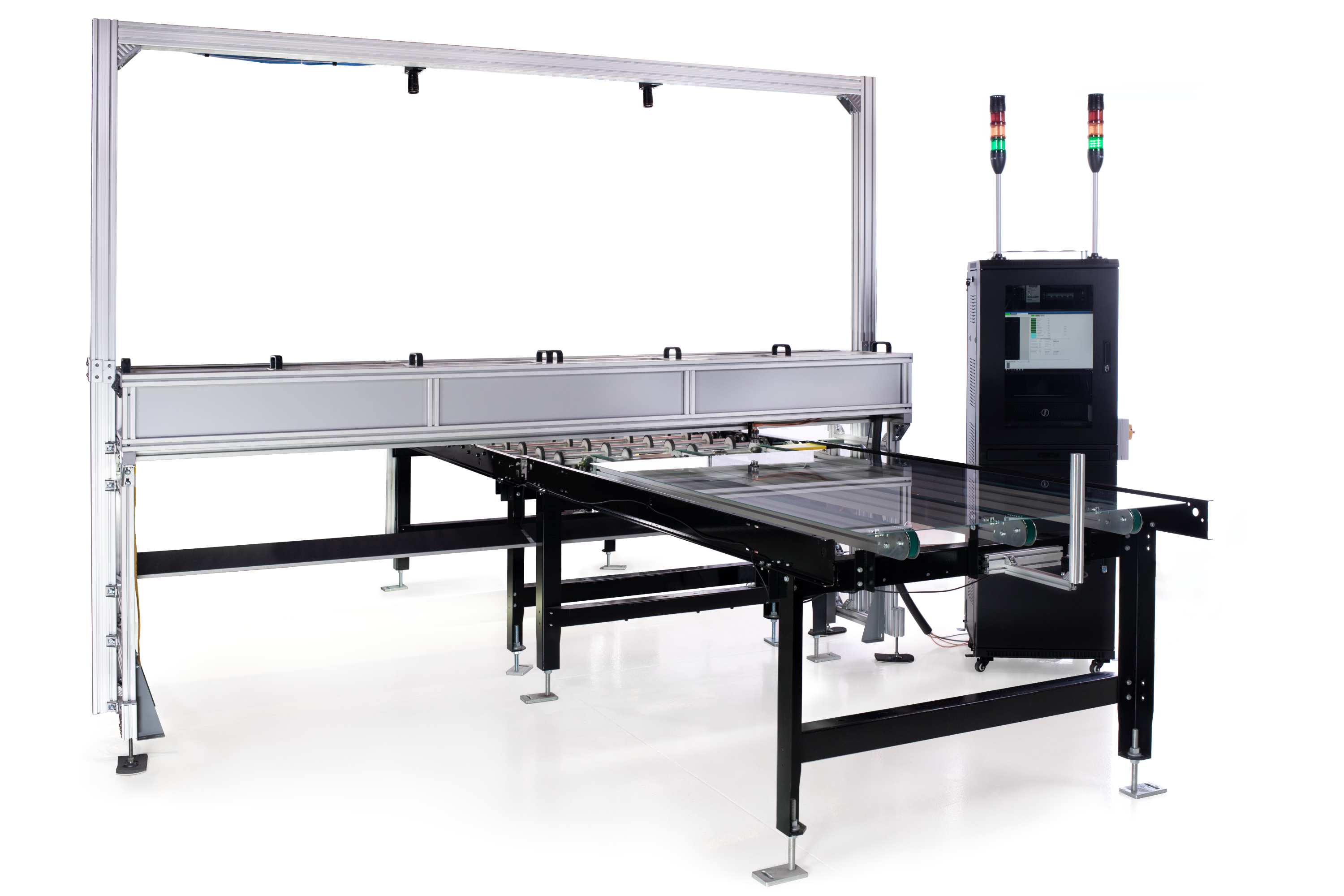
k-Space Associates has announced a new machine learning enhancement for its kSA Glass Breakage & Defect Detection platform, bringing advanced defect classification capabilities to inline glass inspection. The upgrade is designed to help glass manufacturers identify subtle defects and process variations that are often difficult to detect using conventional rule-based vision systems.
The enhanced system combines high-resolution linescan imaging, controlled illumination, and non-contact inspection technology to monitor every glass panel moving through production. By incorporating machine learning algorithms, the platform can analyze inspection data in real time, classify defects, and identify emerging patterns that may indicate process instability before significant production losses occur.
According to k-Space, the technology improves the detection of scratches, haze, coating irregularities, edge defects, and other low-contrast anomalies that can impact product quality. The machine learning layer also helps reduce nuisance alarms by distinguishing genuine defects from visual artifacts such as glare, reflections, dust, and temporary contamination events.
Internal testing has shown that the system can reduce false-positive inspections by up to 30%, enabling manufacturers to focus on critical quality issues while minimizing unnecessary interventions. Earlier identification of defect trends can also support proactive process adjustments, helping to reduce scrap, limit rework, and improve overall production yield. 
Each inspection event is accompanied by a highlighted detection area, defect classification, and confidence score, providing engineers with actionable information for process optimization. The upgrade has demonstrated particular effectiveness in coated glass applications, darker substrates, and complex inspection environments where traditional inspection methods often face limitations.
Source: k-Space with additional information added by Glass Balkan