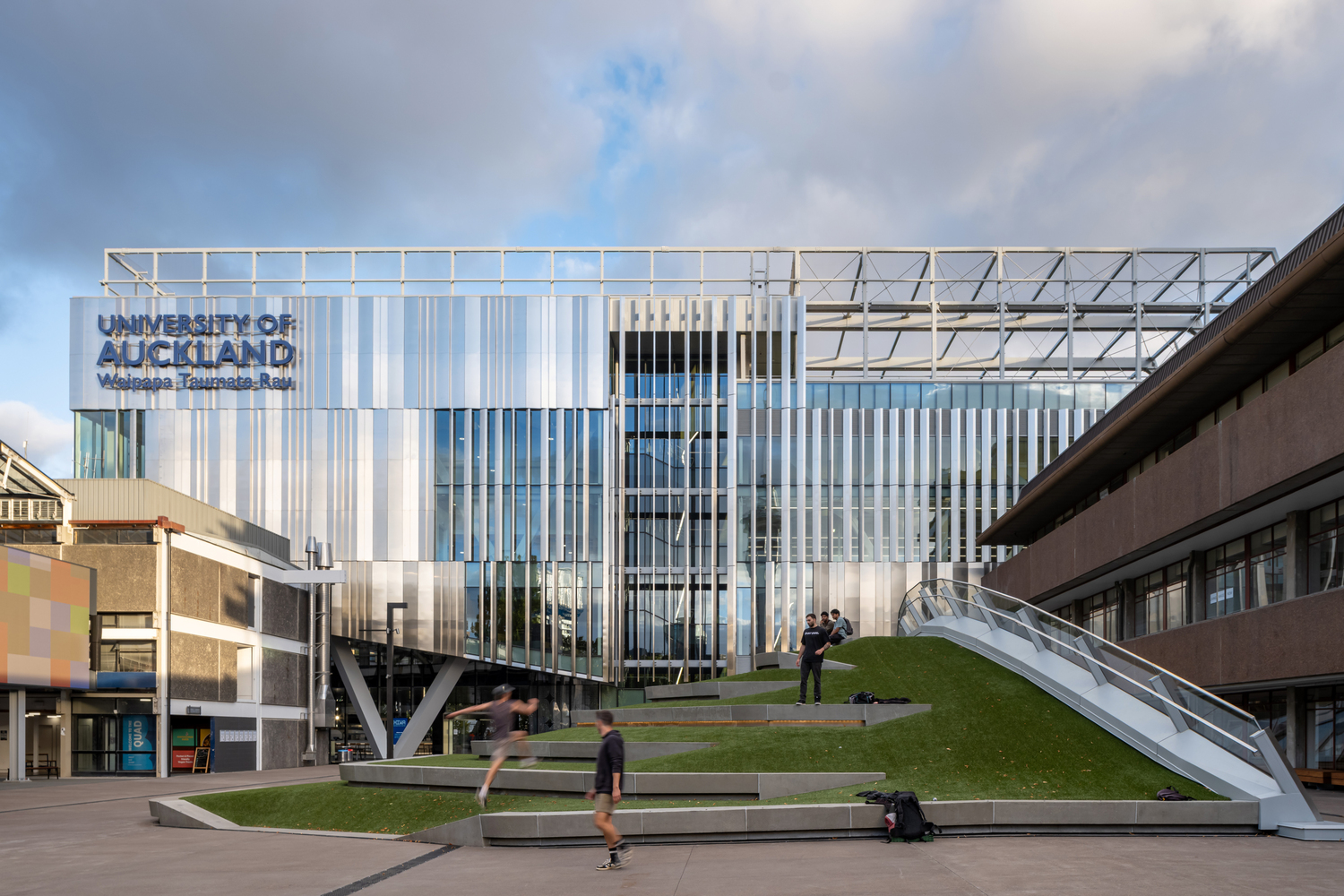
The University of Auckland Recreation and Wellness Centre (Hiwa) is a major new student facility completed in 2024 on the University’s City Campus in Auckland, New Zealand. Designed by Warren and Mahoney, the project is delivered as a large-scale wellness infrastructure that brings together sport, fitness, and social interaction within a highly constrained urban site.
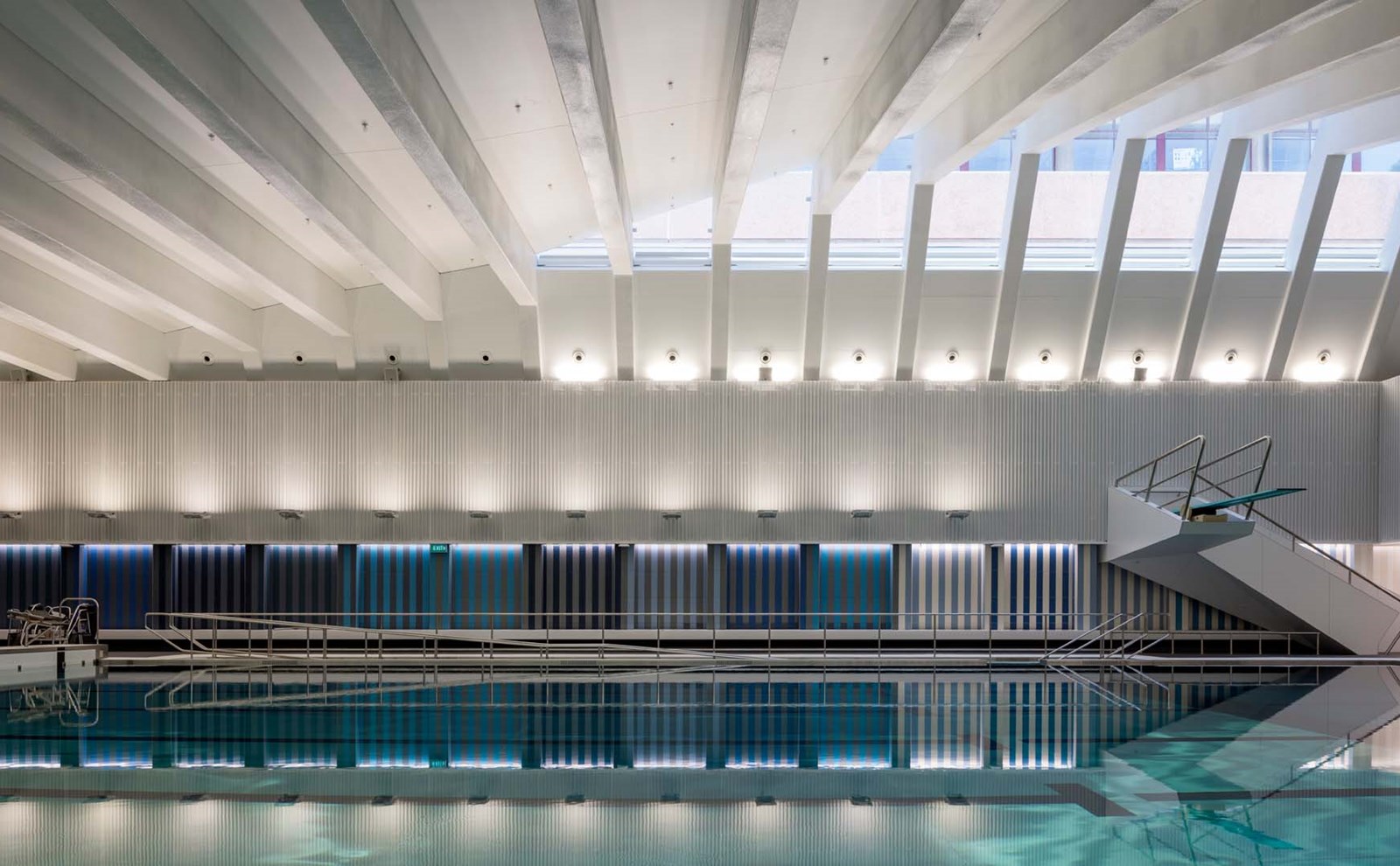
With a total area of approximately 20,000m² on a 6,500m² site, Hiwa consolidates a wide range of facilities including a gym, swimming pool, sports halls, climbing wall, squash courts, rooftop turf and running track, alongside informal social and wellness spaces. The centre is designed not only as a sports building but as a campus-wide wellbeing catalyst, encouraging student participation, social connection, and daily physical activity as part of university life.
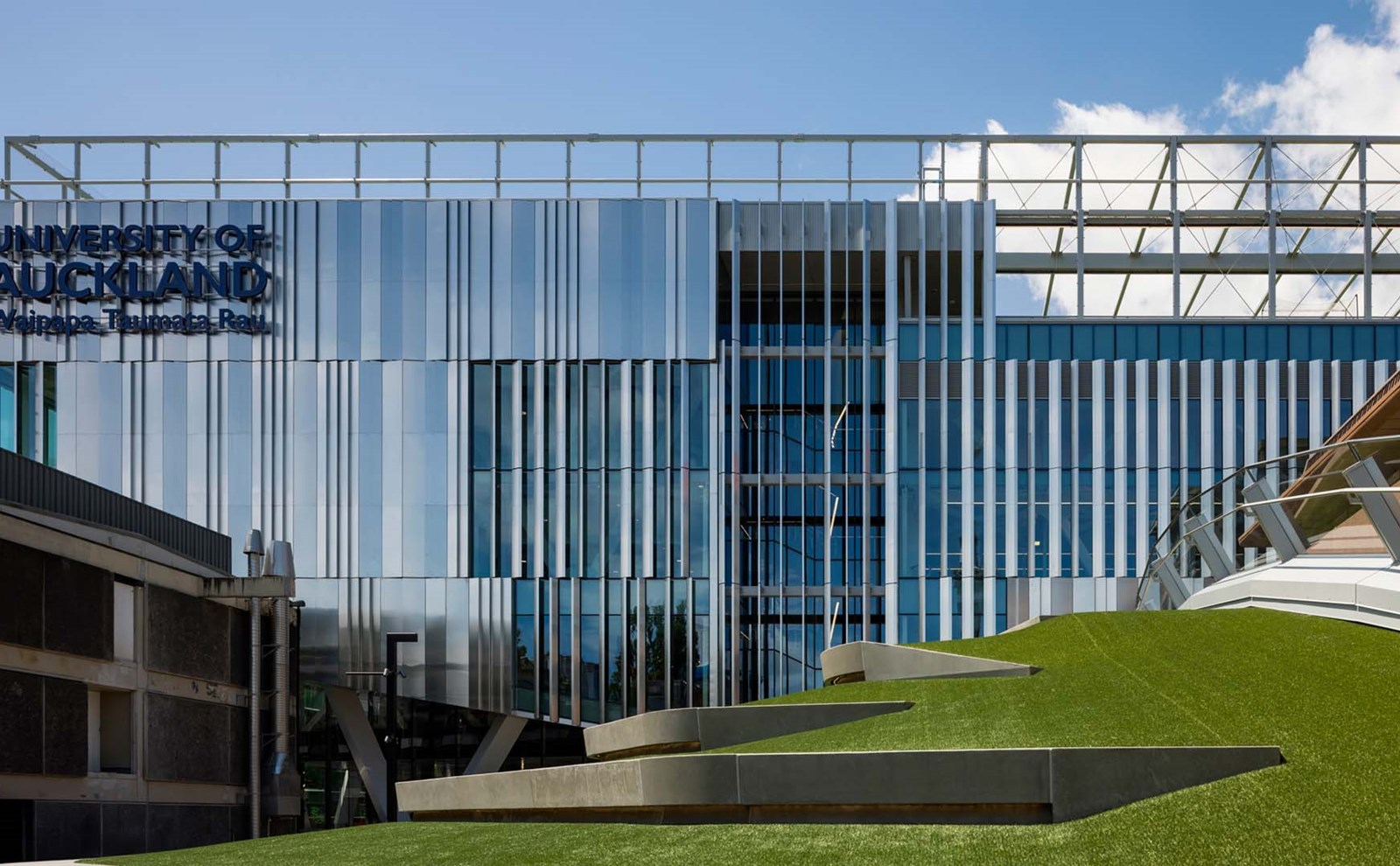
A defining feature of the project is its high-performance façade system, delivered by façade specialist Thermosash. The external envelope combines multiple coordinated systems to achieve both architectural expression and environmental performance.
The most visually dominant element is the stainless steel rainscreen system, which wraps the building in a continuous reflective skin. This façade creates a striking modern identity, with strong vertical articulation that enhances the perception of height and movement. The reflective surface responds directly to Auckland’s changing coastal light conditions, visually shifting throughout the day and seasons while reducing the apparent mass of the large building volumes. 
Integrated within this outer layer is a Thermoplank unitised rainscreen system and solid aluminium sheet cladding, carefully coordinated to manage different façade zones and programmatic requirements. Together, these systems maintain a unified material language while allowing technical flexibility across the building envelope.
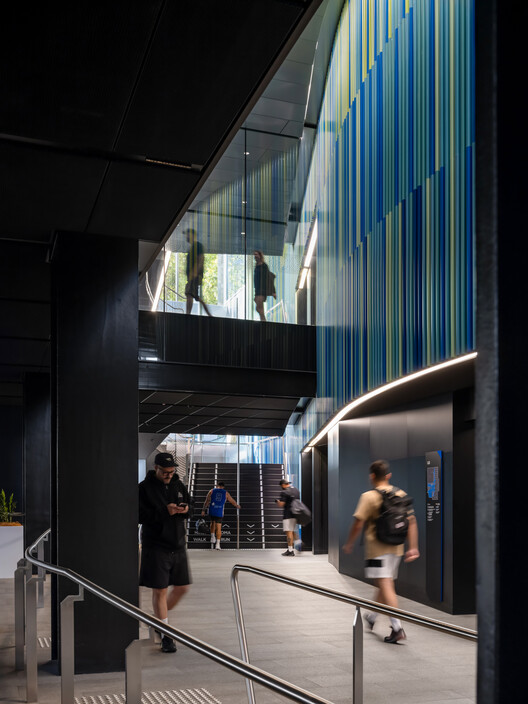
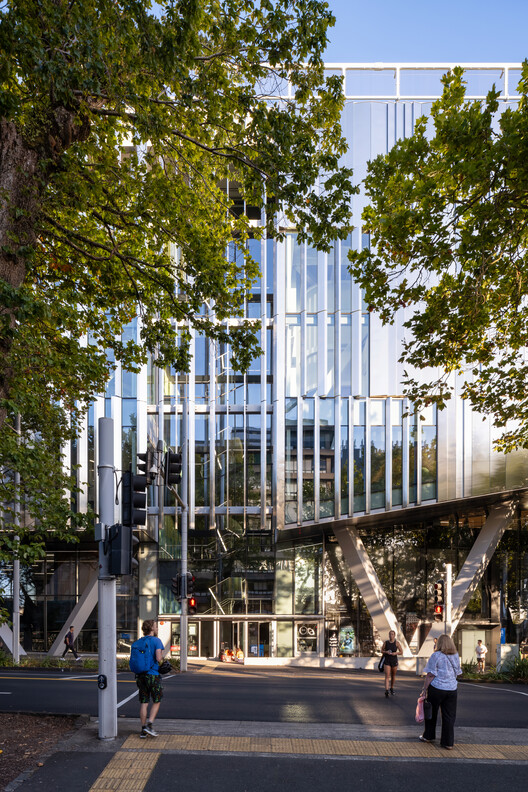
Performance is further enhanced through a unitised glazed PW1000 curtain wall system, which incorporates stainless steel solar shade fins. This system supports daylight control and reduces solar gain in key glazed areas, while maintaining transparency where visual connection to internal activity is important. In addition, unitised louvre systems are deployed to further reduce internal glare and support environmental comfort across large sports and aquatic spaces.
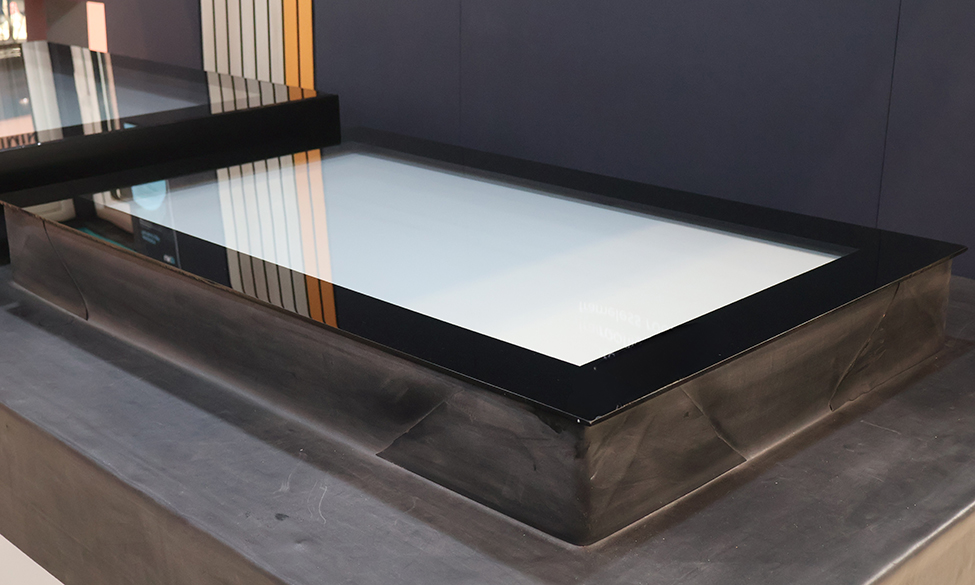
A major architectural feature is the bespoke structural glazing system in the atrium, where steel flat mullions support oversized glass panes measuring up to 2.4 metres wide and stacked to heights of approximately 10 metres. This creates a dramatic vertical transparent space that visually connects multiple levels of activity. The façade also incorporates four-sided structurally sealed skylights, bringing controlled daylight deep into internal zones.
At ground level, a combination of frameless glazing, framed systems, shopfront doors, and automatic entrances ensures permeability between interior circulation and the campus environment, reinforcing the building’s civic role.
Completed in 2024, Hiwa received the Supreme Award and Best in Category (Education Property) at the 2025 Property Council New Zealand Rider Levett Bucknall Property Industry Awards, recognising its integration of architecture, engineering, and wellbeing strategy.
Source: thermosash.co.nz with additional information added by Glass Balkan