Building-integrated photovoltaics (BIPV) are photovoltaic systems designed to become part of a building’s envelope rather than being mounted onto an existing roof or façade. They can be incorporated into roofs, curtain walls, skylights, windows, façades and solar shading systems. In glass applications, the manufacturing process combines photovoltaic technology with established architectural glass production.
The process begins with the glass substrate. Depending on the application, manufacturers can use monolithic or laminated glass, or incorporate the photovoltaic layer into an insulating glass unit. Low-iron glass may be selected where higher light transmission is required. The glass is cut, edged, drilled and, where necessary, tempered or heat-strengthened before the photovoltaic components are assembled.
The photovoltaic cells are produced separately. Most BIPV products use crystalline silicon cells, although thin-film technologies are also available. Individual cells are electrically interconnected into strings using conductive ribbons. In architectural BIPV, the arrangement of these cells is important not only for electrical output but also for the appearance and transparency of the façade.
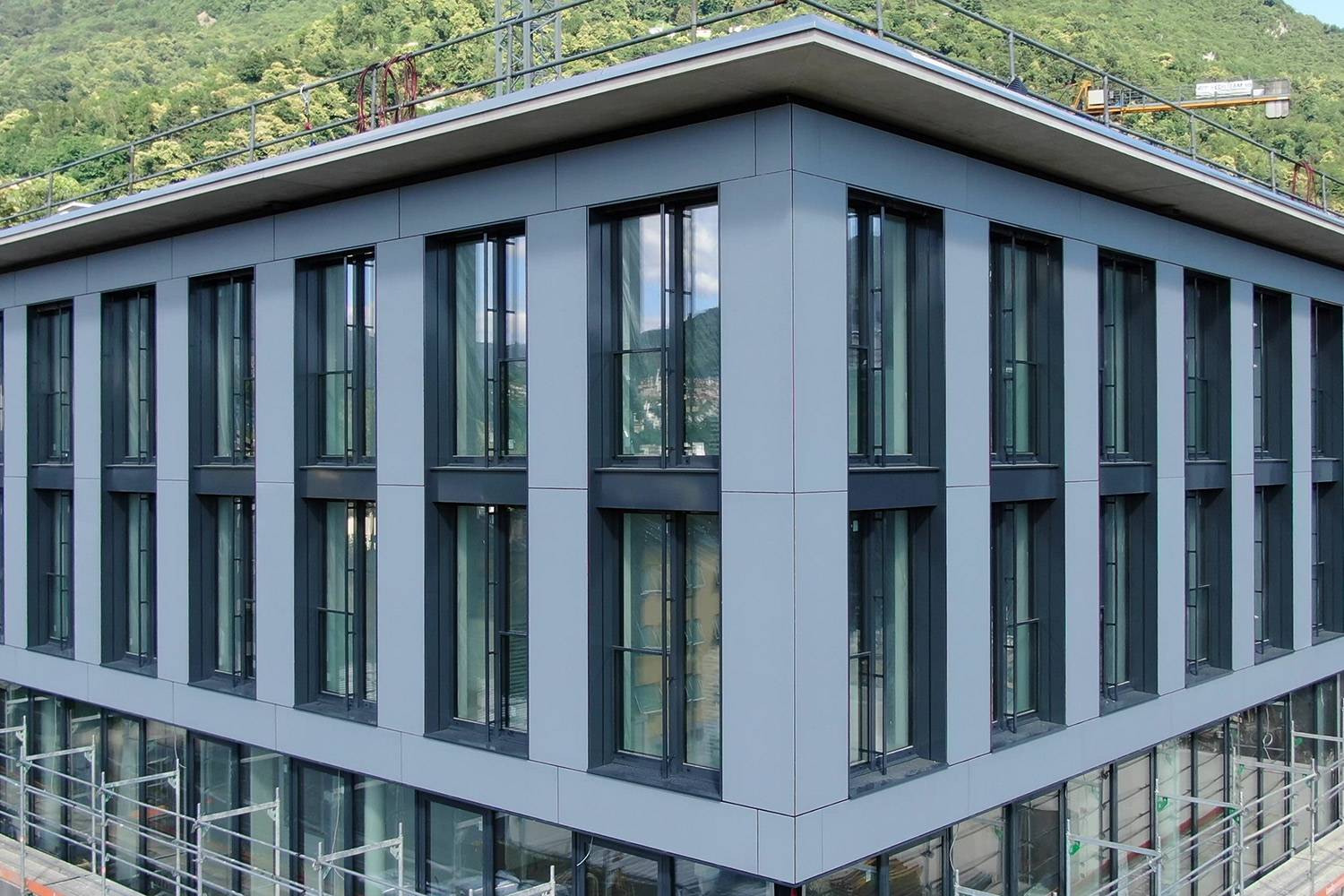
For semi-transparent BIPV glass, cells are positioned with controlled gaps between them. These gaps allow daylight to pass through the glazing. A higher cell density generally increases electricity generation, while greater spacing increases transparency. Manufacturers can therefore design different cell layouts according to the building’s daylight, energy and aesthetic requirements. 
The cells are then encapsulated between glass layers. An encapsulant such as EVA or POE surrounds the photovoltaic components and protects them from moisture and mechanical stress. The complete assembly enters a vacuum laminator, where controlled heat, pressure and vacuum remove air and bond the layers into a sealed glass-PV composite.
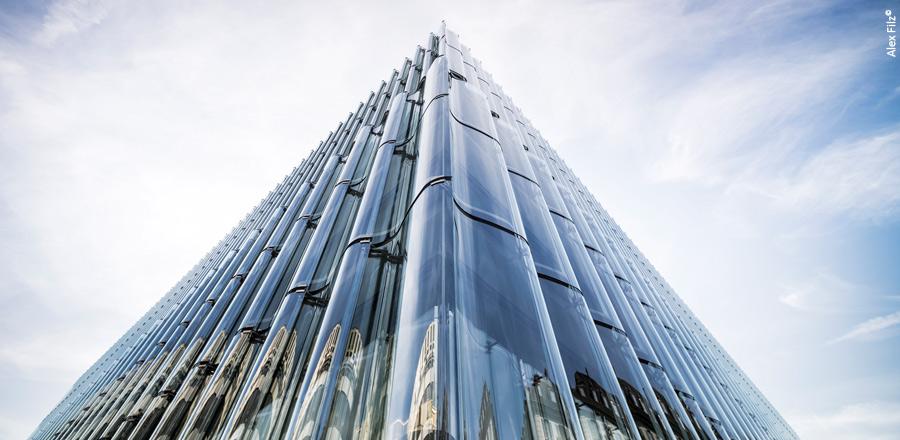
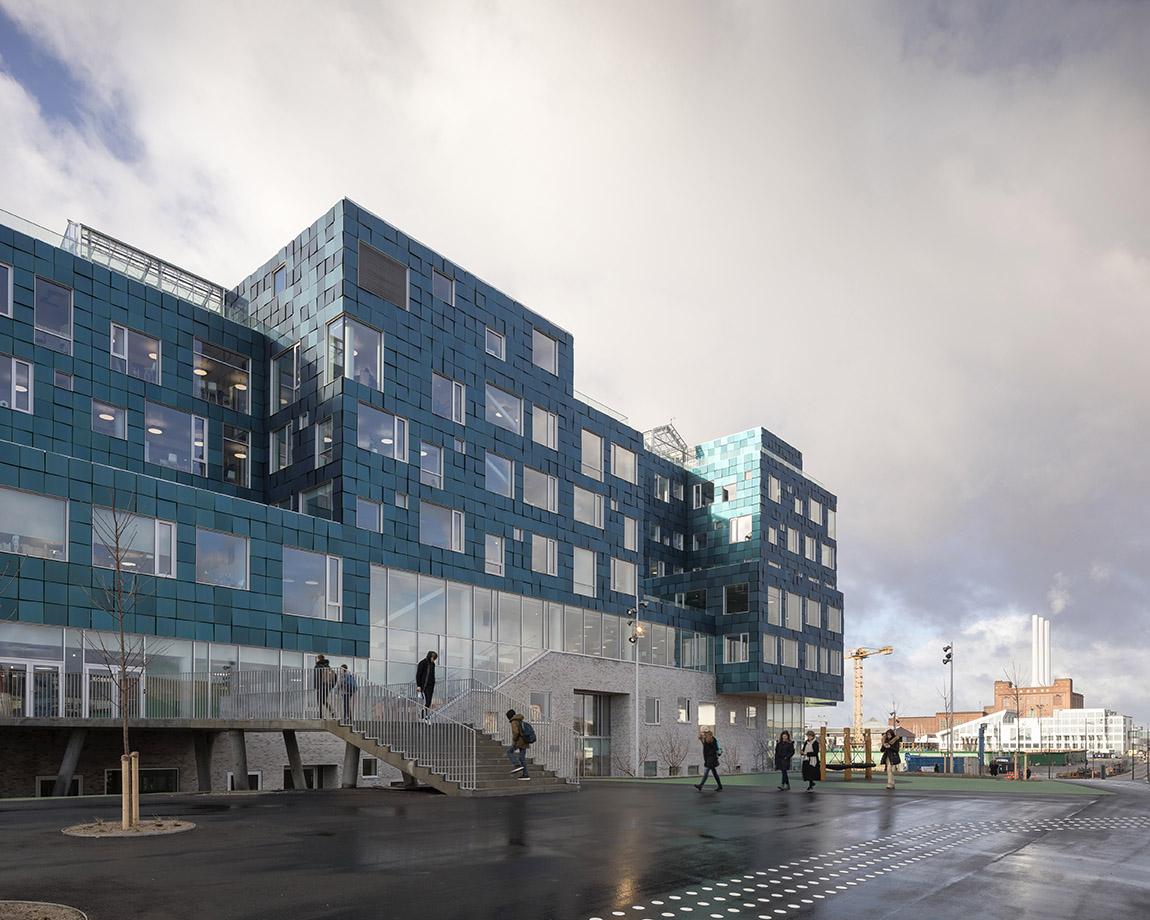
The resulting technology can be seen at Copenhagen International School in Denmark, where approximately 12,000 photovoltaic modules cover around 6,000 m² of façade. The individually angled modules create the building’s distinctive blue-green, fish-scale appearance while generating electricity. The project demonstrates how the photovoltaic layer can become a major architectural feature rather than being hidden behind the façade.
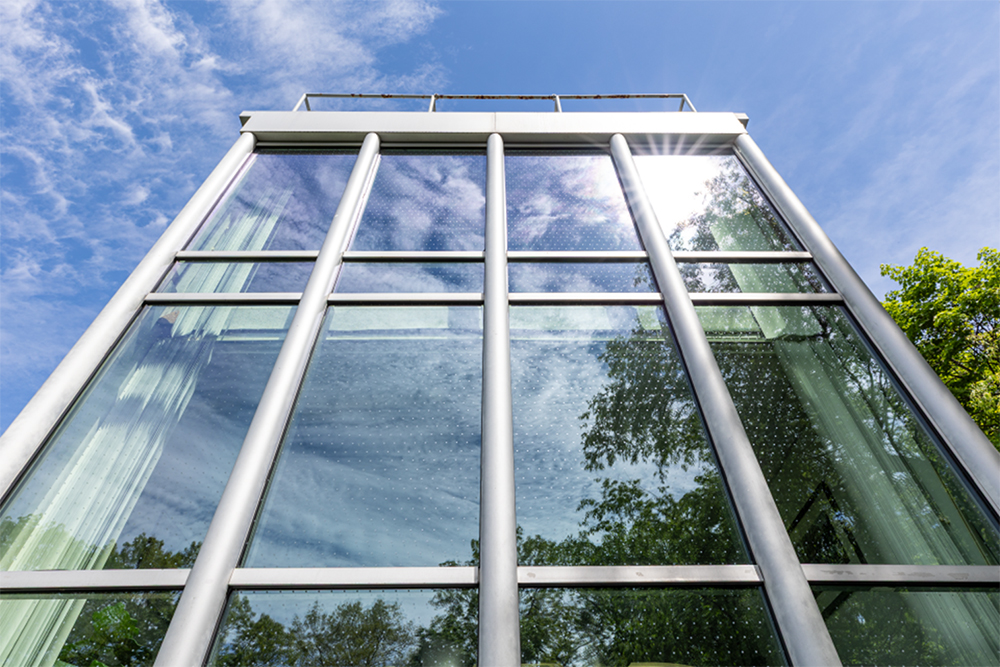
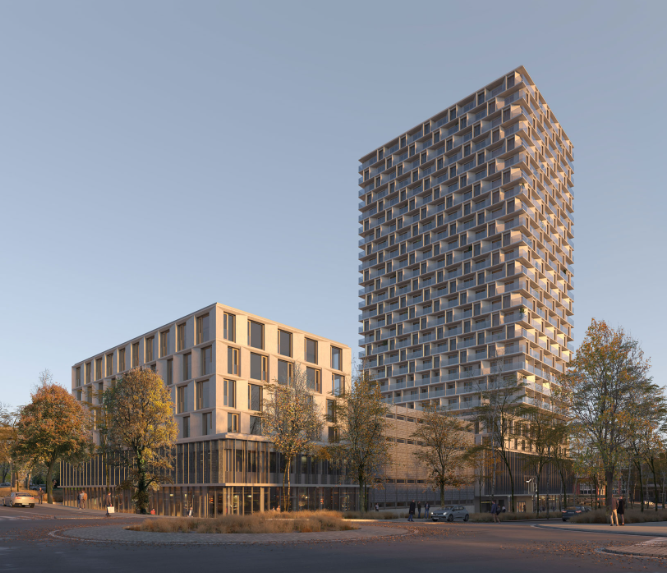
BIPV can also be designed to appear much closer to conventional architectural glazing. At Tilia Tower in Lausanne, Switzerland, photovoltaic glass is incorporated into the high-rise façade, with different areas using different module specifications and finishes. This approach illustrates how PV technology can be adapted to façade proportions, colours and architectural composition.
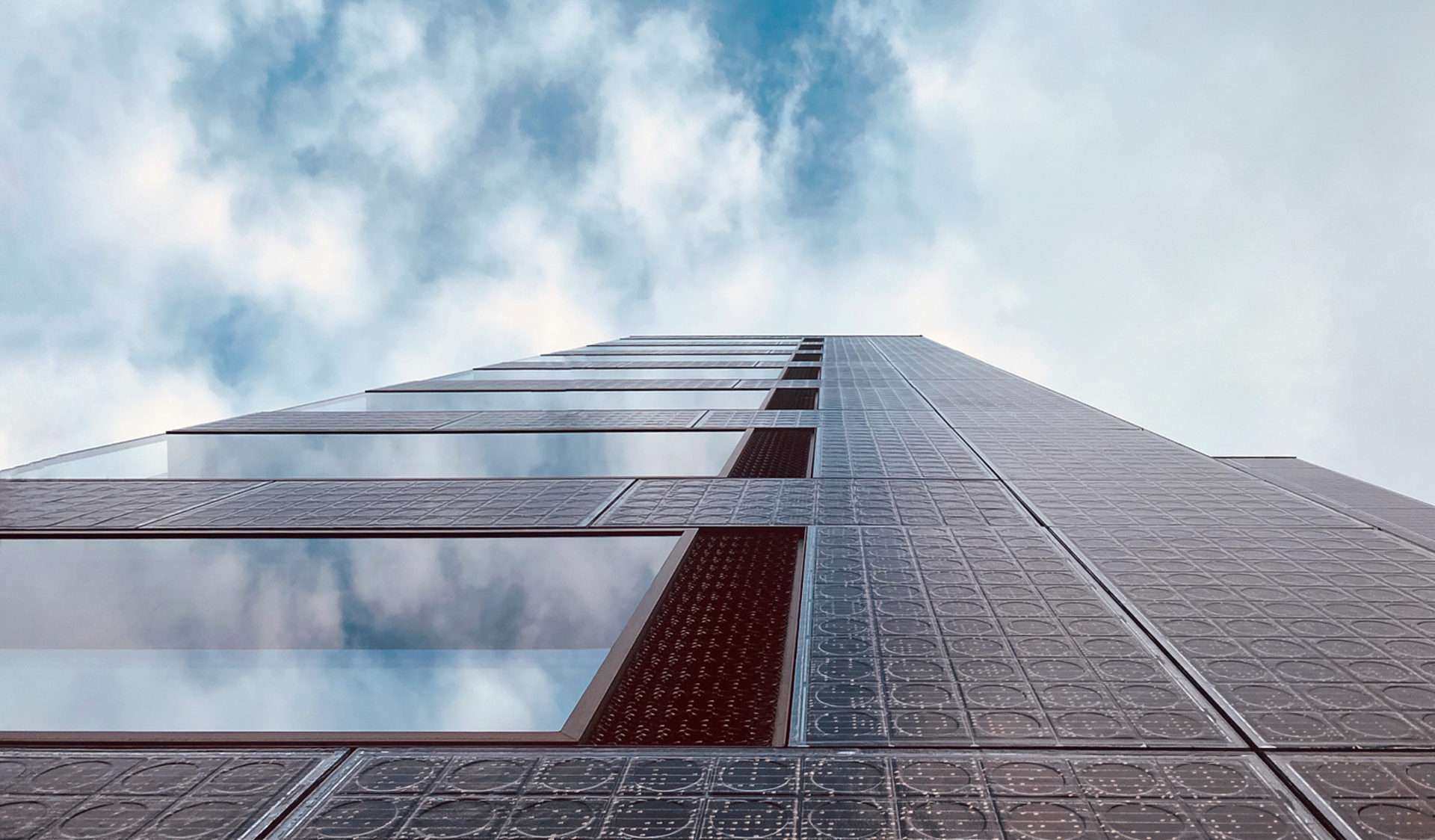
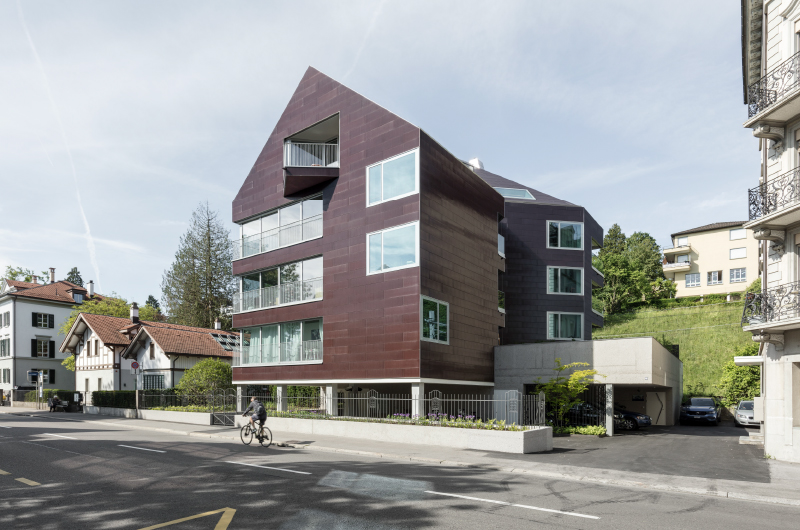
Another solution is to deliberately reduce the visual presence of the photovoltaic cells. Solaris 416 in Zurich uses photovoltaic elements combined with laser-printed brown glass. The printed surface creates a more uniform appearance while allowing the façade to generate electricity. The project demonstrates an important BIPV consideration: increasing the visual concealment of photovoltaic cells can affect their energy output.
After lamination, the electrical connections are routed to the edge of the module and connected to a junction box or electrical interface. Multiple modules are then connected into strings and linked to inverters, which convert the direct current generated by the PV cells into alternating current for the building.
For façade applications, the laminated BIPV glass can subsequently become part of an insulating glass unit (IGU). A spacer separates the photovoltaic glass from another pane, creating a sealed cavity that may be filled with air or argon. The finished unit can therefore provide several functions simultaneously: weather protection, thermal insulation, solar control, daylight transmission and electricity generation.
The final BIPV product is consequently not simply a solar panel attached to a building. Its glass composition, cell layout, transparency, colour, electrical performance, thermal properties, dimensions and façade connections must be coordinated as part of the building envelope.
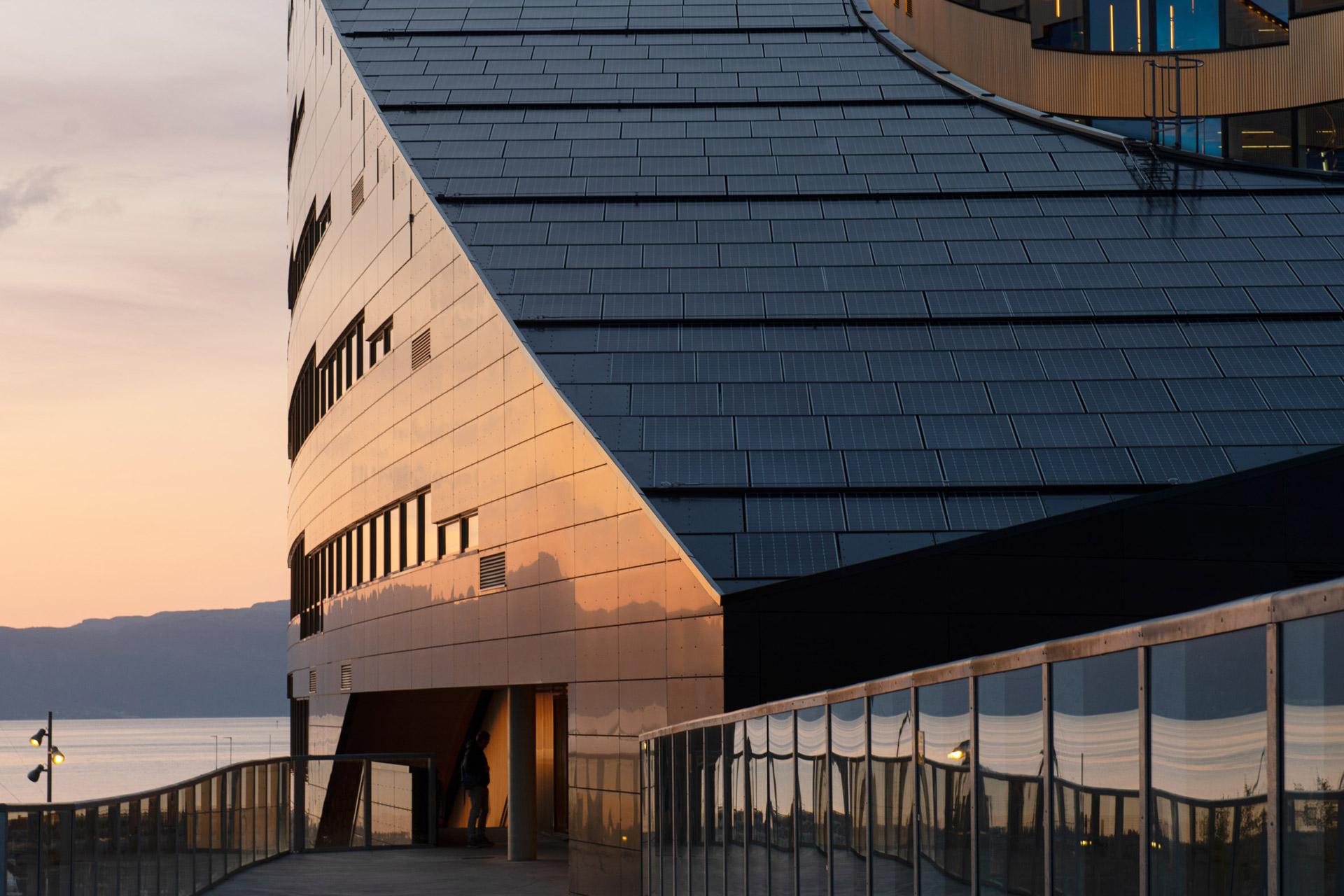
This is the defining principle of BIPV: the photovoltaic system becomes an architectural material and an energy-generating component at the same time.
Source: Glass Balkan