AC Milan and FC Internazionale Milano have officially unveiled the design of their future home, Generali Stadium, a 71,500-seat arena designed by Foster + Partners and MANICA. Conceived as the next chapter in the legacy of San Siro, the project introduces a new architectural landmark for Milano while aiming to redefine the experience of football supporters and major sporting events.
The stadium forms the centrepiece of a wider 281,000-square-metre urban regeneration project, representing a significant investment in the city’s future. Developed through the shared long-term vision of AC Milan and Inter, under their respective ownership groups RedBird Capital Partners and Oaktree, the project aims to create a destination that remains active throughout the year, extending beyond the traditional boundaries of a football stadium.
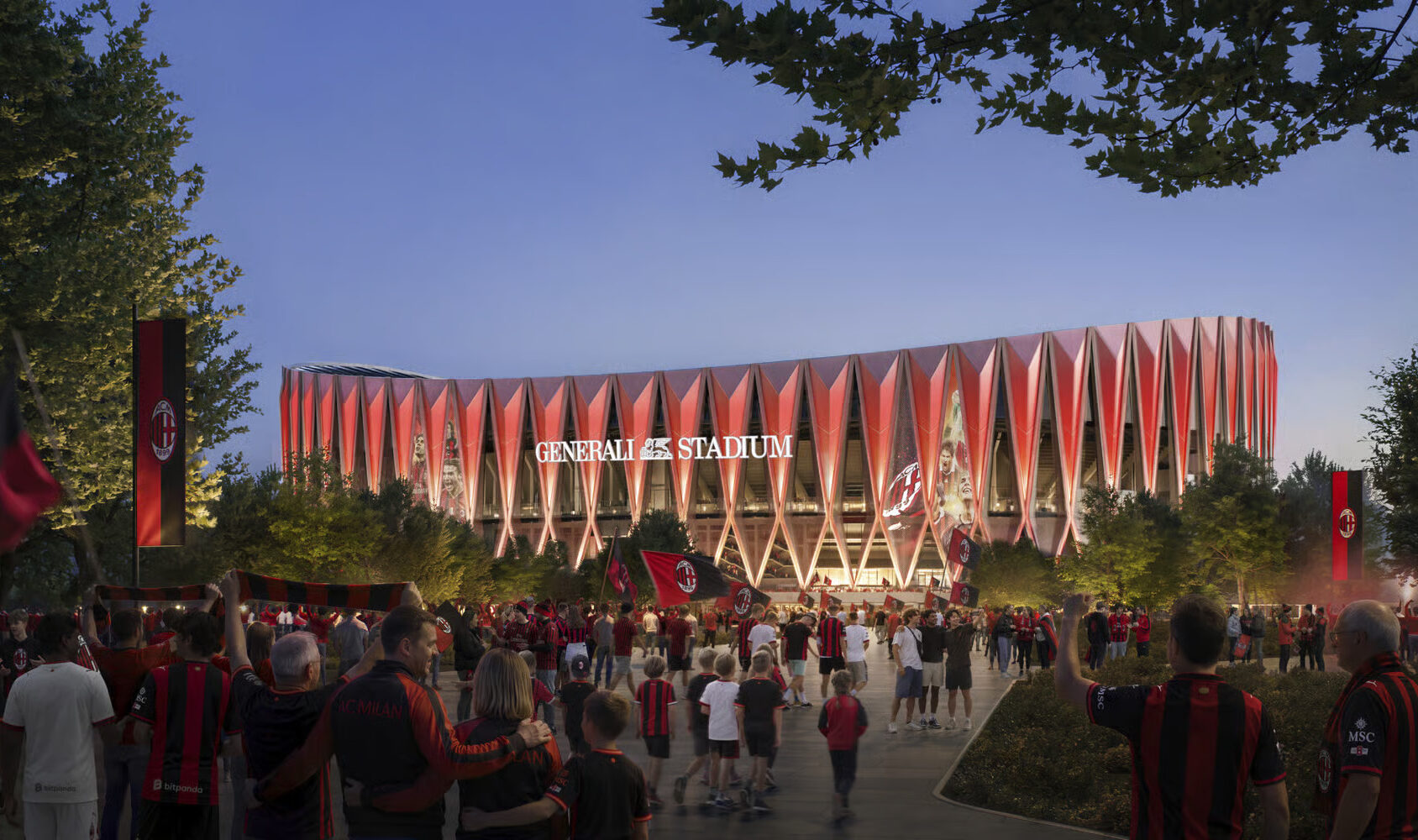
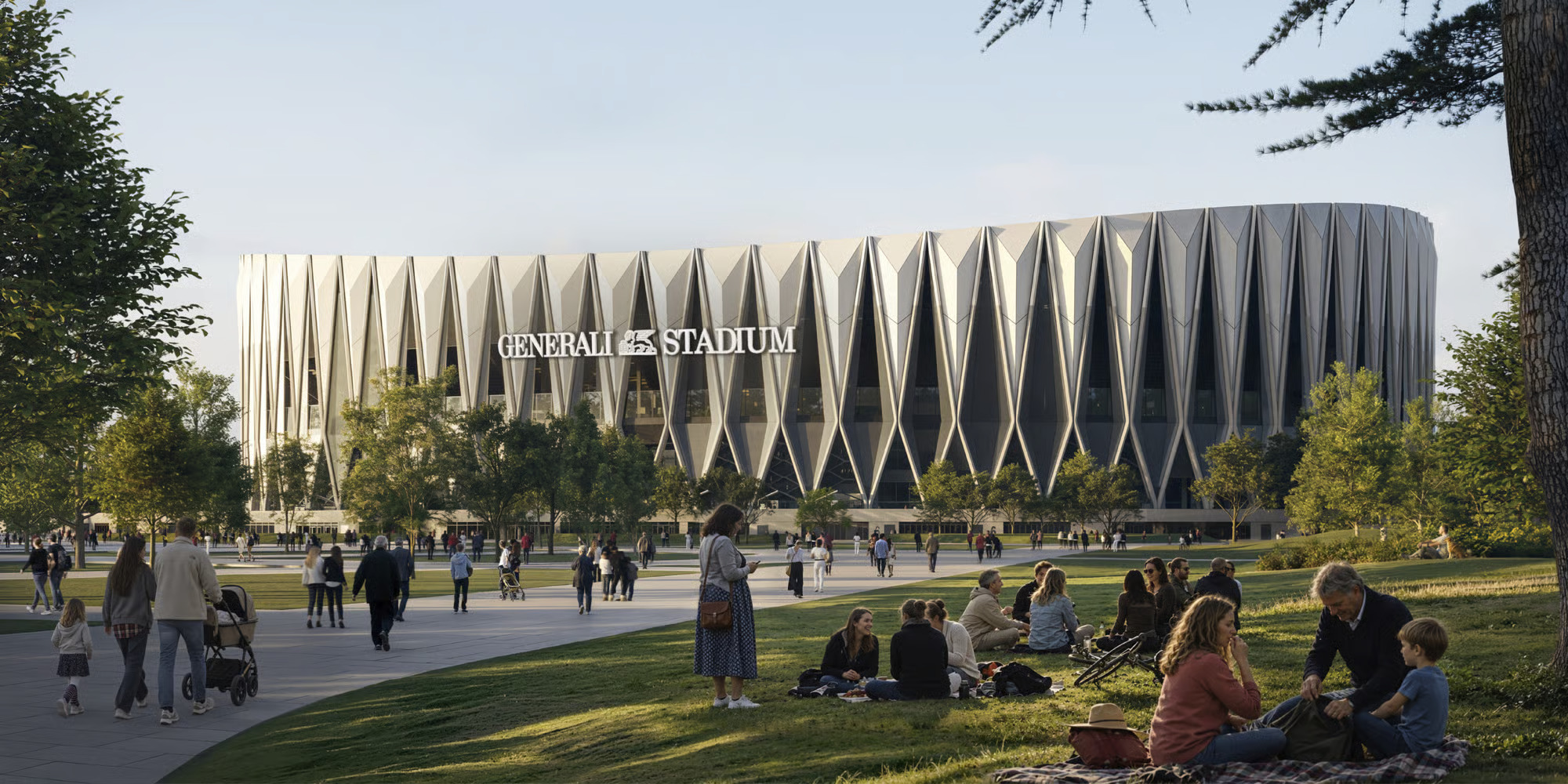
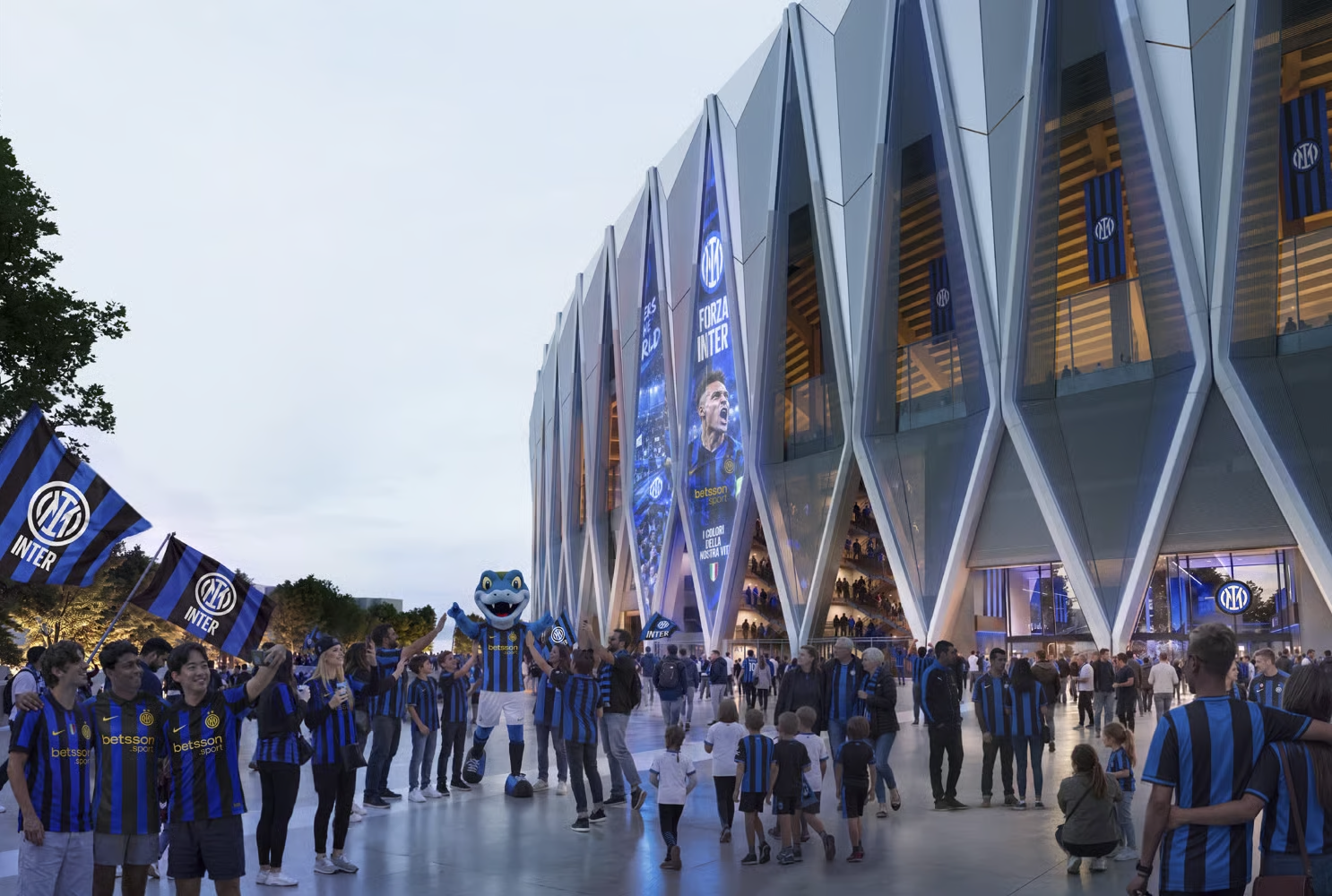
The architectural concept draws inspiration from Milano’s rich architectural heritage, engineering traditions and design culture. One of its defining features is a structural concrete X-frame that establishes a strong visual rhythm across the building. Extending from the naturally ventilated colonnades through the façade, the structure rises to support the stadium’s distinctive roofline.
The design also references the craftsmanship and geometric complexity of the Duomo di Milano, translating elements of the city’s architectural identity into a contemporary sporting venue. 
Diamond-shaped entrance structures will welcome visitors, creating a distinctive arrival experience with glimpses of the stadium interior before opening onto panoramic concourses overlooking the city. These circulation spaces are designed to improve visitor movement while connecting the stadium experience with its wider urban surroundings.
A double-curved roof will define the stadium’s silhouette. Beyond its architectural character, the roof incorporates photovoltaic technology, acoustic optimisation and other sustainability measures intended to improve the building’s environmental performance.
With a capacity of 71,500 spectators, Generali Stadium has been designed to preserve the atmosphere and emotional connection associated with San Siro while bringing fans closer to the action.
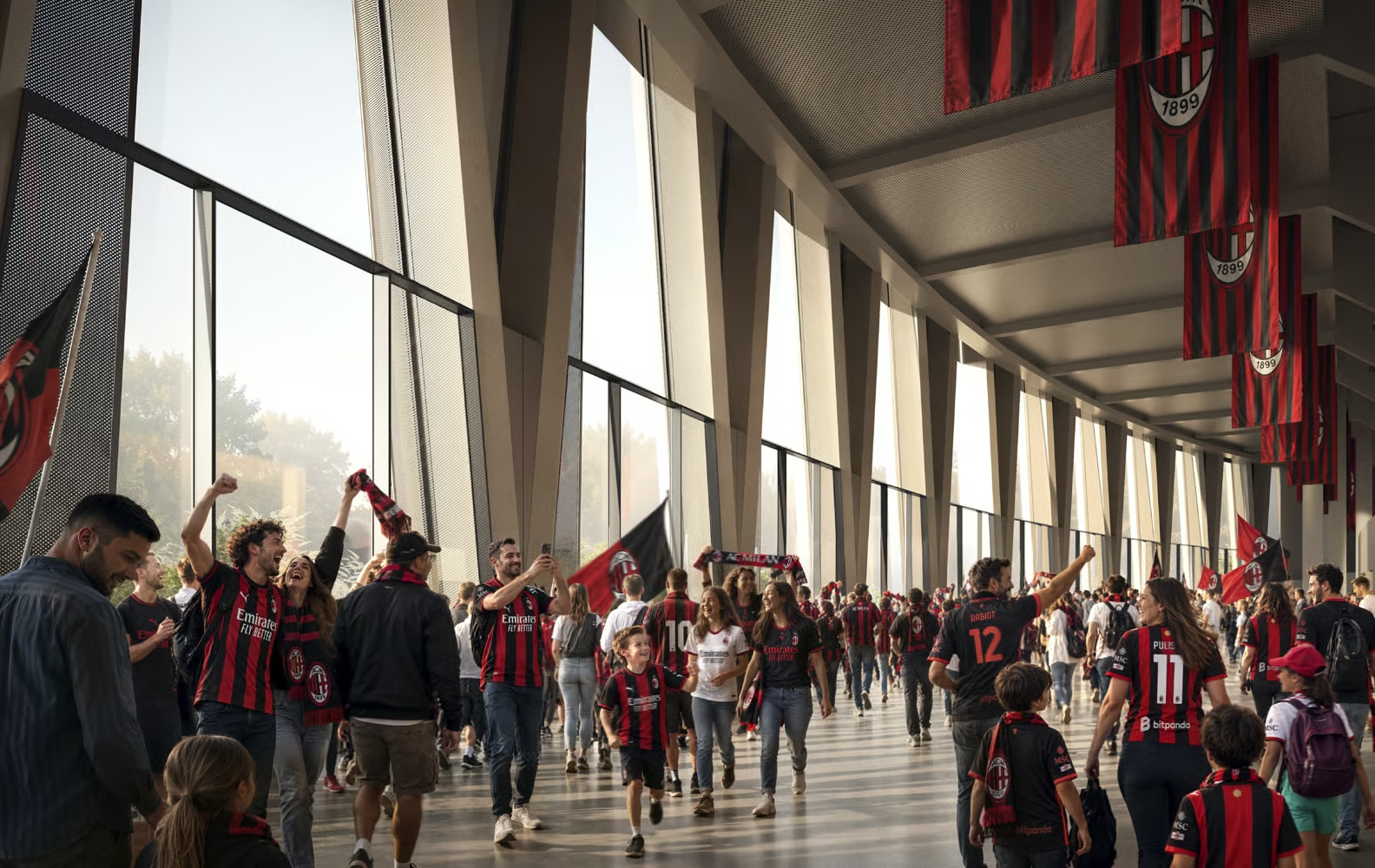
The seating arrangement consists of two tiers forming a continuous 360-degree bowl, providing clear sightlines and creating a more immersive relationship between supporters and the pitch.
Particular attention has been given to the two iconic Curvas, the dedicated supporter sections traditionally associated with the clubs’ most passionate fan groups. At both ends of the stadium, these sections will rise as steep, continuous walls of seating, with inclinations reaching up to 37 degrees. Their geometry is intended to intensify the visual impact of the stands and strengthen the atmosphere during matches.
Acoustic engineering will play an important role in capturing and amplifying crowd energy, ensuring that supporters remain central to the stadium’s identity. Enhanced accessibility, contemporary hospitality facilities and a wider range of seating options will also accommodate different generations and visitor expectations.
The development extends beyond the stadium itself. The surrounding 281,000-square-metre district will integrate public spaces, green areas, retail and leisure destinations, creating a new urban environment for residents, visitors and football supporters.
The objective is to establish a year-round destination where the clubs’ heritage and communities can be experienced outside matchdays. Natural ventilation, photovoltaic energy generation and additional efficiency measures are incorporated into the wider sustainability strategy.
Norman Foster, Founder and Executive Chairman of Foster + Partners, described the project as an opportunity to build upon San Siro’s legacy while creating a new landmark that reflects Milano’s cultural identity. MANICA President David Manica also highlighted the ambition to honour the history of football in the city while establishing a new standard for the stadium experience.
The unveiling follows the historic agreement reached between the two clubs and the City of Milano in 2025, establishing the foundations for the transformation of the San Siro area.
Source: Foster + Partners with additional information added by Glass Balkan