High above Courmayeur, in Italy’s Aosta Valley, the Skyway Monte Bianco carries visitors from the valley floor to the edge of the Mont Blanc massif in about 19 minutes. Opened in 2015, it links Pontal d’Entrèves (1,300 m) with Punta Helbronner (3,466 m) via the Pavillon du Mont Fréty station, while rotating cabins turn a full 360 degrees on the way up.
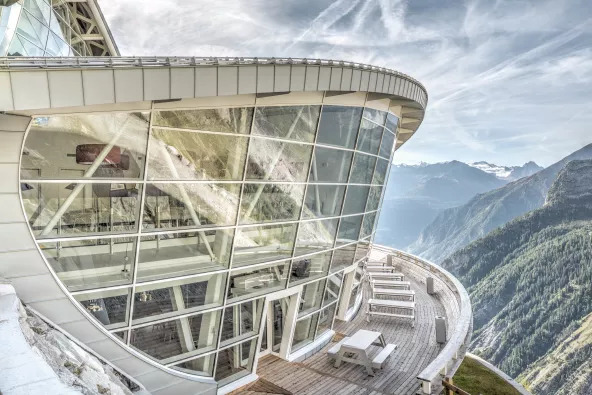
The stations were designed by Studio Progetti Cillara Rossi, led by architect Carlo Cillara Rossi, and the facades are central to the concept. Each station has its own architecture, built mainly from aluminium, steel and glass. The elevations rise vertically with cantilevered terraces. At Punta Helbronner, the angular, crystal-shaped volume recalls both the granite spires of Mont Blanc and the quartz crystals found in its rock, while the wider design draws on ice crystals and reflections on snow.
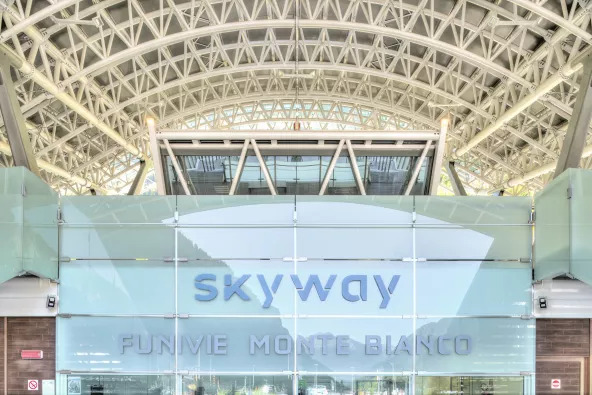
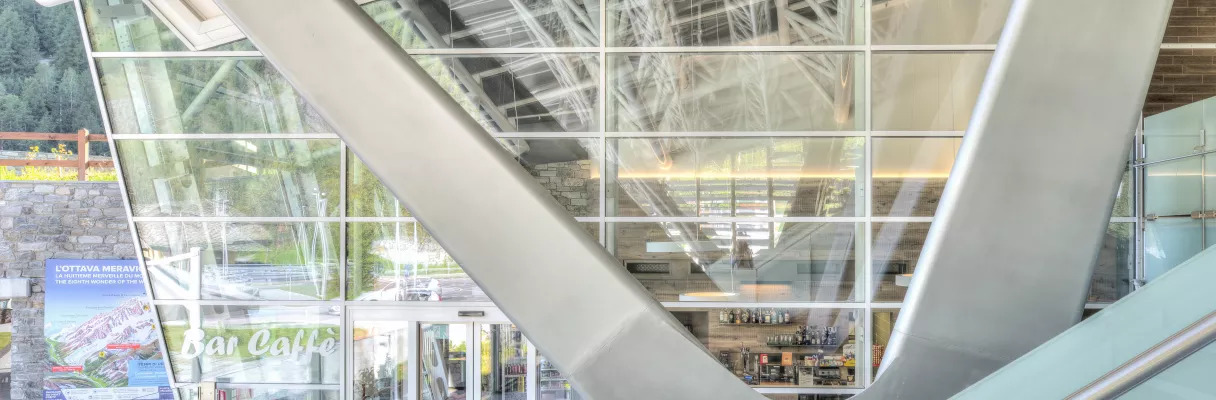
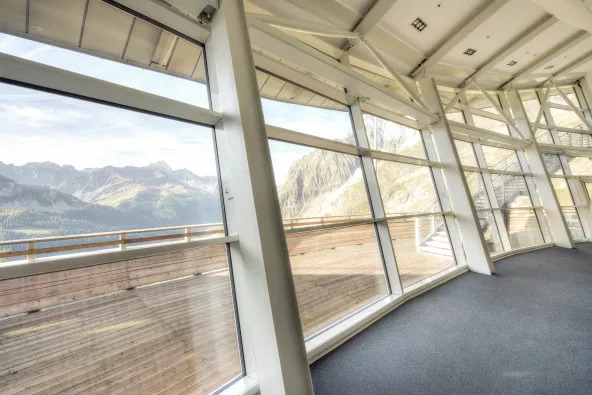
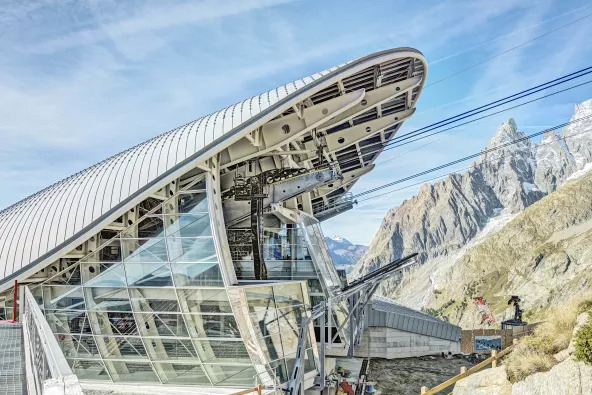
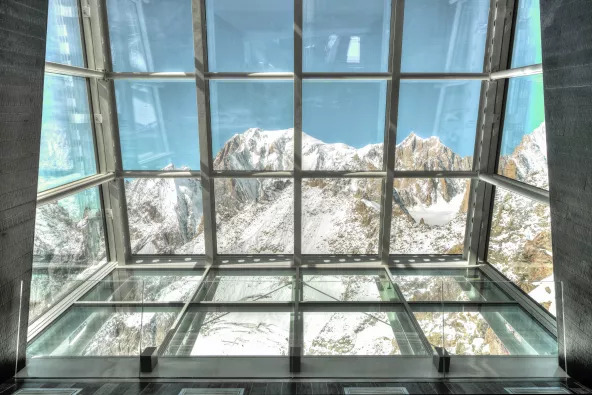
Glass does most of the architectural work here. AGC Glass Europe supplied almost 2,000 square metres of glazing for all three stations, using iplus E coatings on extra-clear Clearvision glass. Some panes are monolithic and 10 mm thick; others are laminated with an acoustic safety interlayer and assembled as triple glazing at AGC Interpane’s plant in Plattling. The architects asked for glass that was perfectly neutral in colour while still insulating well, and every unit was cut to a different size.
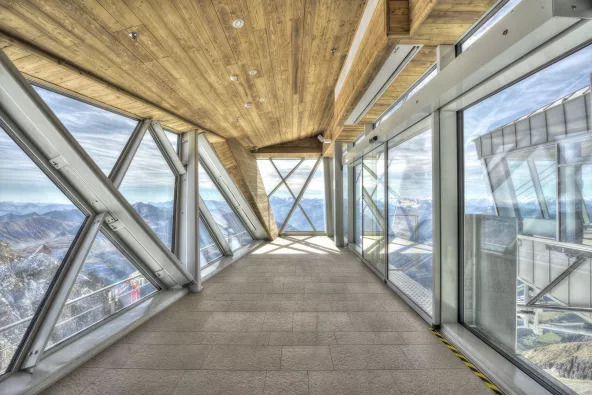
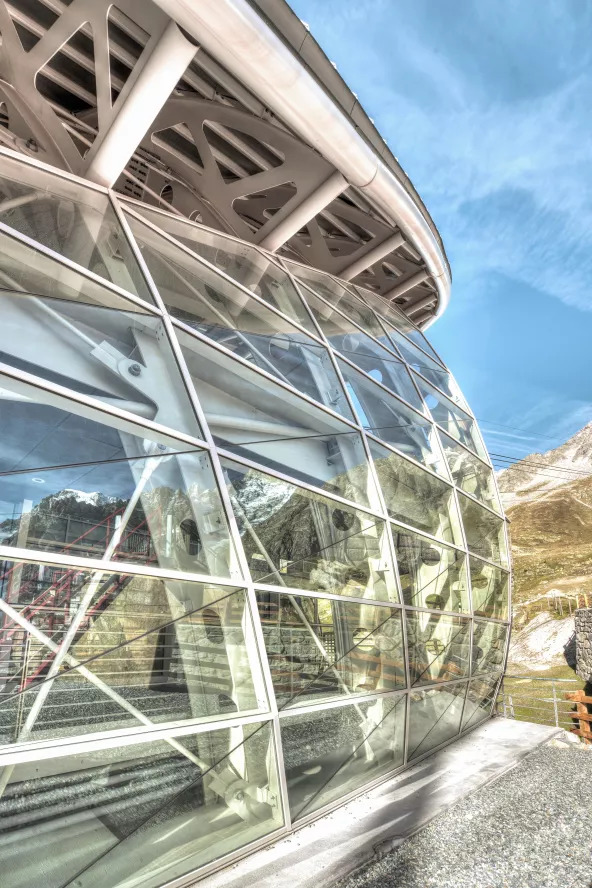
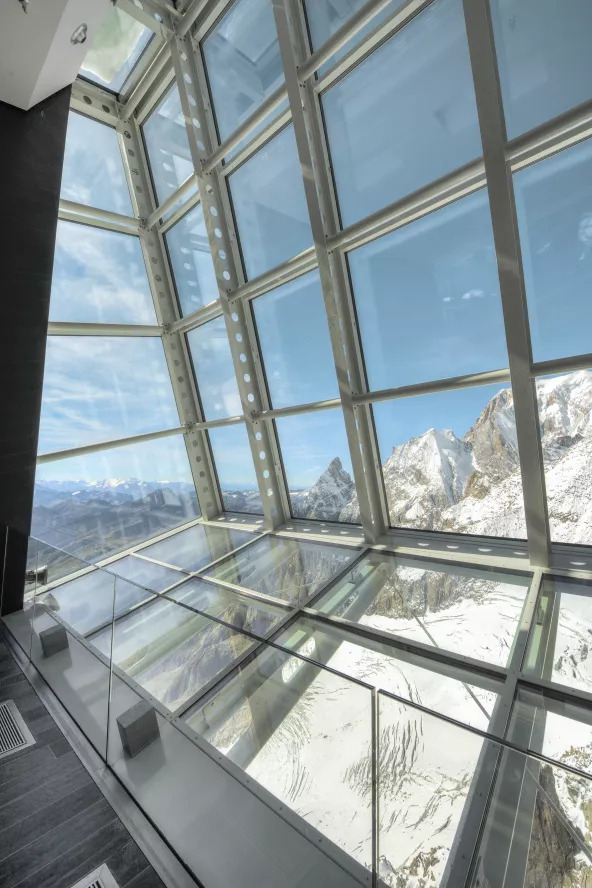
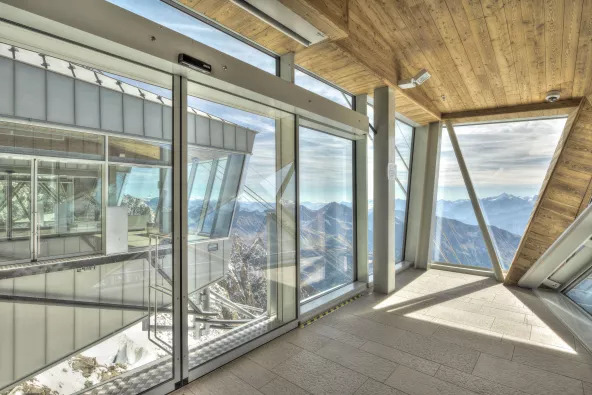
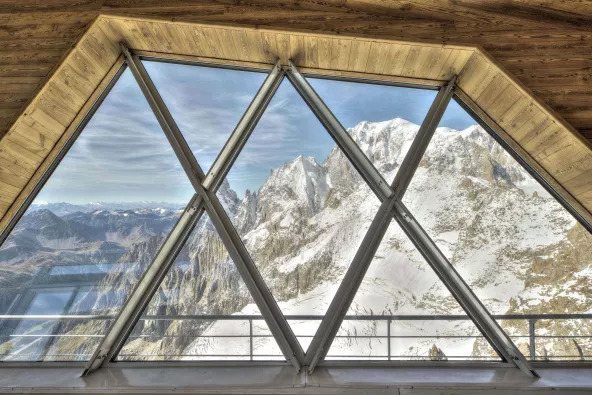
The framing comes from Schüco, with customised FW 50+ SI curtain walls engineered by AZA Aghito Zambonini. These systems are rated for temperatures as low as -35 °C and wind gusts of up to 170 km/h. Some panels measure 4.5 by 0.9 metres, with a thermal transmittance (Ucw) of about 1.0 W/m²K. In the summit bar and first-aid room, the highly insulated panoramic glazing keeps visitors in visual contact with the peaks. 
Building at this altitude made logistics part of the design. The glass could only be lifted to the summit by pulley between May and October, when weather conditions allowed it.
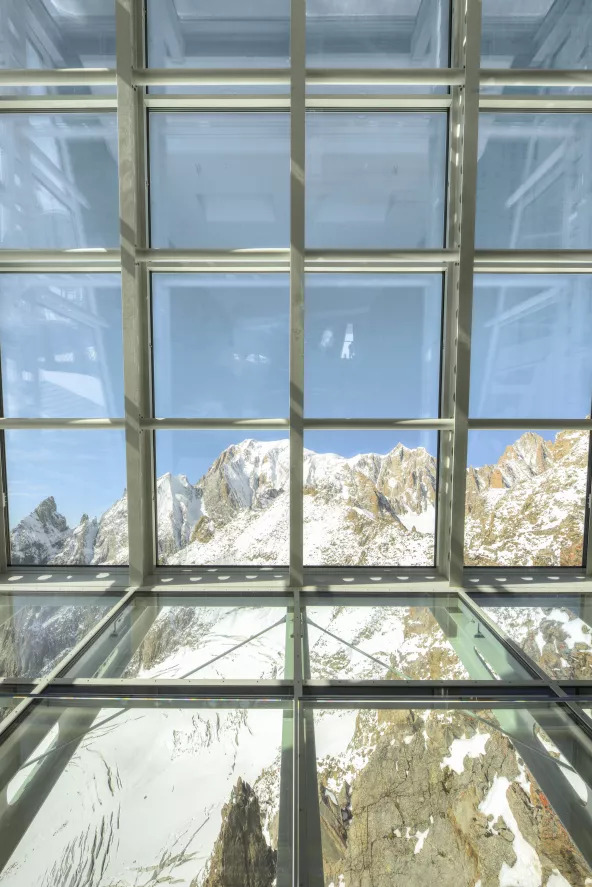
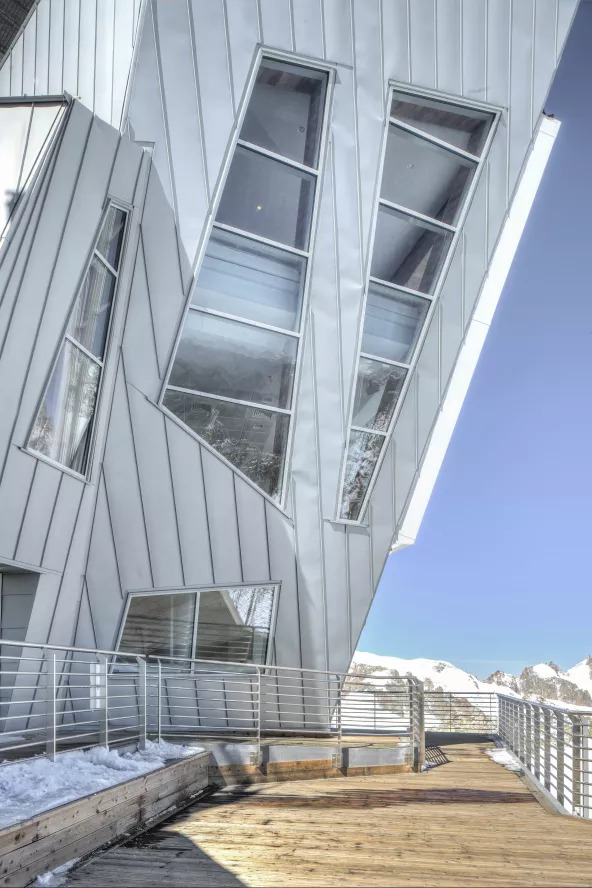
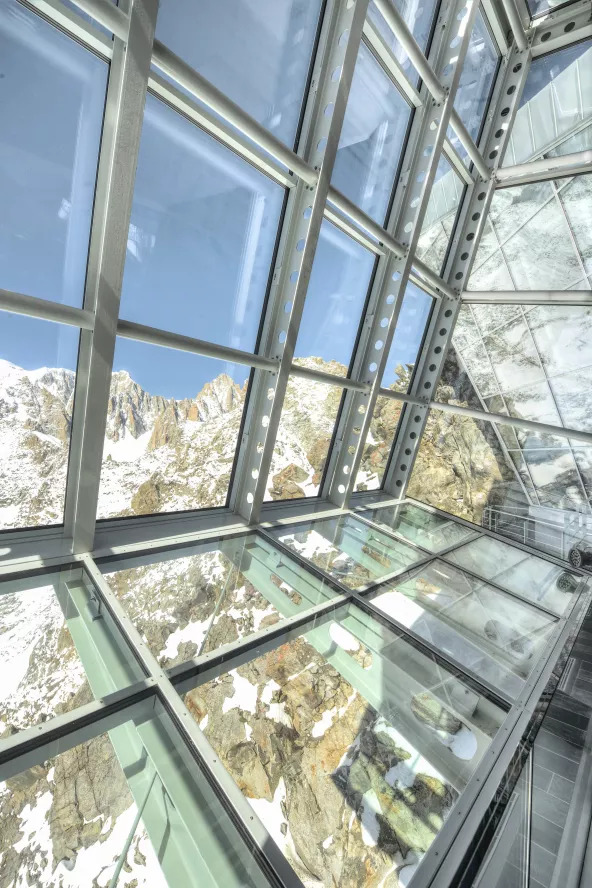
Including associated infrastructure, the project cost around 138 million euros, the most ever spent on a cable car installation at the time it opened. At the top, the 360° Observatory shows what the facades were built for: framing the landscape rather than competing with it.
Source: AGC with additional information added by Glass Balkan