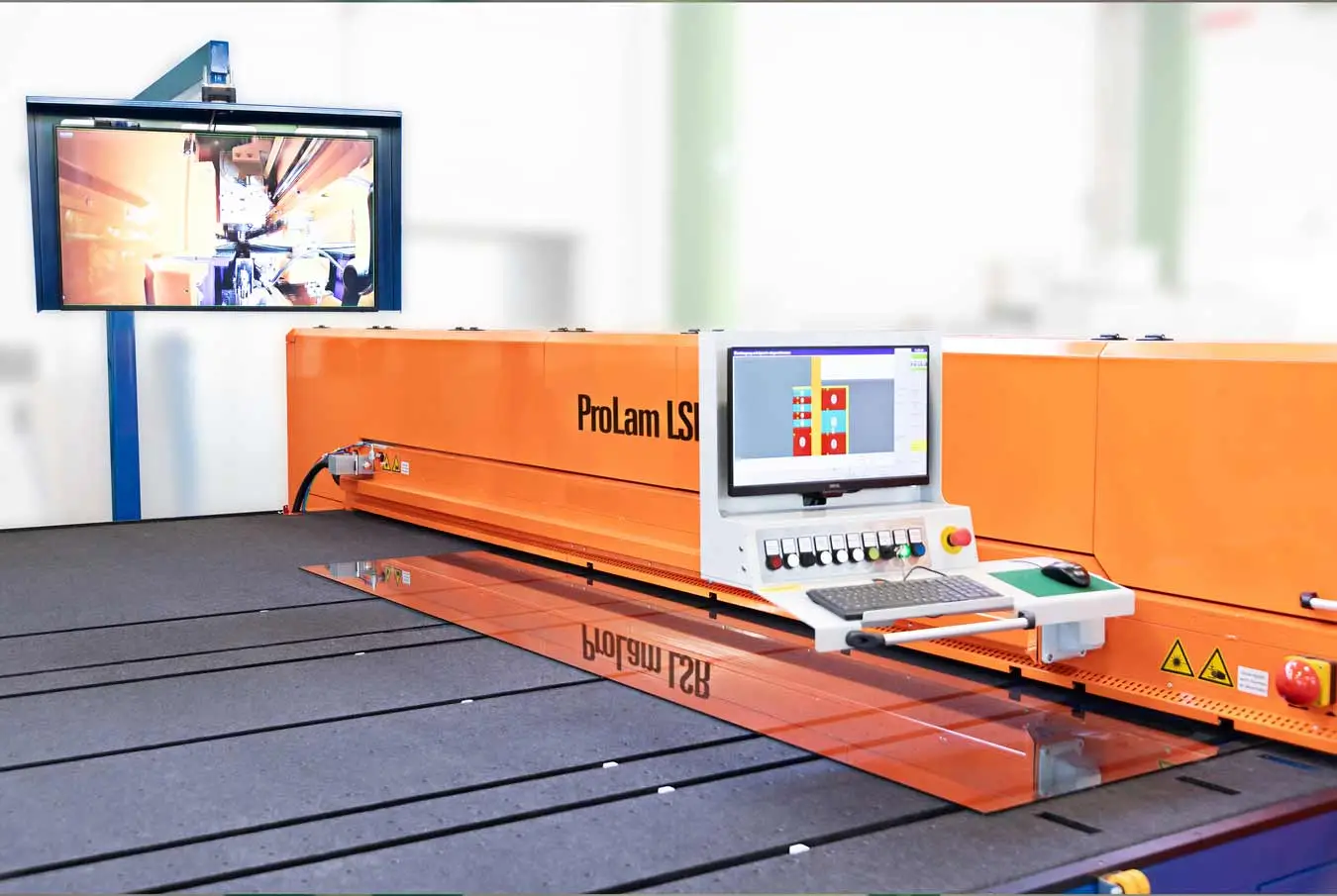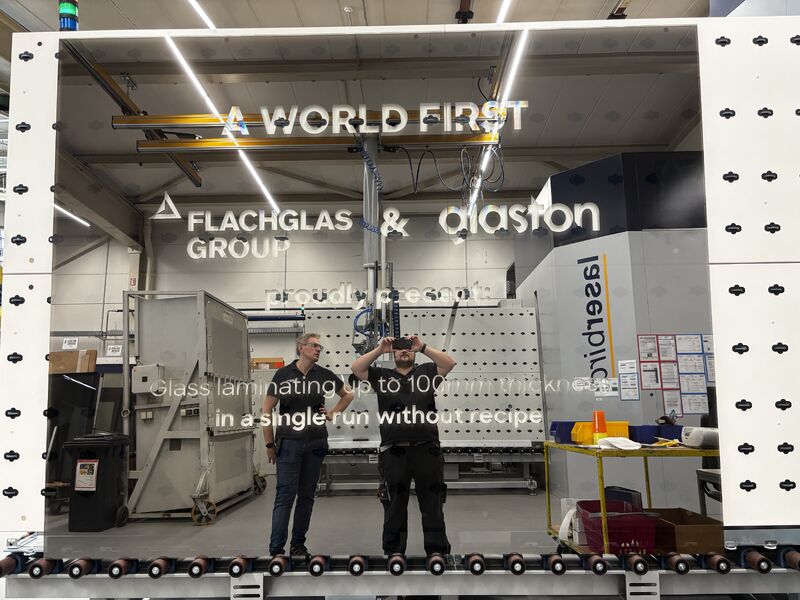
Multilayer glass laminates are increasingly used in safety and security applications, architectural design and structural glazing. However, processing multiple interlayers can create production challenges, particularly when layers adhere prematurely or air becomes trapped near the trailing edge. Glaston Corporation is addressing these issues with its patented ProL Convection Control upgrade, designed to improve temperature consistency during lamination.
The technology maintains the laminate’s trailing edge at the same temperature as its centre, allowing trapped air to escape more effectively. According to Glaston, the upgrade can increase production yield, enable faster processing speeds and eliminate changeover times through automatic operation.
A customer case shared by Glaston illustrates the potential impact. The processor produced approximately 5,280 m² of double SentryGlas® laminates annually, but manufacturing these products required reducing the furnace temperature from 190°C to 165°C for each production run. Output was limited to 12 laminates per hour, with an 80% yield.
Following the implementation of Convection Control, the reported yield increased to 95%, while production capacity rose from 12 to 18 pieces per hour. Changeover times were eliminated, allowing the processor to maintain a more flexible production schedule. 
Glaston estimates the improvement generates €73,800 in annual savings, calculated from direct raw material and manpower costs alone. The figure does not include any additional potential benefits from improved scheduling or delivery performance.
The company is presenting the technology as part of its preparations for glasstec 2026, taking place in Düsseldorf from 20–23 October. Its exhibition will also feature a glass laminate manufactured by Flachglas Group in Wernberg, described by Glaston as the world’s first glass laminating up to 100 mm thick in a single run without a recipe.
Source: Glaston with additional information added by Glass Balkan