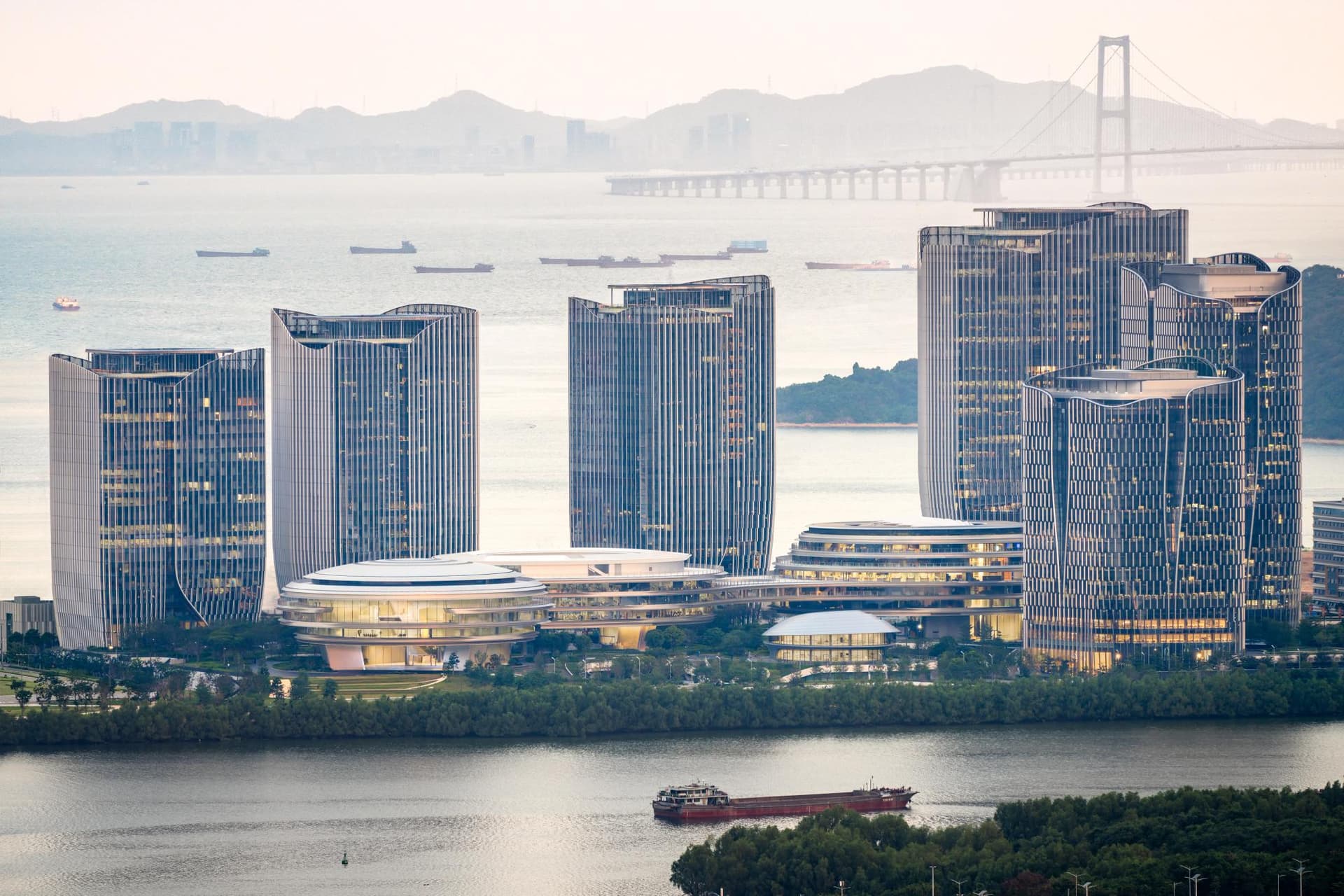
MAD has completed the Tengyun Center, a striking addition to Tencent’s headquarters campus in Shenzhen, China. Positioned along the city’s reclaimed coastline, the development reimagines the relationship between architecture, the public realm, and the surrounding landscape by lifting three interconnected office volumes 8.6 meters (30 feet) above ground level.
While the elevated design creates a publicly accessible coastal park beneath the buildings, the project’s façade plays an equally significant role in defining its architectural identity and environmental performance.
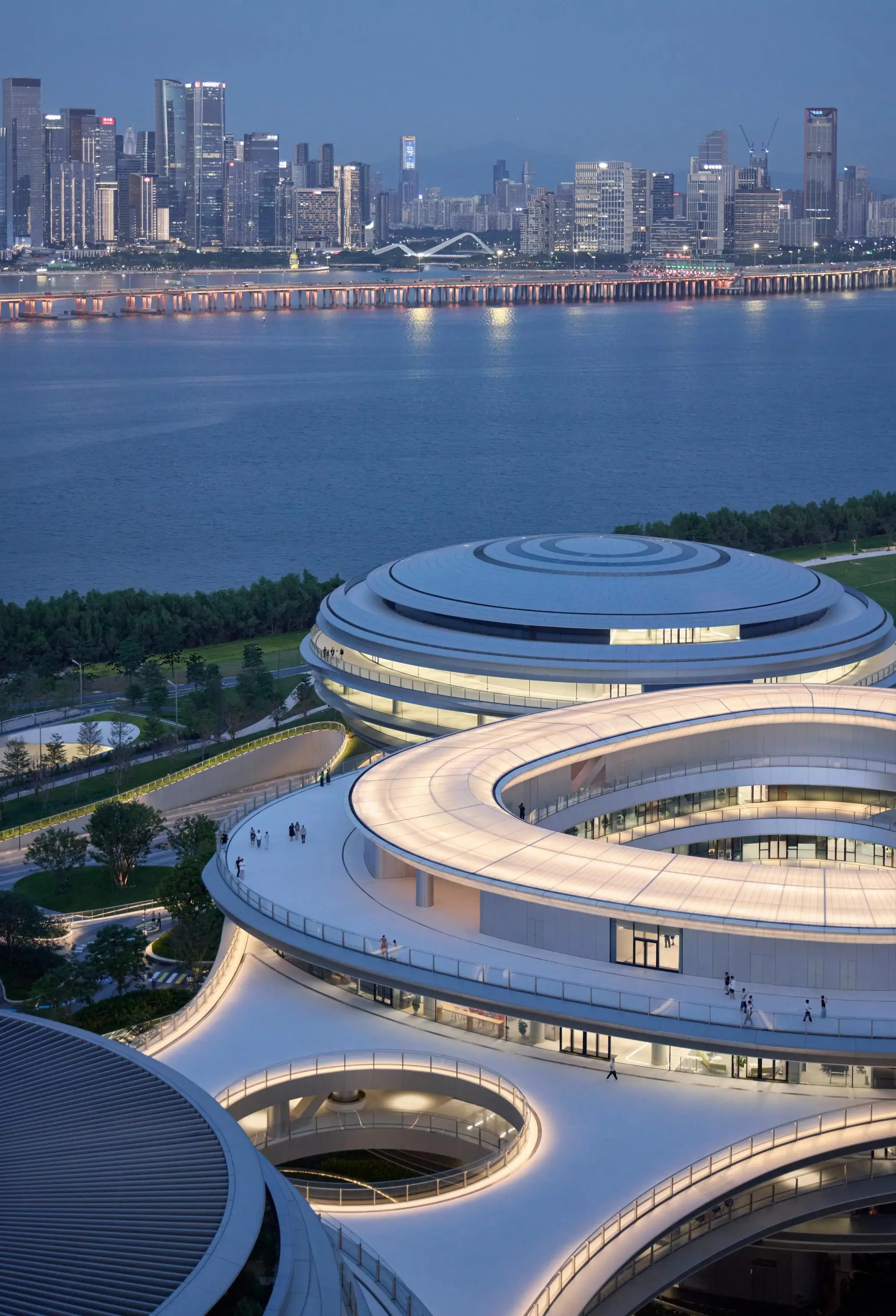
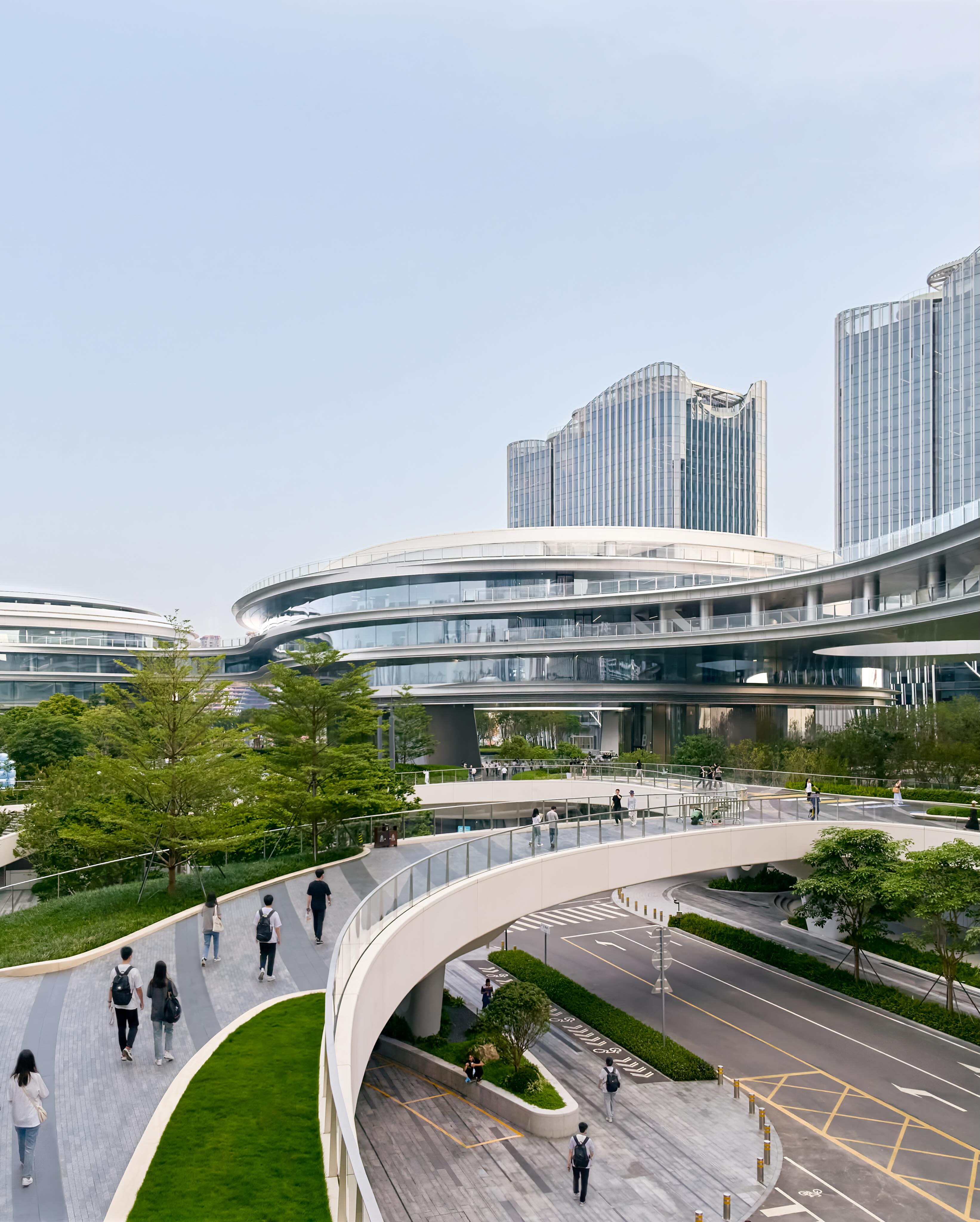
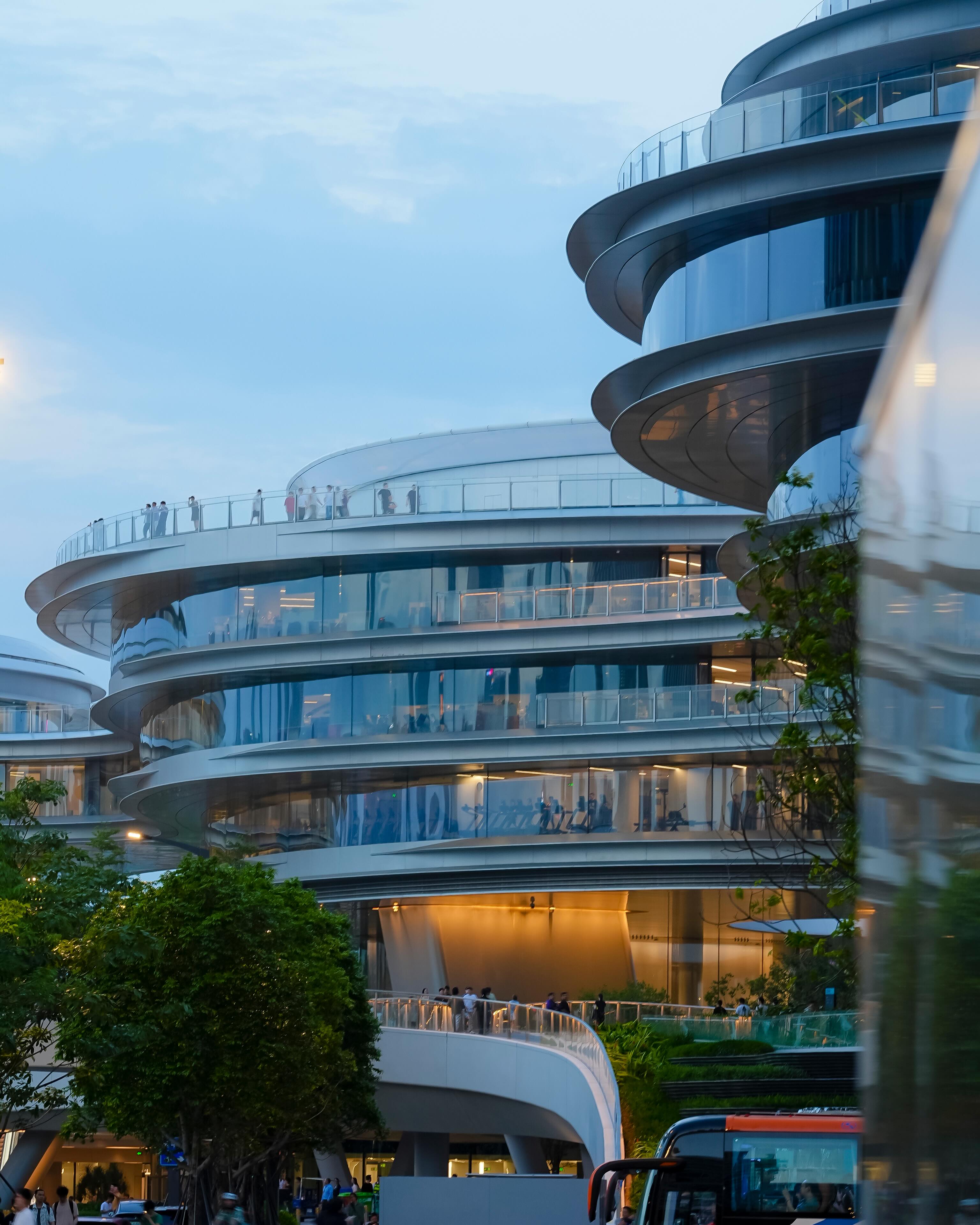
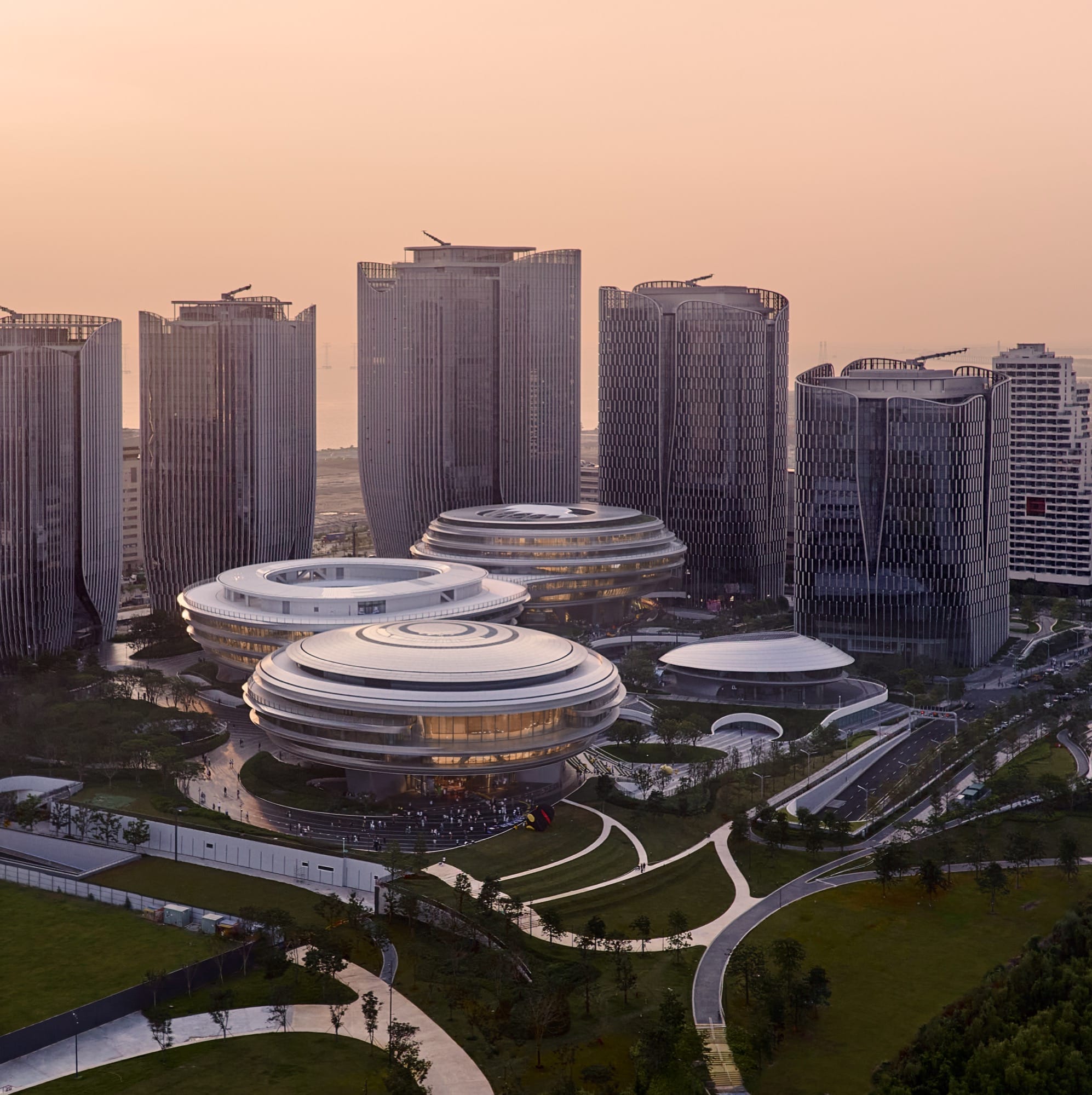
The three cloud-like volumes are enclosed by expansive curved glass façades that reinforce the building’s soft, organic geometry. Large-format glazing minimizes visual interruptions, providing panoramic views of Shenzhen Bay while maximizing daylight penetration throughout the office interiors. Frameless glass sections further enhance transparency, creating a seamless visual connection between indoor workspaces and the surrounding coastal environment.
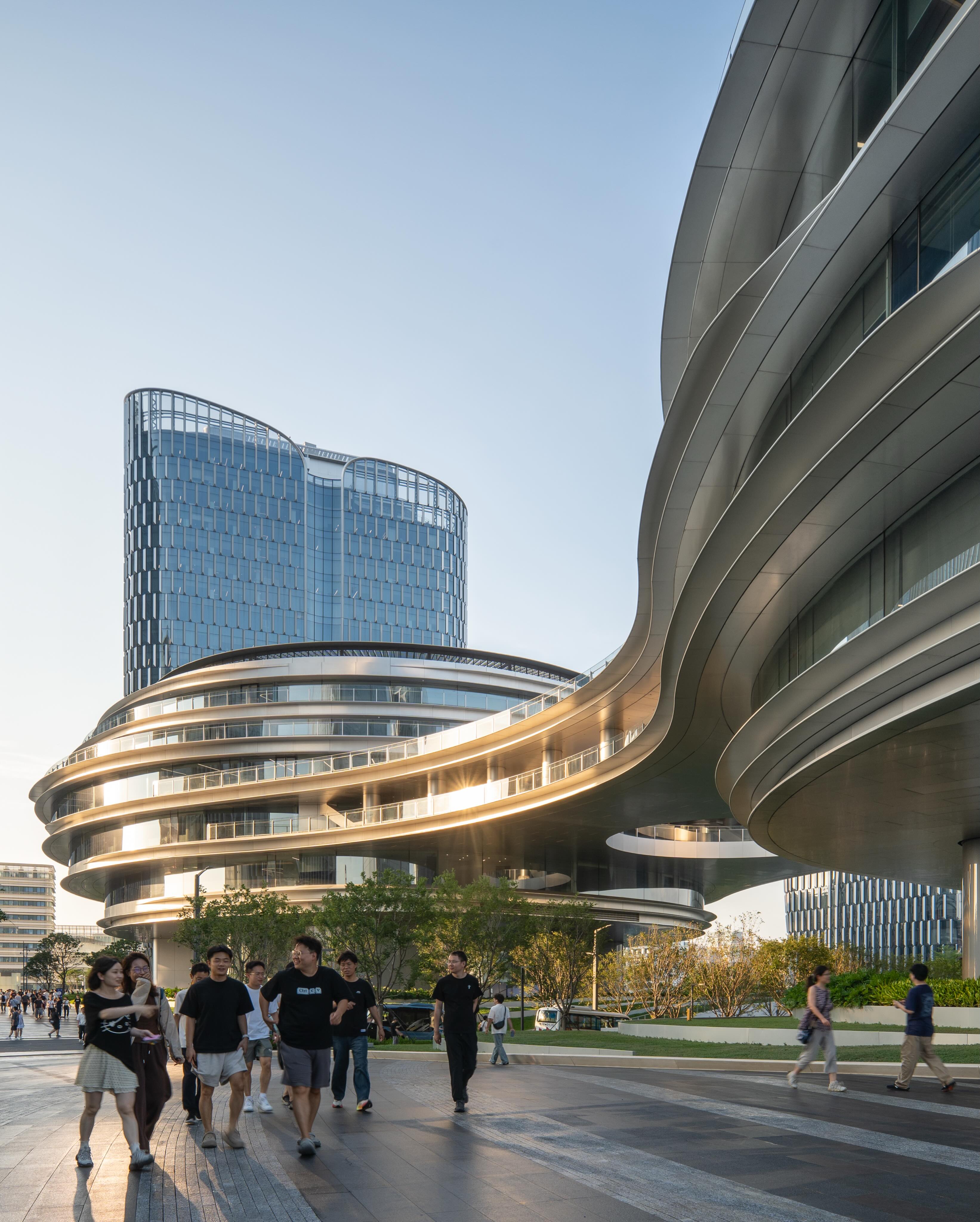
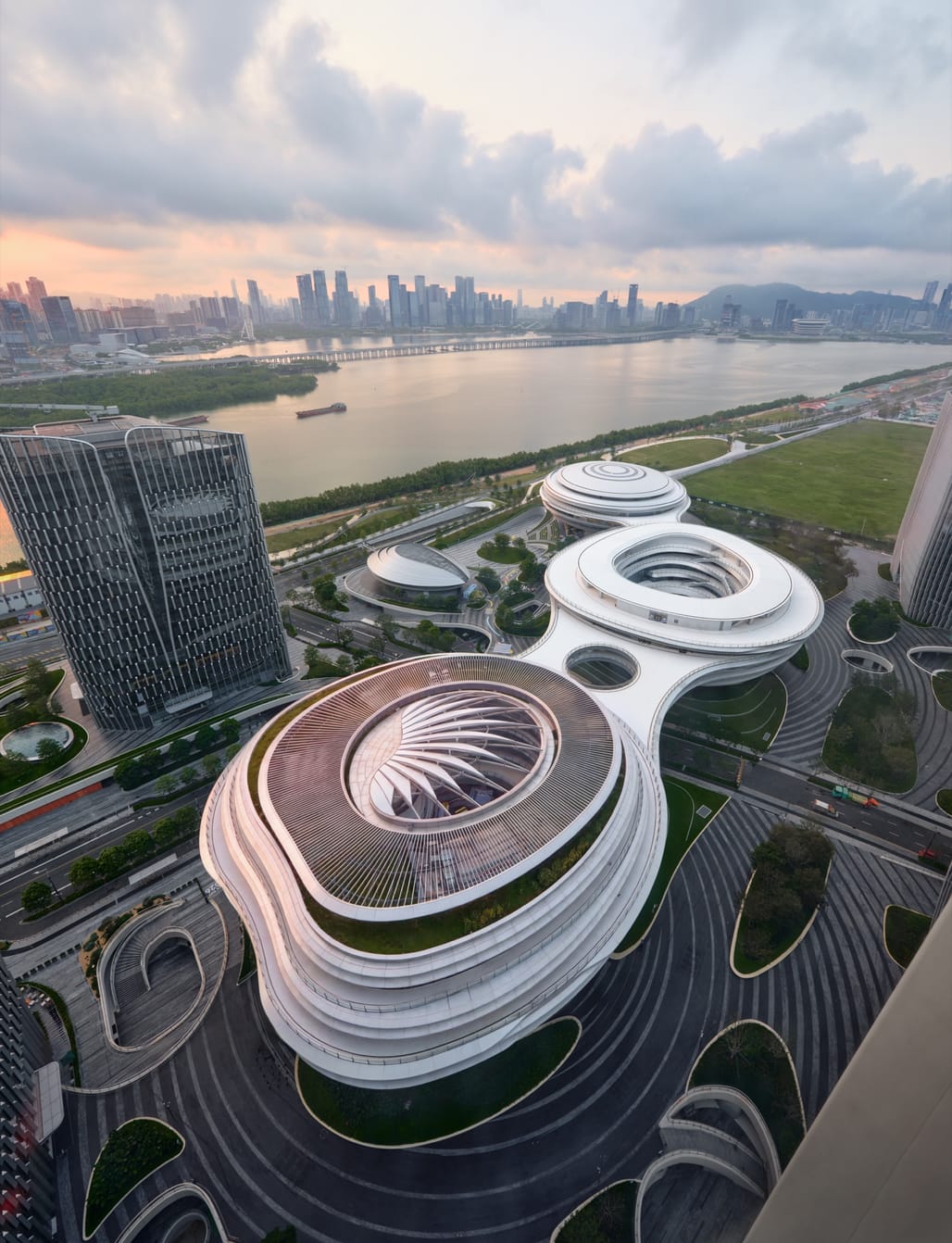
To address the challenges of the subtropical climate, the façade incorporates integrated horizontal shading elements that follow the curved profile of each building. Rather than appearing as separate attachments, the shading devices are carefully embedded within the façade system, reducing direct solar heat gain while preserving unobstructed outward views. This approach improves occupant comfort, lowers cooling demand, and maintains the clean architectural expression envisioned by MAD. 
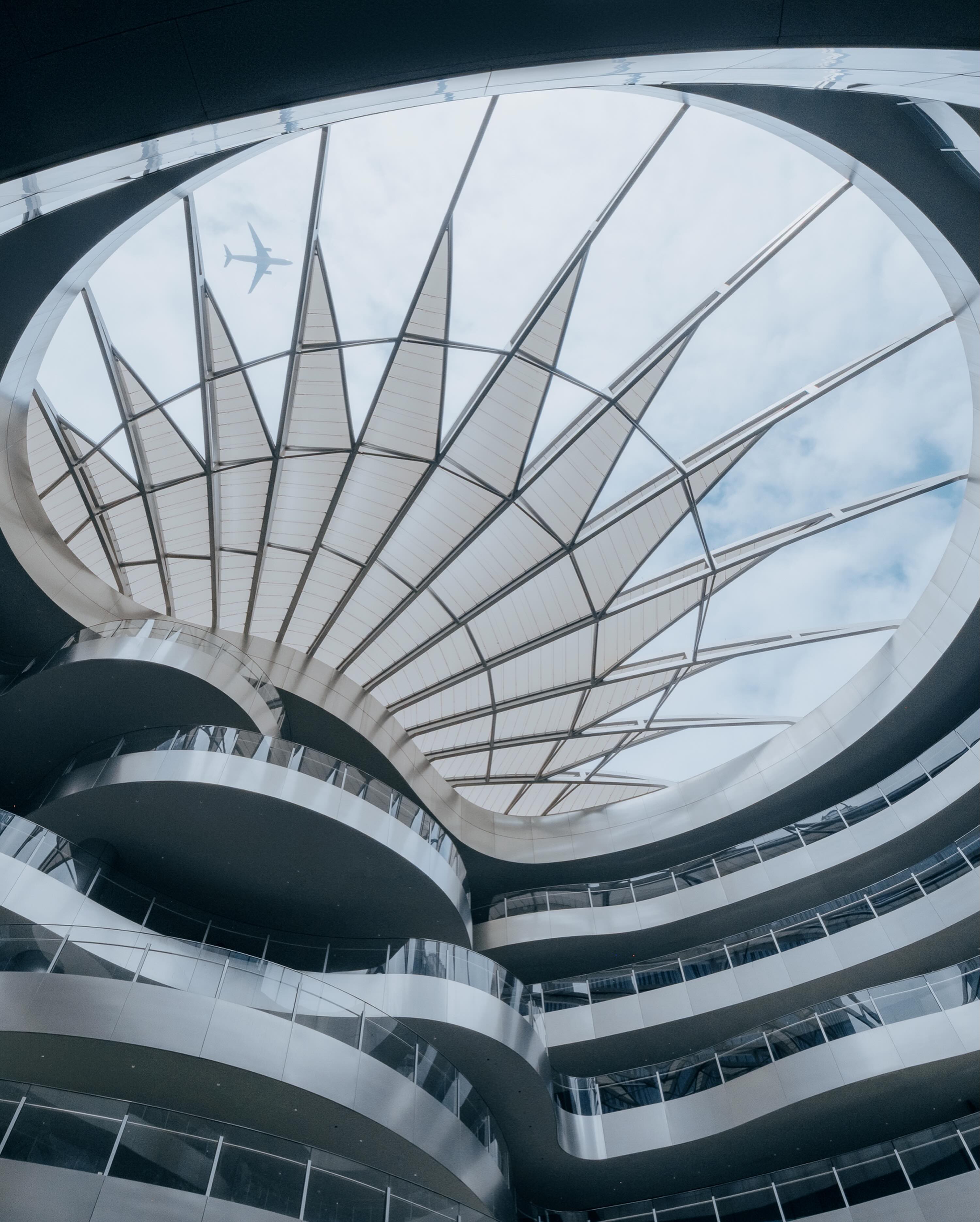
The northern office volume introduces an additional façade feature through a semi-open shell-shaped ETFE skylight that covers the central atrium. The lightweight ETFE structure filters intense coastal sunlight while allowing abundant natural illumination to reach interior circulation spaces, creating bright communal areas without excessive heat buildup.
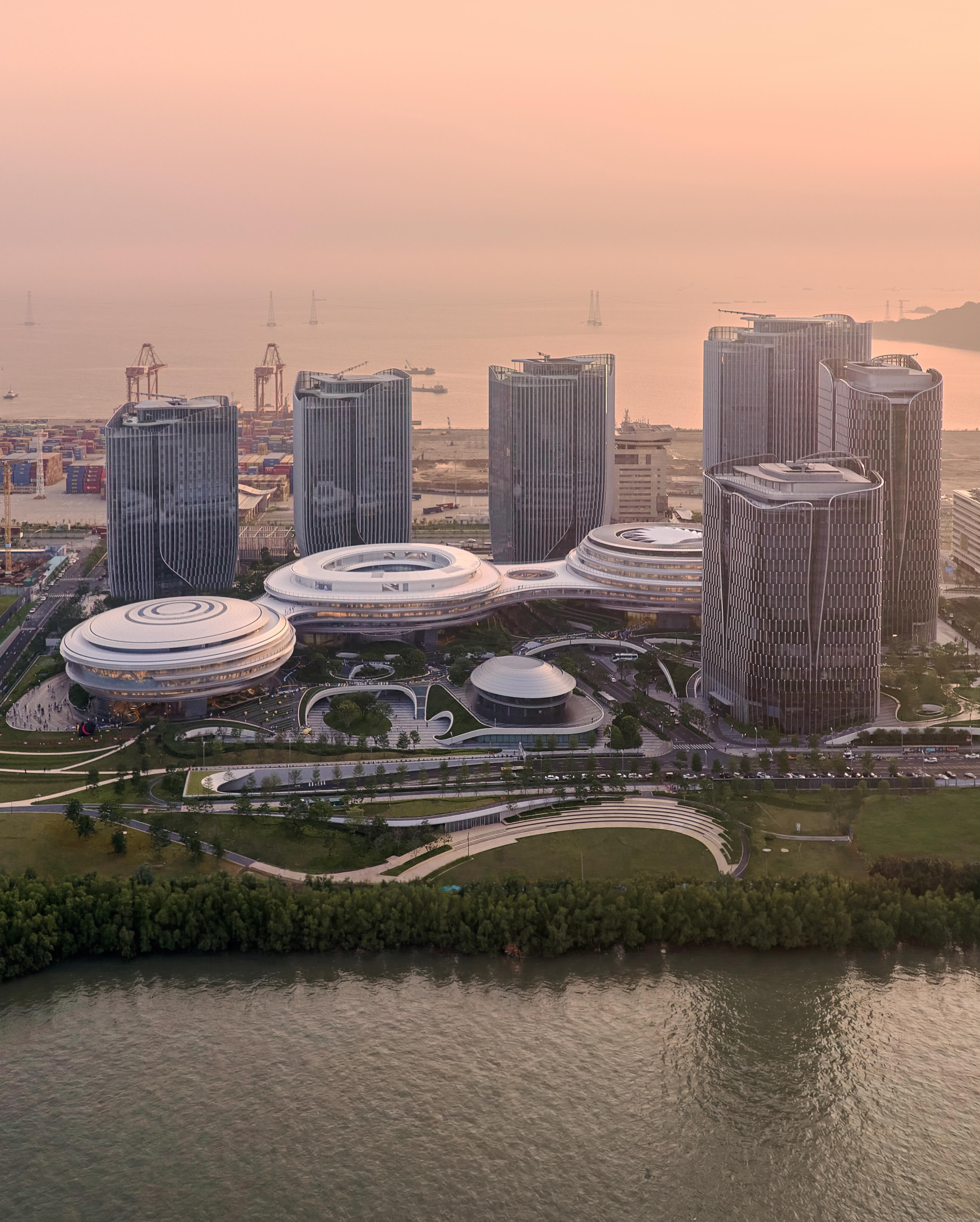
Steel-truss bridges connecting the three elevated buildings are wrapped within the architectural envelope, ensuring visual continuity across the campus while allowing employees to move efficiently between office blocks.
The extensive use of high-performance glazing, integrated solar control, and lightweight ETFE technology demonstrates how façade engineering contributes to both energy efficiency and user experience. Together, these systems support a workplace that remains visually open to its surroundings while responding to the environmental demands of Shenzhen’s waterfront climate.
Source: MAD with additional information added by Glass Balkan