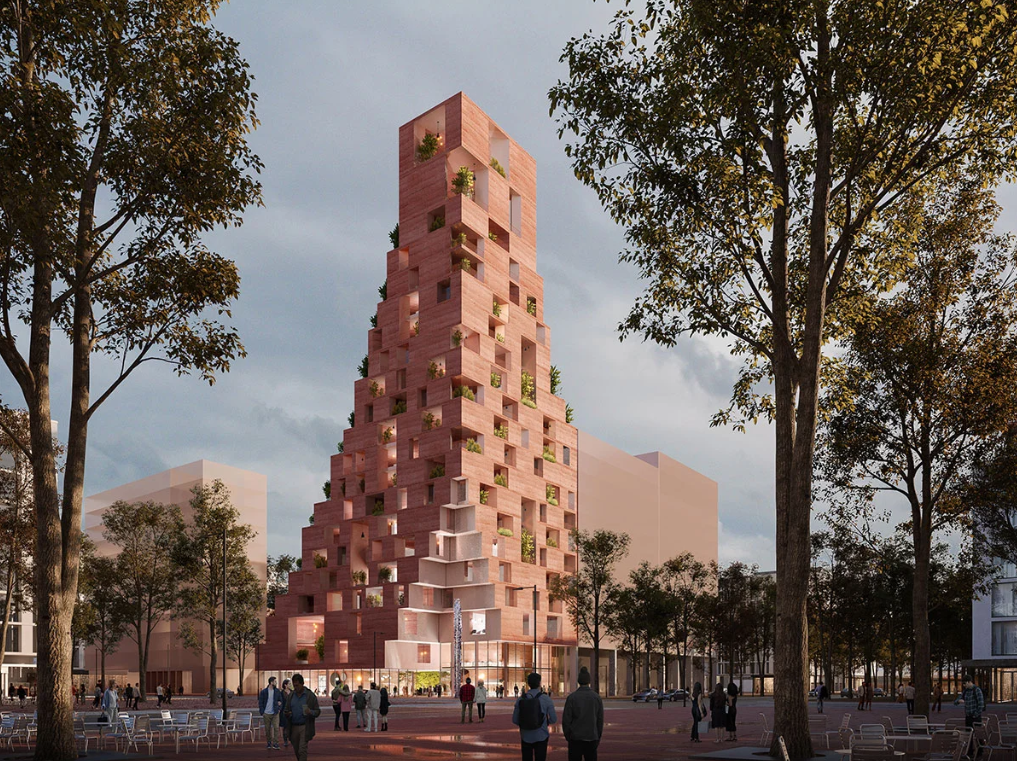
The Tirana Multifunctional Tower by CHYBIK + KRISTOF represents a significant addition to the Albanian capital’s rapidly evolving architectural landscape, positioning itself as both a landmark development and a strategic urban connector within the city’s future Cultural Hub.
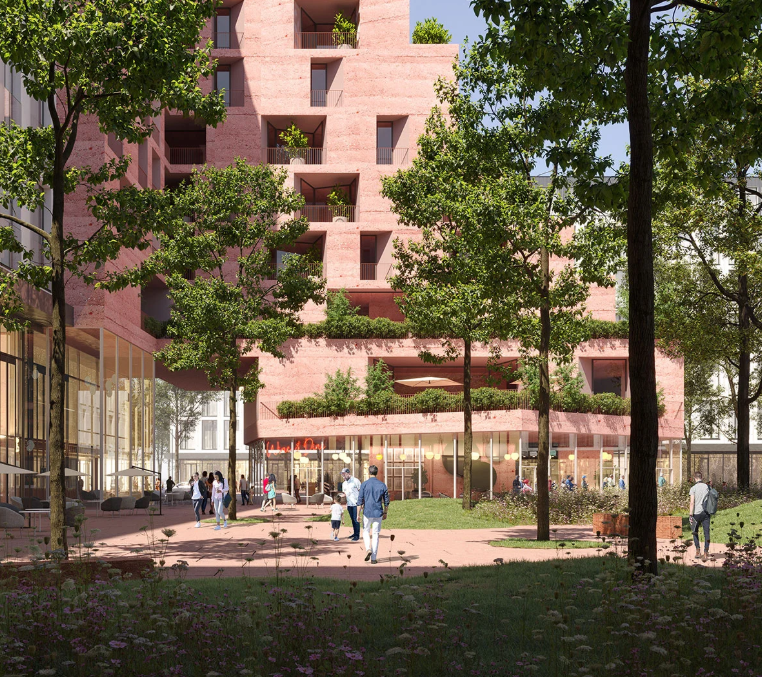
Located at the termination point of Tirana’s New Boulevard, the 83-meter mixed-use tower is among the first realized projects within the city’s broader masterplan aimed at transforming the surrounding district into a major cultural and civic destination. Designed by the Czech architectural practice CHYBIK + KRISTOF, the project introduces a contemporary architectural language defined by its cascading massing, red concrete façade, and integration of environmentally responsive residential design principles.
The development combines residential, office, and retail functions within a unified vertical structure, with residential programs accounting for approximately 80 percent of the building’s total area. The lower three levels accommodate commercial and office spaces, reinforcing the project’s role as an active urban interface while contributing to the vitality of the surrounding public realm.
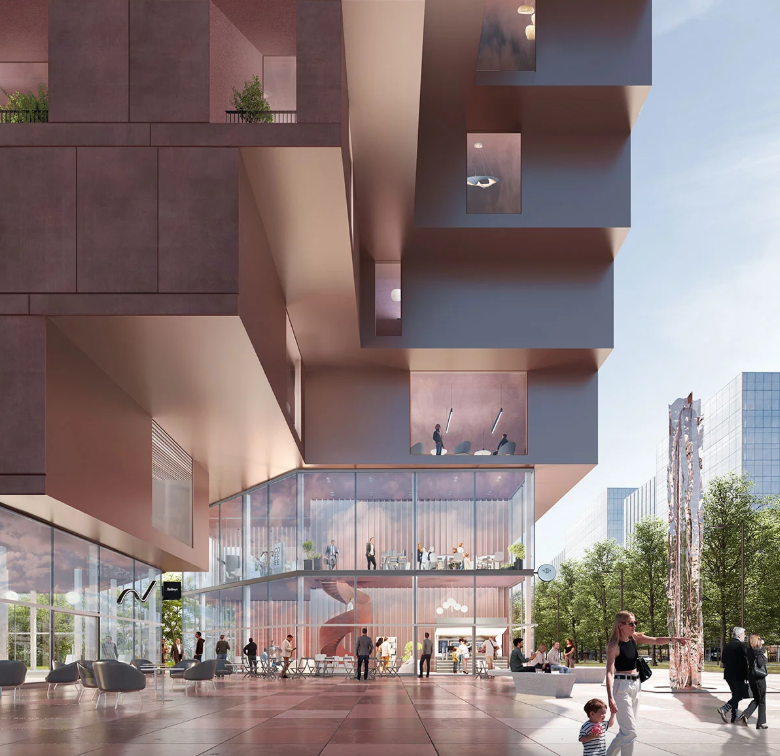
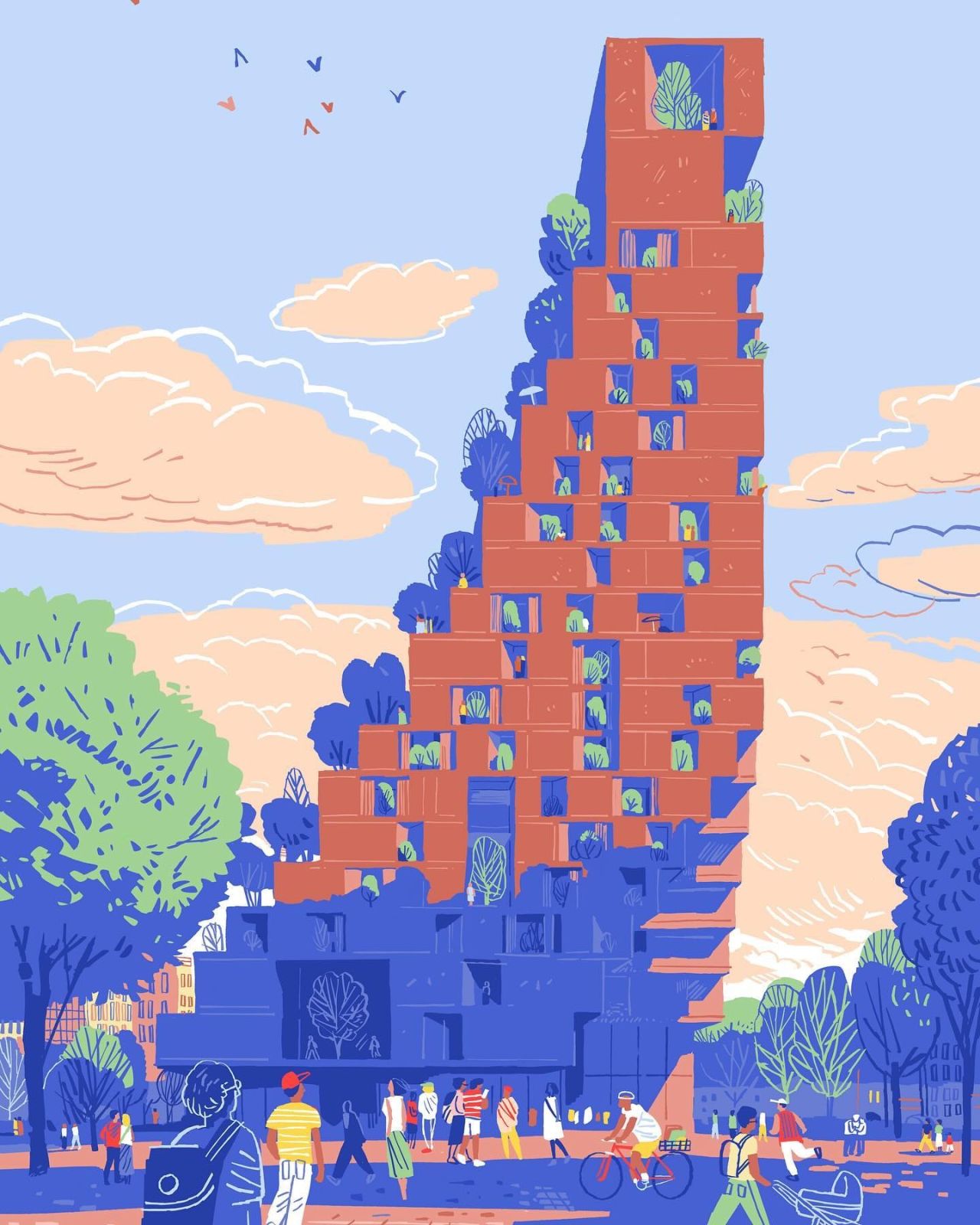
Central to the architectural concept is the tower’s cascading geometry, which establishes a distinctive silhouette within Tirana’s expanding skyline while simultaneously generating a series of accessible green terraces throughout the structure. These landscaped roof terraces extend the surrounding urban greenery vertically, contributing to passive environmental performance through rainwater retention, mitigation of the urban heat island effect, and integrated vegetation systems. 
The project demonstrates a climate-responsive approach tailored specifically to Tirana’s subtropical Mediterranean conditions. Passive shaded loggias integrated into each residential unit function as thermal buffers, reducing solar gain while enhancing natural ventilation and daylight optimization. The use of recessed outdoor spaces and aluminum-framed façade systems supports energy efficiency while framing panoramic views toward the Skanderbeg mountain range.
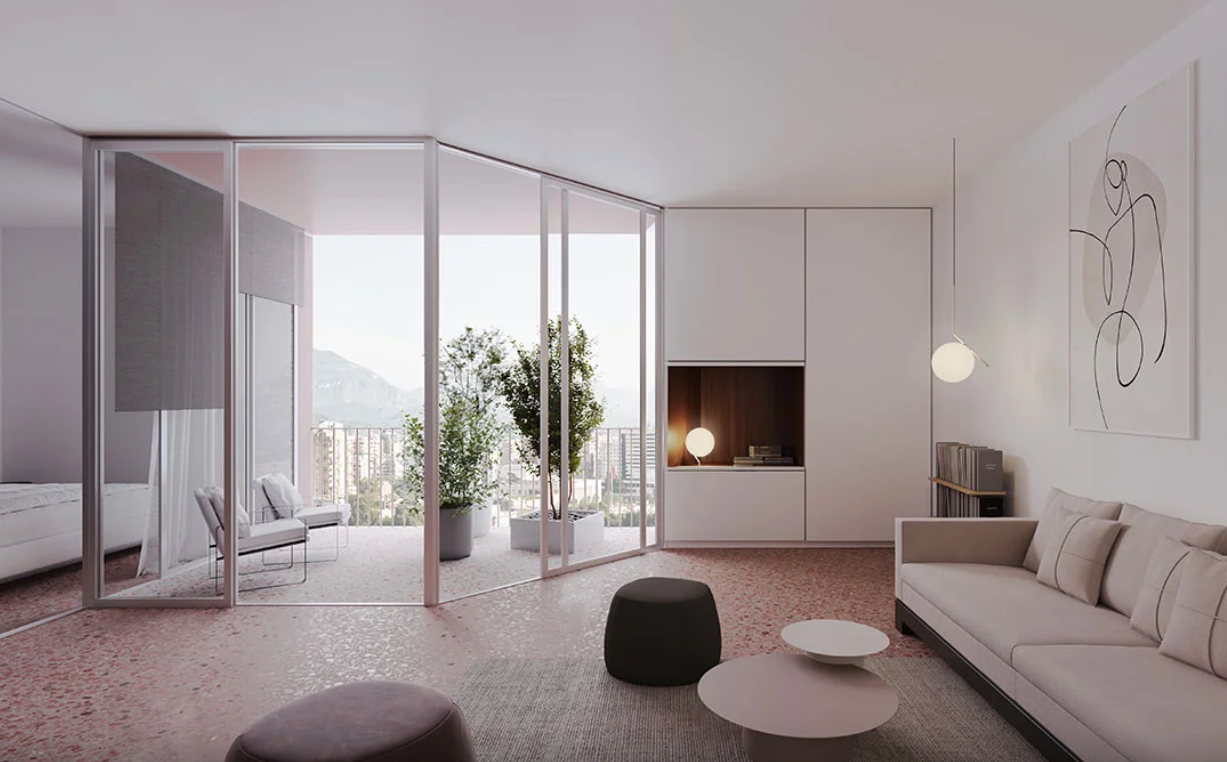
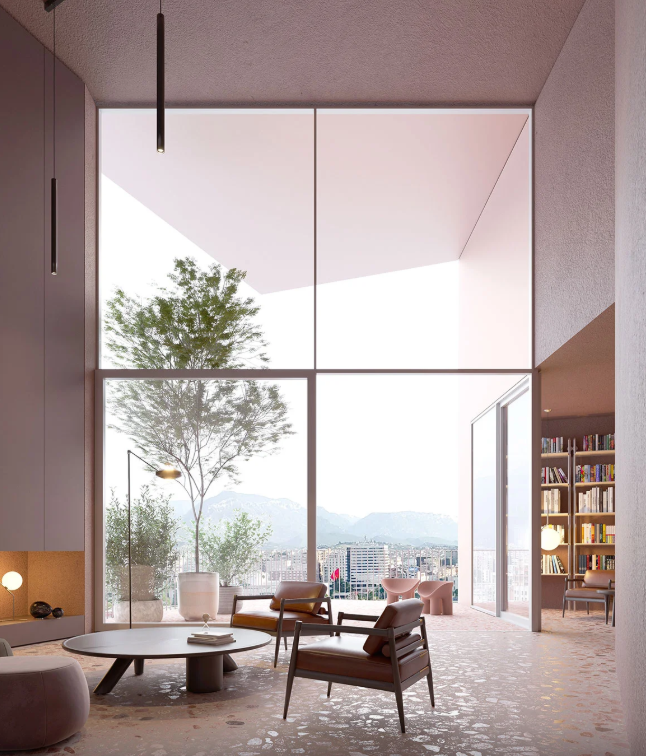
Beyond its architectural identity, the tower carries broader urban significance as a catalyst within the city’s emerging Cultural Hub. Strategically positioned between the Boulevard and the future River Park, the development is conceived as a connective element linking forthcoming cultural institutions, including the opera house, art gallery, and cultural center. Its placement reinforces pedestrian continuity and contributes to the creation of an integrated public environment within one of Tirana’s most ambitious redevelopment zones.
The project also marks an important milestone in Albania’s architectural procurement process. According to Frida Pashako, General Director of Urban Planning and Development at the Municipality of Tirana, the tower resulted from the city’s first international competition for privately owned land conducted in collaboration with municipal authorities and international architectural offices. The initiative establishes a new framework for public-private collaboration in shaping the future urban identity of Tirana.
The architectural philosophy underpinning the project reflects the broader design methodology of CHYBIK + KRISTOF, a practice internationally recognized for adaptive reuse strategies, socially engaged urban interventions, and contextual contemporary architecture. Led by founding partner Ondrej Chybik, the studio continues to explore the intersection between civic responsibility, sustainability, and architectural innovation across Europe.
Further insight into the studio’s approach will be presented during the upcoming “Rethinking Architecture” lecture featuring Ondrej Chybik. The online session will examine the practice’s design philosophy, urban strategies, and key international projects, including the Tirana Multifunctional Tower.
The lecture will take place on May 29, 2026, at 13:00 GMT via Zoom and will include a 45-minute presentation followed by a live Q&A discussion. Registration for free access is available through PAACADEMY Registration Page, with recordings accessible to PAACADEMY members.
Source: PAACADEMY with additional information added by Glass Balkan