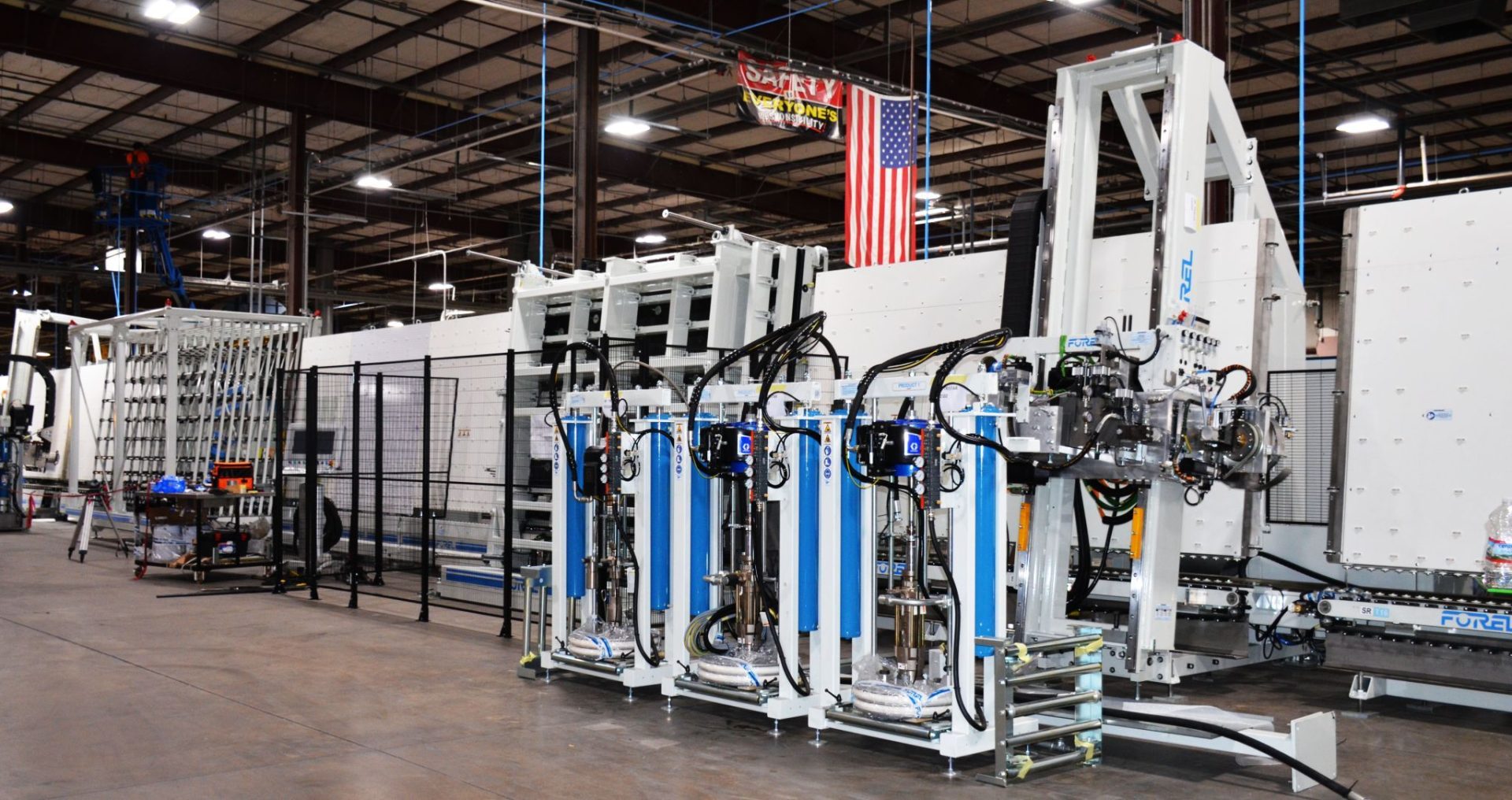
A decade ago, glass operators spent their days physically adjusting wheels, lifting and repositioning lites, and fine-tuning machines by feel and experience. Today, operators at companies like Tristar Glass Inc. in Catoosa, Oklahoma, and Salem Fabrication Technologies Group in North Carolina oversee multiple robotic cells, monitor production dashboards, and respond to system alerts. Automation and artificial intelligence (AI) have shifted glass fabrication from physically repetitive work to technical oversight, workflow coordination, and data-driven decision-making.
Automation in Insulating Glass Lines
At Tristar Glass, the adoption of thermoplastic spacers has been a major driver of labor transformation. Processes that were once fully manual, such as spacer bending, polyisobutylene application, and spacer placement, are now largely automated. Jon Kelley, plant manager, explains that operators have transitioned into roles focused on inspection, troubleshooting, and maintaining consistency. Similar shifts are seen in lamination, polishing, and seaming/batching, where workers now monitor automated equipment and respond to process issues instead of performing repetitive manual tasks.
Robotic Edging and Pre-Processing 
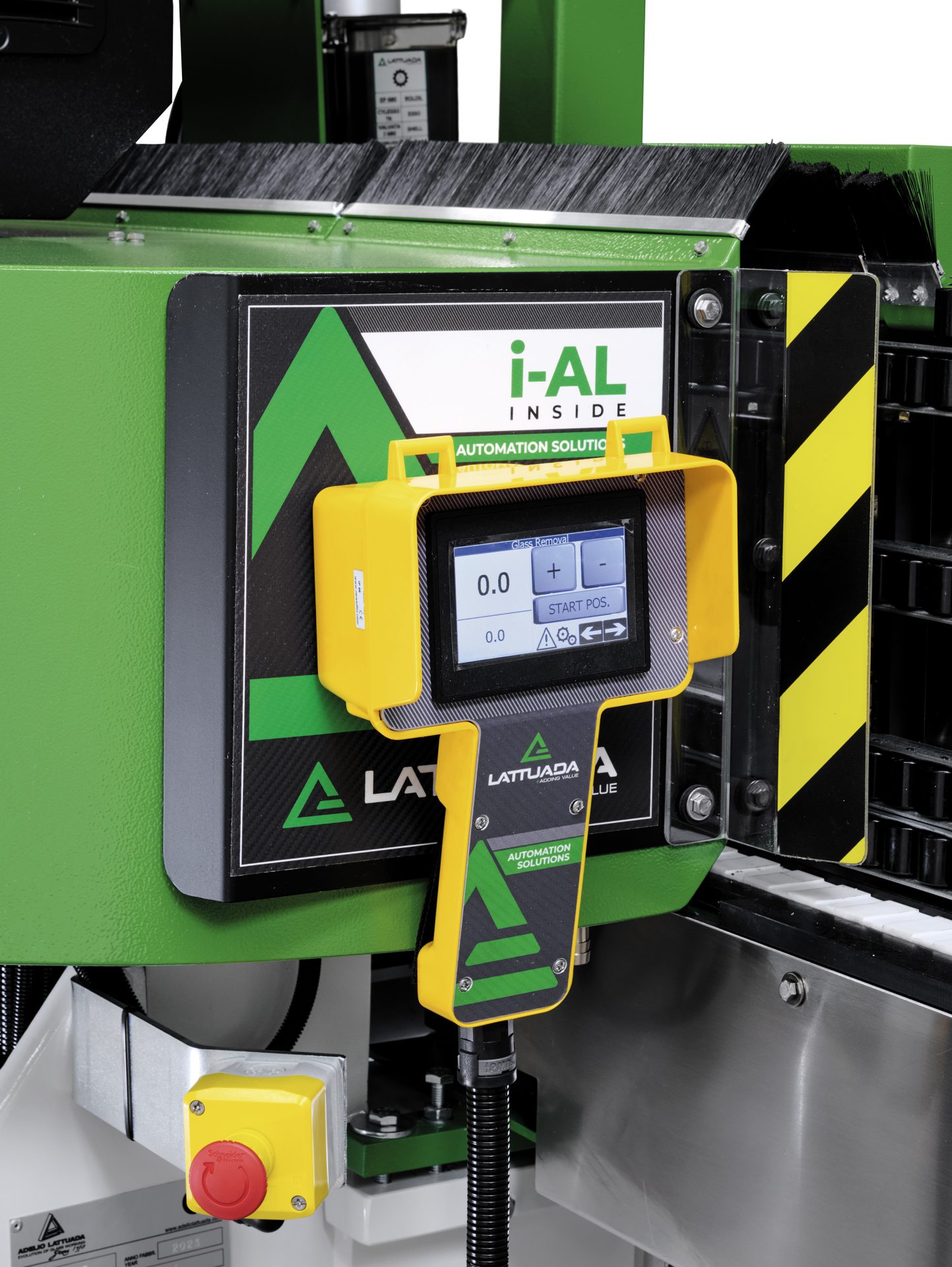
Edging and pre-processing are at the forefront of change. Nicola Lattuada, president of Lattuada North America Inc., notes that a decade ago, straight-line edging machines required constant manual adjustments and operator know-how.
Today, robotic cells integrated with straight-line edging machines and vertical washing systems allow operators to oversee multiple machines simultaneously. Advanced systems such as A-WR automatic wheel wear recovery and i-AL automatic adjustment embed traditional operator expertise directly into machinery, reducing variability, improving safety, and ensuring consistent quality.
Workforce Impact and Industry Trends
While high-profile tech layoffs often dominate headlines, automation’s broader impact is subtler and transformative. MIT’s Project Iceberg, developed with Oak Ridge National Laboratory, estimates AI could affect 12% of U.S. jobs, while the World Economic Forum Future of Jobs Survey 2025 predicts that 39% of skill sets will be transformed or become outdated by 2030. In the glass machinery sector, demand for integrated robotic cells, complete with glass tracking, digital twin simulations, and remote diagnostics, continues to grow. Companies are motivated by productivity, scalability, energy efficiency, and reliability rather than labor reduction alone.
Automation in glass fabrication is redefining roles rather than eliminating them. Operators are now supervisors and technical coordinators, combining human expertise with AI and robotics to enhance production quality, safety, and efficiency. The industry demonstrates that technology, when applied strategically, can elevate human roles while stabilizing and scaling operations in a competitive global market.
Source: USGlassMag with additional information added by Glass Balkan