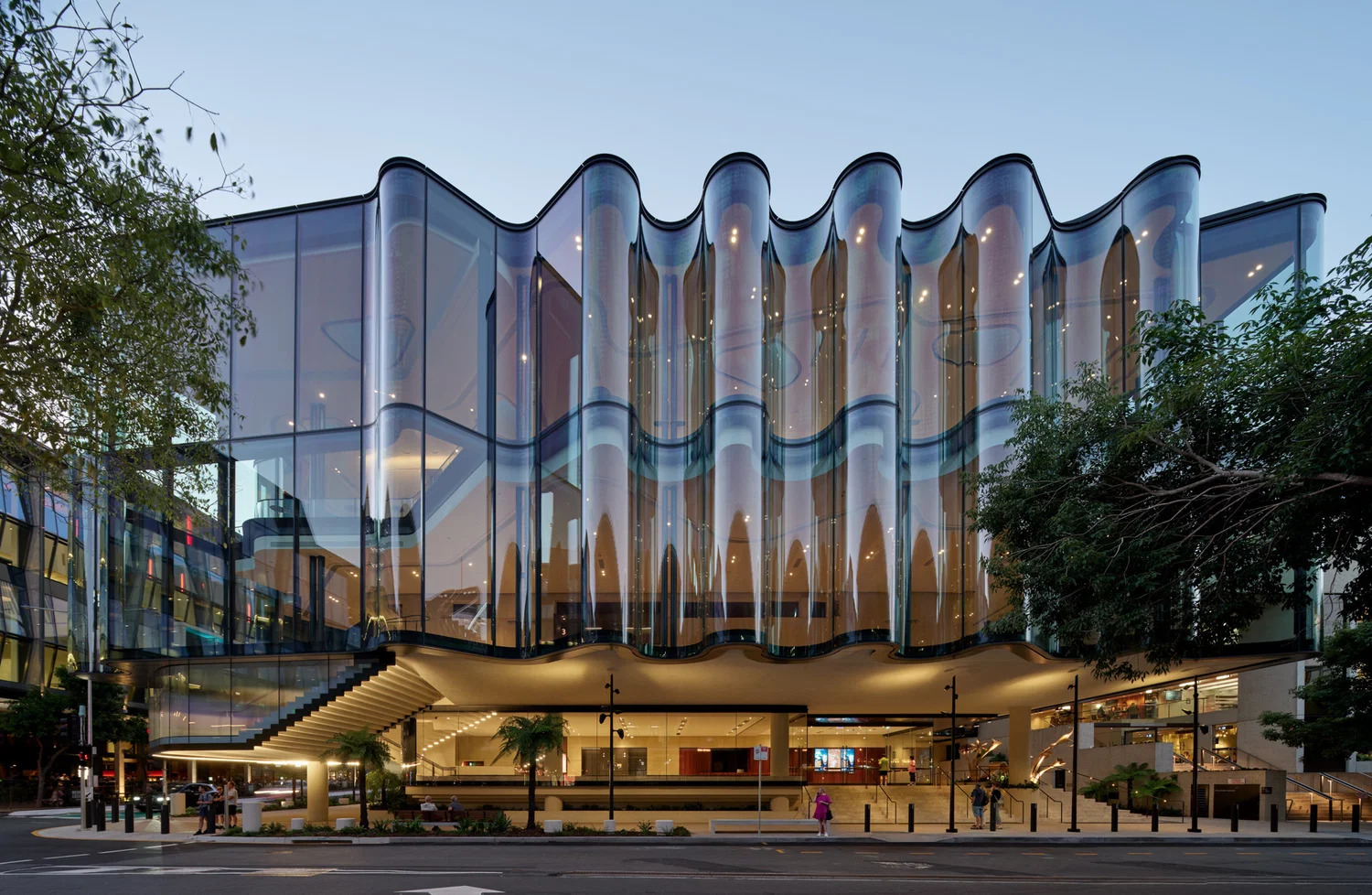
Blight Rayner and Snøhetta’s Glasshouse Theatre at QPAC in South Bank, Meanjin / Brisbane, stands as a striking testament to modern architectural innovation and cultural ambition. The 1,500-seat venue makes QPAC the largest performing arts centre under one roof in Australia, capable of hosting world-class ballet, symphony, opera, theatre, dance, and musical productions. Its rippling glass façade and cantilevered design reframe how a major cultural building interacts with the city and its community.
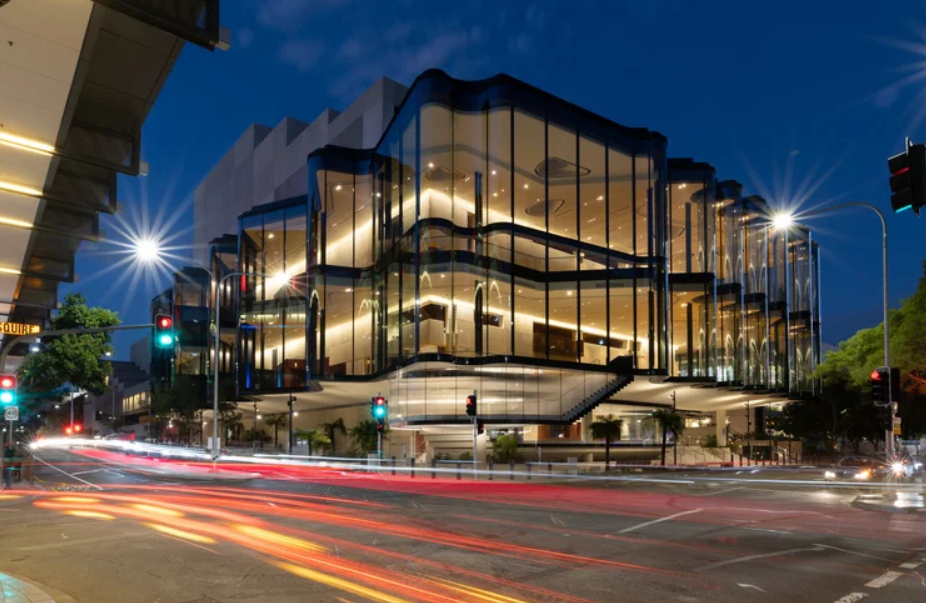
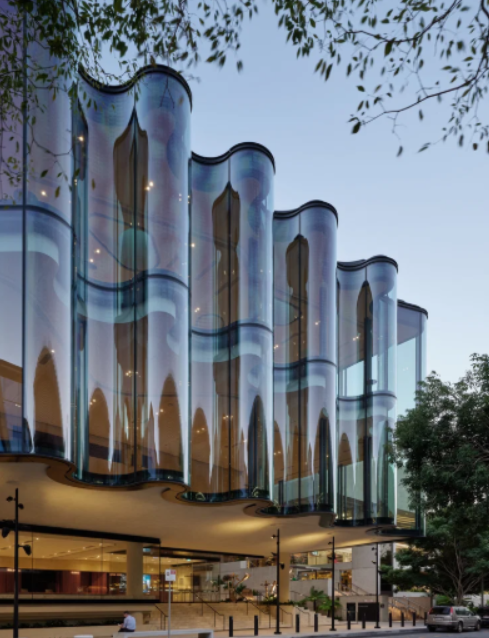
The theatre’s design is rooted in the local environment and First Nations narratives. The undulating glass façade was inspired by a prose-poem by Aboriginal Elder Lilla Watson, evoking the ripples of the Brisbane River and fish swimming beneath its surface. The building cantilevers six metres over its street frontages to fit the site while respecting the heritage of QPAC and the Queensland Cultural Precinct architect Robin Gibson AO.
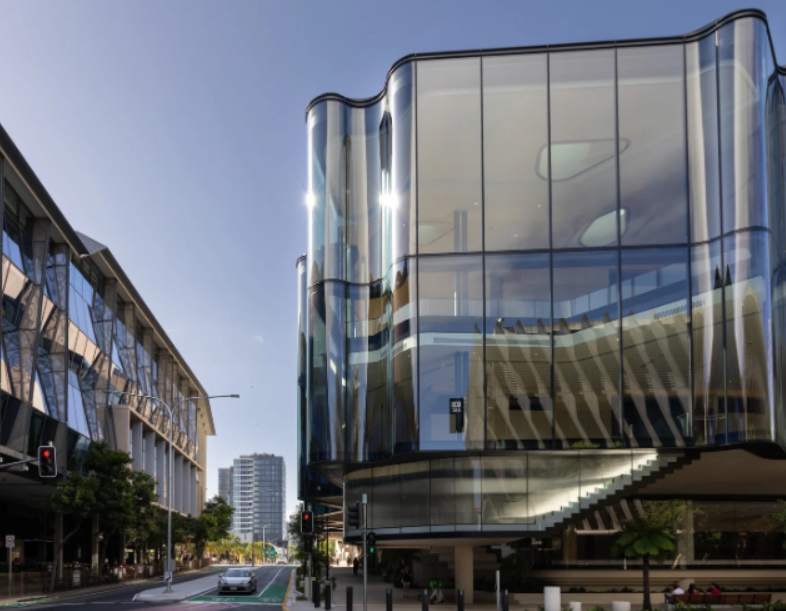
The glass edges provide transparency, minimizing visual bulk, and allow visitors in the foyers to be partially visible from the street, creating a “public theatre” effect that enhances engagement between the city and the performing arts.
Inside, the theatre contrasts light, airy foyers with a cocoon-like auditorium. The foyers feature highly engineered four-layer glass walls with an intervening air gap. Sun-exposed facets are embedded with black ceramic inlays acting as integrated louvres to block solar heat, minimize glare, and optimize energy performance. The auditorium walls are clad in dark grey ironbark, with rainforest green carpeting complementing the Queensland-inspired timber ribbons. These ribbons, reminiscent of stringed instruments, combine technical precision with atmospheric warmth. 
The auditorium was conceived as a highly adaptable performance environment. The front edges of the single balcony were pulled closer to the stage, and additional balcony boxes were added to improve intimacy and visual balance. The furthest seat is only 28 metres from the stage, comparable to the length of a half-Olympic pool, with wrap-around balconies further enhancing audience connection. Continental seating is used strategically, with rear rows divided into aisles at approximately 25%, 50%, and 25% to balance accessibility and audience cohesion.
The theatre also embeds First Nations cultural narratives. Seven skylights in the roof represent the seven watersheds of Queensland, as researched with Elder Aunty Colleen Wall. Complementing this, Floriate, a sculpture by Torres Strait Islander artist Brian Robinson, showcases seven emblematic flowering plants found across the state.
State-of-the-art technical features further elevate the venue. The fully automated orchestra pit has three independently adjustable floor sections and four pit configurations, accommodating orchestras of varying sizes. The 24-metre-high fly tower supports multiple fly lines, enabling scenery, props, and performers to extend far over the audience. Together with acoustically tuned walls, flexible staging, and precision-engineered mechanical systems, the theatre functions as a finely tuned instrument suitable for a wide spectrum of art forms.
The Glasshouse Theatre strengthens Queensland’s cultural tourism, with QPAC projecting an additional 300,000 visitors annually, bringing total visitation to 1.6 million. It enables the state to attract world-class artists and Australian-exclusive performances, positioning the Queensland Cultural Precinct as one of the nation’s busiest creative hubs.
This landmark is the result of exceptional collaboration between Blight Rayner, Snøhetta, and key consultants including Schuler Shook and Acoustic Studios. By marrying technical innovation, cultural storytelling, and civic engagement, the Glasshouse Theatre has become both a visual icon and a symbol of Queensland’s artistic ambition.
Source: Snohetta with additional information added by Glass Balkan