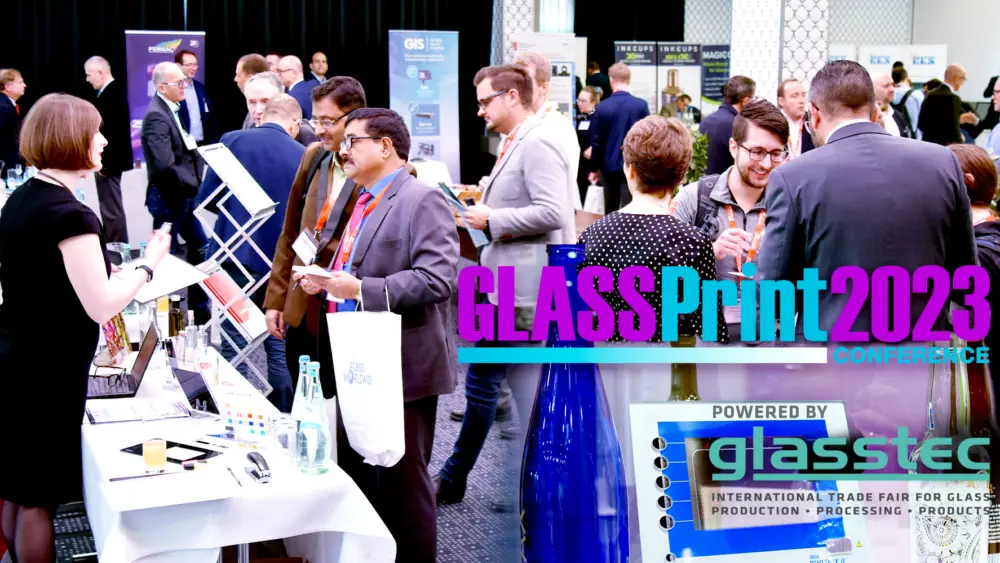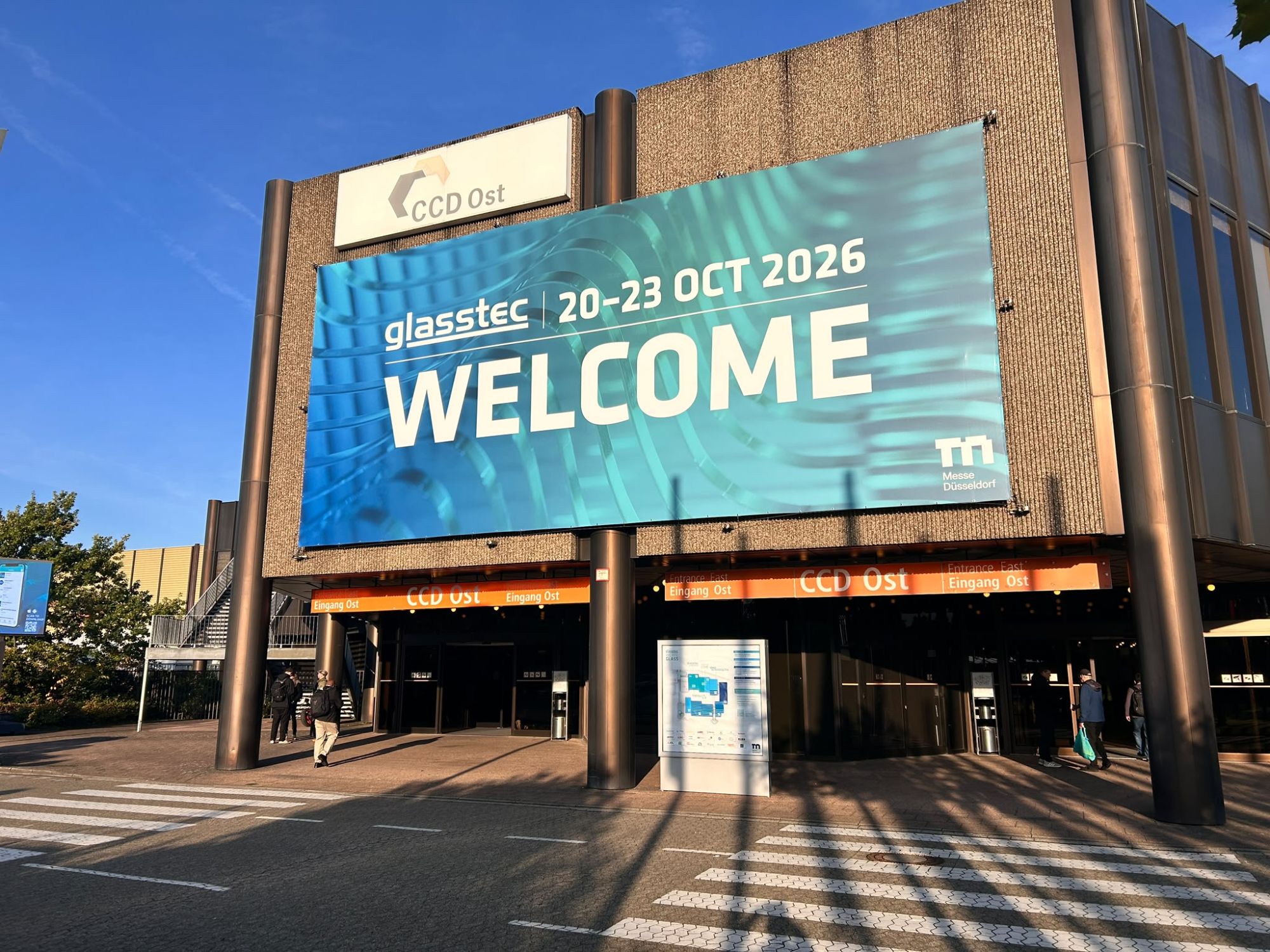
Four days in Düsseldorf brought the international glass industry together around processing technology, intelligent manufacturing, architectural applications and new business connections. Held from 20 to 23 October, glasstec 2026 welcomed more than 1,150 exhibitors from 48 countries, presenting technologies, products and solutions spanning the entire glass value chain.
Recognised as the world’s leading trade fair for the glass industry, glasstec covered everything from glass manufacturing and processing machinery to finishing technologies, software, measurement and control systems, and new architectural applications.

GlassBalkan followed developments across the exhibition, from live machinery demonstrations and automation to glass innovation, sustainability and the companies connecting these technologies with real production needs.
Three hot topics ran throughout this year’s programme: AI & Digital Technologies, Decarbonisation and Circular Economy. Together, they reflected the industry’s efforts to improve production efficiency, reduce environmental impact and expand the possibilities of glass in buildings and other applications. 
DAY 1 — 20 October
Glass manufacturing, live technology and circularity. The opening day combined industrial technology with discussions about the future of glass production, material efficiency and environmental responsibility.

At the centre of the programme, CircuClarity Two, under the motto Beyond Progress: From Practice to Impact, addressed how circular economy initiatives can move beyond pilot projects and become scalable industrial solutions. The discussion was particularly relevant to a sector working to improve resource efficiency, reduce waste and make greater use of circular approaches across the glass and façade supply chains.
Manufacturing technology was prominent across the halls. Horn Glass Industries AG, at Hall 13, Stand C32, represented the glass manufacturing equipment segment, while Keraglass, at Hall 16, Stands B14/C13, brought glass-processing technology into the exhibition mix.

Live demonstrations also gave visitors the opportunity to see machinery operating rather than simply compare technical specifications. Glaston Corporation and Schiavo Tech featured in our coverage of live demonstrations, offering a practical view of the equipment and processes supporting modern glass production.
Beyond machinery, the first day introduced women in glass, a networking format for women working across production, technology, research, design and management. The programme combined a keynote, panel discussion and networking.

The glass melting pot programme connected research with industrial practice, while the first GlassPrint LIVE session focused on developments in glass printing and finishing. These discussions highlighted how new production methods and finishing technologies can create opportunities for both functional and decorative glass applications.
The opening day established the wider direction of glasstec: manufacturing performance, material innovation, circularity and collaboration are closely connected.
DAY 2 — 21 October
Smarter production, automation and quality control
Digitalisation moved further into focus on the second day, with artificial intelligence, connected machinery and process monitoring among the key themes.
The Connected Machines special area, organised by VDMA in Hall 15, Stand C28, demonstrated how equipment from different manufacturers can communicate through standardised interfaces and shared data models. The objective is to improve interoperability between machines and support more integrated production environments.

For glass processors, this has practical implications. Better communication between equipment can support production monitoring, improve access to operational data and help coordinate different stages of processing.
The glass trends sessions examined AI and digital technologies alongside decarbonisation and circular economy initiatives. HEGLA and boraident were part of our coverage of developments in intelligent manufacturing, including discussions on AI applications and real-time monitoring of glass-cutting processes.

Another perspective on production intelligence came from Forel Advanced Diagnostics 2.0, highlighting the growing importance of diagnostics and quality control. Identifying production issues and understanding process performance can help processors maintain consistency, reduce avoidable losses and improve operational efficiency.
On the exhibition floor, Yinrui Intelligent presented a live demonstration, adding to the practical machinery coverage from Düsseldorf.

The day also featured the second programme day of CircuClarity Two, culminating in the CircuClarity Award 2026. The Start-Up Zone in Hall 11 and the BMWE Young Innovators joint stand presented emerging businesses and technologies, while glass technology live connected research and prototypes with potential industrial and architectural applications.
Across these activities, one priority stood out: digital tools and automation are most valuable when they deliver measurable improvements to glass manufacturing, processing and quality control.
DAY 3 — 22 October
Architectural innovation, safety and the possibilities of glass
The third day brought greater attention to glass applications, building performance and the relationship between research and architectural practice.
At glass technology live in Hall 11, Stand C28, prototypes, mock-ups and full-scale exhibits demonstrated new approaches to glass in architecture and technology. NorthGlass presented advanced glass products and equipment, including two world-first innovations in the exhibition’s technology area.

The wider showcase illustrated how research and engineering continue to expand the possibilities of glass, from advanced glazing concepts to solutions addressing energy performance, façade design and building functionality.
The architectural discussion extended beyond appearance. The ift Rosenheim programme addressed security, climate resilience and sustainability, combining live testing, digital applications and operational exhibits. These topics are central to modern façade design, where glass must meet demanding technical and safety requirements alongside architectural expectations.
Research also remained part of the conversation through glass melting pot, bringing researchers and industrial partners together to discuss developments in glass technology, design and production.

Meanwhile, the creative side of glass was visible in glass-made paintings and souvenirs. These applications offered a reminder that glass is not limited to façades, windows and industrial products; its optical qualities, transparency and versatility also make it a distinctive medium for art and design.
For architects, engineers, processors and façade specialists, the developments seen on Day 3 highlighted the importance of bringing design ambitions together with manufacturing capabilities and verified technical performance.
DAY 4 — 23 October
Building safety, bird-friendly glass and the next steps for manufacturing
The final day of glasstec 2026 brought the focus back to building performance, environmental responsibility and the changing requirements facing machinery manufacturers.
The ift Rosenheim sessions addressed environmental life-cycle assessment, Environmental Product Declarations (EPDs) and fire protection with glass. Life-cycle assessment and EPDs provide information for evaluating the environmental impacts of construction products, helping manufacturers, architects and façade specialists make more informed specification decisions.

Another important topic was bird protection. The bird protection forum examined how bird collisions with glass surfaces can be prevented, bringing together current requirements, tested solutions and practical knowledge for architects, planners and the glass industry.
This topic has direct implications for façade design and product selection. Bird-friendly glazing needs to be considered during the planning stage, with attention to suitable products, testing and the requirements of the individual project.

The GIMAV Roundtable addressed the implications of artificial intelligence, software and cybersecurity for machinery and equipment. Discussions focused on the new European Machinery Regulation and what its requirements mean for manufacturers, suppliers and operators, including questions around technical documentation, software-related risks and responsibility for machinery safety.
The day also included sessions connecting research and education with industrial practice, alongside further presentations at Handwerk Live and glass technology live.
Company developments provided another perspective on the technologies shaping the sector. HEGLA celebrated its 50th anniversary, marking five decades of developing glass-processing solutions. Glaston Corporation highlighted automated processing technologies, including robotic glass loading, intelligent batch optimisation and an AI assistant for insulating glass production.

As glasstec came to a close, Day 4 reinforced an important point: the industry’s future depends not only on processing speed and automation, but also on safety, regulatory compliance, environmental performance and the practical application of new technologies.
Beyond the exhibition halls
The companies and professionals we encountered throughout glasstec added another dimension to the exhibition. LiSEC, marking 65 years of activity, highlighted the role of international partnerships, while SmartLift and Denver Stone and Glass Machines represented specialised businesses serving different needs across the glass industry.
Our coverage also included Guardian Glass and Grenzebach, alongside visits from professionals representing Doan Glass, Roland Glass and Vetro Italia.

These encounters reflected the breadth of the international glass community, bringing together equipment manufacturers, processors, suppliers and other professionals whose work spans different stages of the value chain.
For GlassBalkan, these connections matter beyond the exhibition itself. The technologies and relationships developed at international trade fairs can influence equipment investments, production capabilities, supplier relationships and cooperation opportunities throughout the Balkan region.

What glasstec 2026 means for the glass industry
Across four days, glasstec presented an industry addressing several connected priorities.
Digitalisation and automation are changing how production lines communicate, how quality is monitored and how manufacturers use operational data.
Decarbonisation and circularity are pushing the industry to improve resource efficiency, reduce environmental impact and develop more practical approaches to reuse and recycling.

Architectural innovation is expanding the role of glass in façades and buildings, while placing greater emphasis on safety, energy performance, environmental considerations and bird protection.
International cooperation remains essential for sharing expertise, developing technologies and connecting manufacturers with the processors, architects and contractors who apply them.
For the glass, aluminium, façade and fenestration sectors in Southeast Europe, these developments offer opportunities to strengthen technical capabilities, evaluate new technologies and build relationships with international industry partners.

glasstec 2026 may have concluded in Düsseldorf, but the technologies, discussions and business connections established during the exhibition will continue to influence the industry.
GlassBalkan will continue connecting the Balkan industry with the companies, technologies and ideas shaping the future of glass.