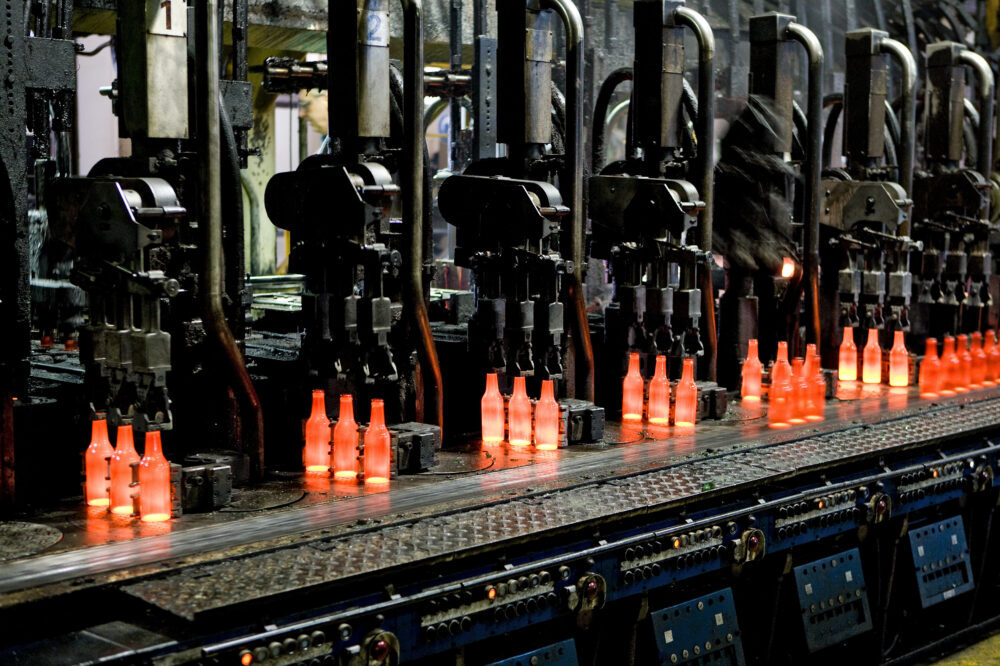
The German glass industry can technically achieve climate neutrality by 2045, but the transformation will require a combination of electrification, green hydrogen, hybrid melting technologies, circularity and carbon management, according to the upcoming “Glass 2045 – Roadmap for the Decarbonisation of the German Glass Industry” study.
The roadmap, developed by the Bundesverband Glasindustrie e.V. (BV Glas) and the Institute for Energy Economics and Rational Energy Use (IER), University of Stuttgart, will be presented at glasstec 2026 in October 2026.
Prof. Dr. Peter Radgen, Head of the Chair for Energy Efficiency at IER, explained that there is no single pathway for decarbonisation because flat glass, hollow glass and specialty glass production have different technical requirements.
Key transformation routes identified in the study include: 
- Electrification of glass melting furnaces: New electric furnace concepts will become increasingly important as renewable electricity expands.
- Green hydrogen adoption: Hydrogen could enable manufacturers to continue using existing melting technologies, but economic challenges remain. According to Prof. Radgen, hydrogen is currently around five times more expensive than natural gas, limiting immediate adoption.
- Hybrid furnace systems: Hybrid solutions combining electricity and hydrogen are expected to remain a permanent part of glass production, especially where full electrification or hydrogen supply is difficult.
- Renewable energy expansion: Companies are encouraged to develop their own renewable energy generation where possible, even if it covers only part of their total energy demand.
- Energy efficiency improvements: Measures such as batch and cullet preheating can reduce energy consumption and emissions.
- Carbon capture and utilisation (CCU/CCS): The roadmap highlights carbon management as necessary for addressing unavoidable process emissions, including CO₂ released during the deacidification of carbonate-based raw materials.
The study also points out that infrastructure will determine the speed of the transition. Access to renewable electricity, sufficient grid capacity, energy storage and hydrogen networks will be critical. Companies located away from planned hydrogen infrastructure may need alternative solutions.
Prof. Radgen warned that uncertainty about future technologies is already affecting investment decisions, with some manufacturers delaying furnace cold repairs. Missing a repair window could potentially lock facilities into existing technologies for another 10–20 years.
Source: glasstec with additional information added by Glass Balkan