Snøhetta’s Shanghai Grand Opera House is entering its final delivery phase ahead of its official opening on October 17, 2026, marking the completion of one of Shanghai’s most significant cultural infrastructure projects. Located along the Huangpu River waterfront, the landmark venue has been conceived as both a world-class performing arts institution and a public civic destination, integrating advanced theatre design with accessible urban space.
The opening performance season, running from October 2026 to February 20, 2027, will present 82 performances across 47 productions, establishing the venue as a major international platform for opera, theatre, dance, and multidisciplinary performing arts.
The project follows Snøhetta’s winning proposal in the 2016 international design competition. In 2019, Snøhetta, East China Architectural Design & Research Institute (ECADI), Theatre Projects, and Nagata Acoustics were commissioned as a multidisciplinary consortium to deliver the opera house from concept development through completion. The collaboration combines international architectural expertise, local design knowledge, and specialist theatre engineering to create a new cultural landmark for Shanghai.
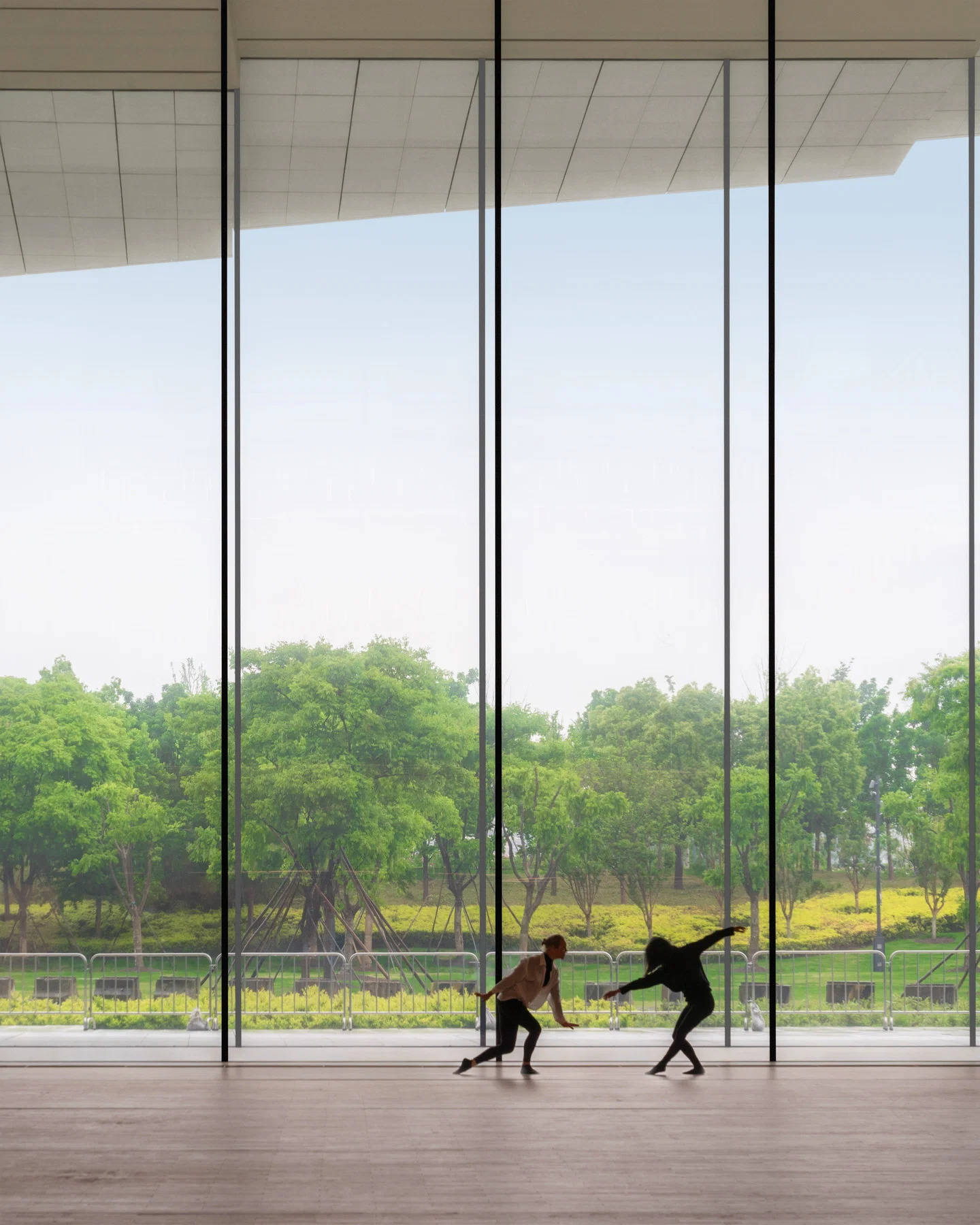
Architecturally, the building is defined by its sweeping helical roof structure, a signature design element inspired by the fluid movement of the human body in dance and theatre. Positioned on the convex bank of the Huangpu River, the building’s continuous curved geometry creates a dialogue between architecture, landscape, and waterfront context. 
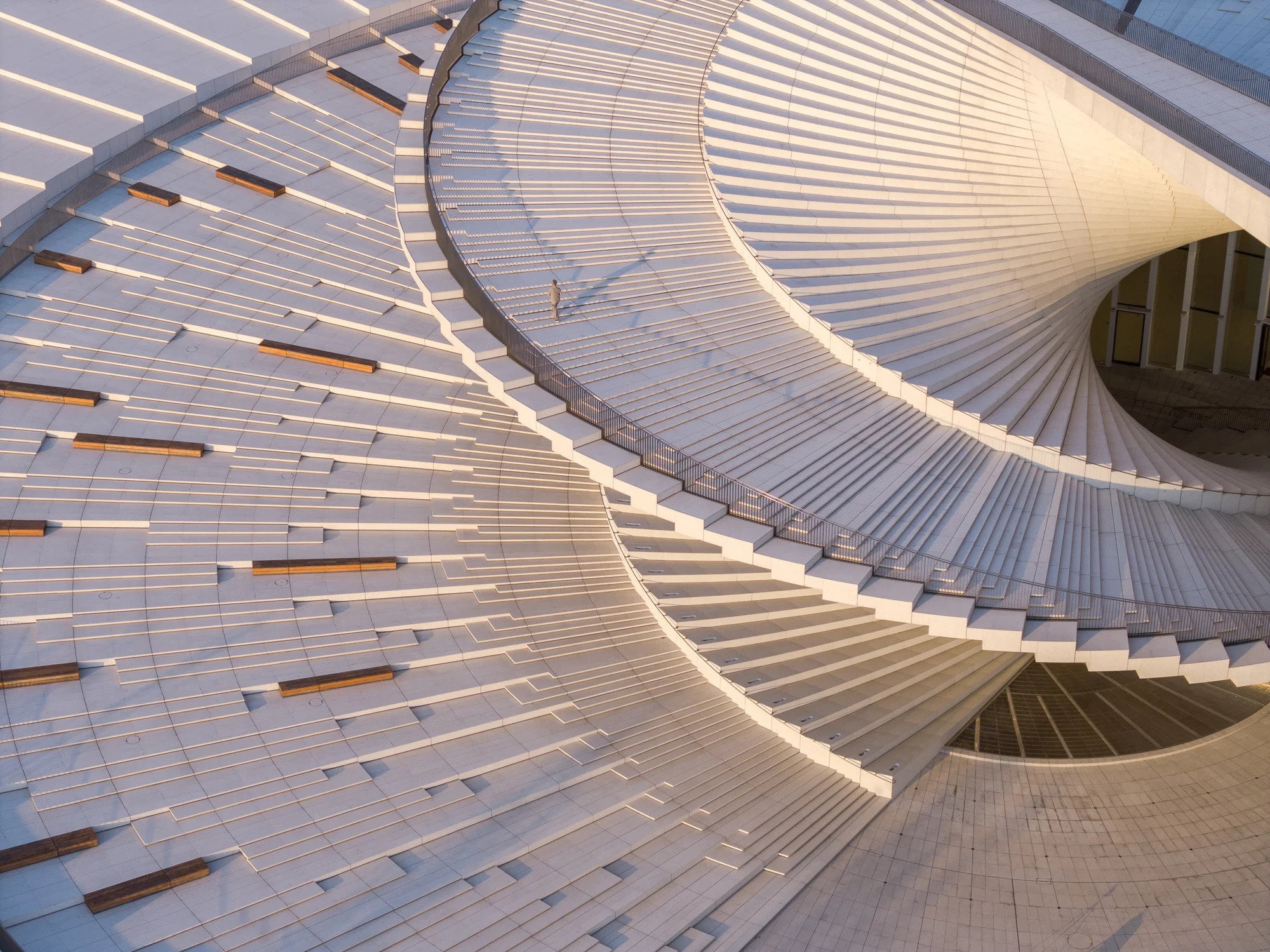
A defining feature of Snøhetta’s approach is the transformation of the roof into a publicly accessible urban landscape. The 24-hour year-round roofscape extends the building beyond a traditional performance venue, allowing visitors to experience the architecture without attending a scheduled event. A spiralling staircase connecting ground level and roof terrace creates a vertical promenade with panoramic views toward Shanghai’s skyline and riverbanks.
The opera house incorporates three state-of-the-art auditoriums, each designed for different performance scales and artistic formats. Acoustic performance has been developed with Nagata Acoustics, supporting demanding international productions including opera, orchestral performances, and contemporary cultural programmes.
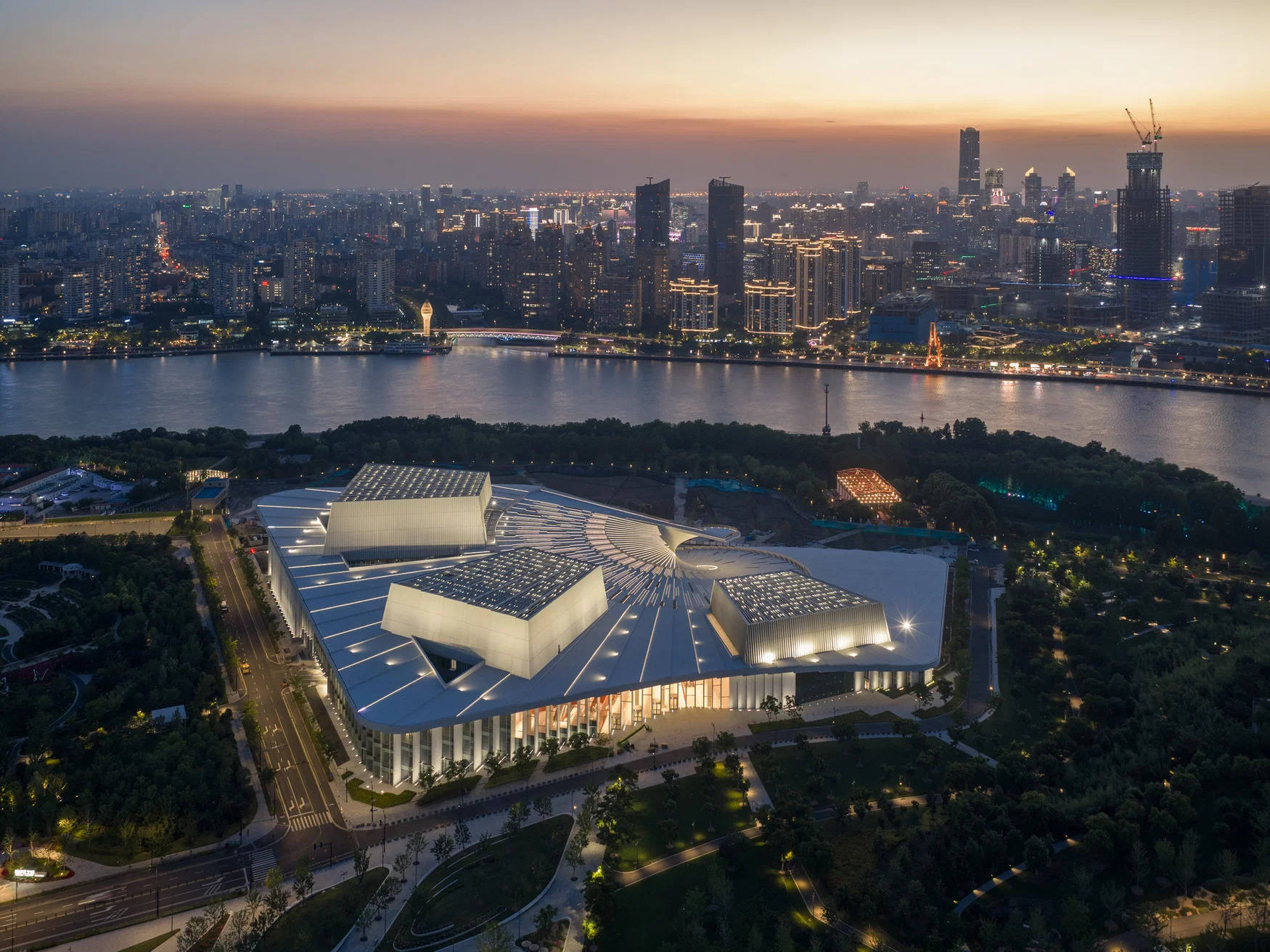
Inside, the architectural expression continues through deep-red sculptural interior volumes that guide circulation and establish a theatrical spatial sequence. The surrounding landscape follows a radial masterplan geometry derived from the opera house form, strengthening the connection between the building, public realm, and natural environment.
With its combination of advanced performance infrastructure, civic accessibility, and landmark architecture, the Shanghai Grand Opera House represents a major addition to Shanghai’s cultural ecosystem and reinforces the city’s ambition as a global centre for creativity, exchange, and architectural innovation.
Source: Snøhetta with additional information added by Glass Balkan