Located within the historic Can Oliver palace in Palma de Mallorca, Nobis Hotel Palma demonstrates how contemporary architecture can preserve and enhance a centuries-old building without compromising its identity. Designed by Jordi Herrero Arquitectos, Eduardo García Acuña Arquitecto, and Swedish studio Wingårdhs, the 37-room hotel occupies one of Palma’s oldest surviving structures, originally built as a 12th-century Islamic palace.
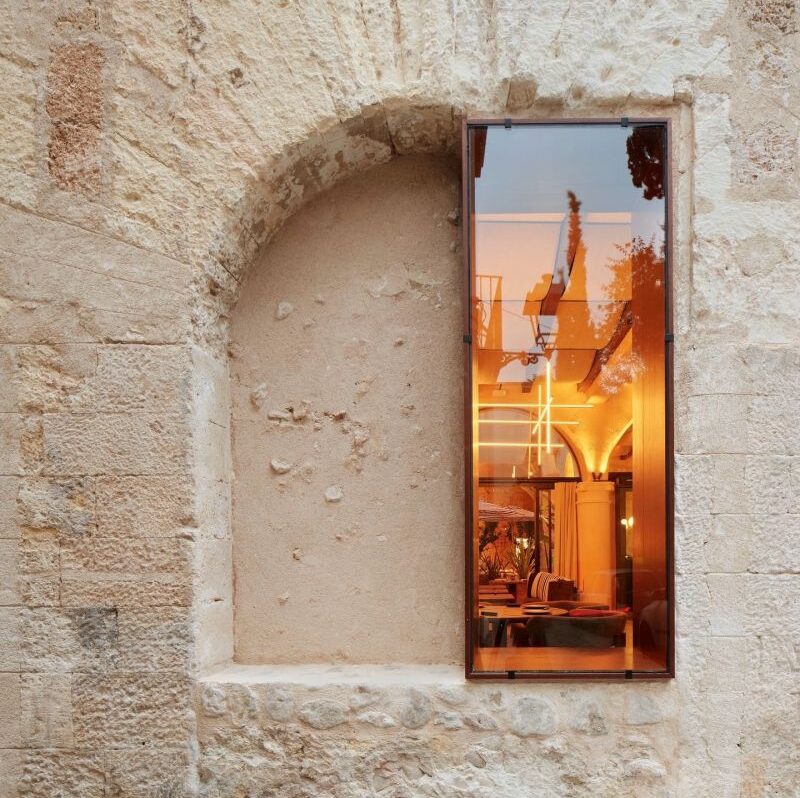
Rather than restoring the building to a single historical period, the architects embraced its layered history. The restoration preserves traces of Gothic, Baroque, and Islamic architecture, allowing the natural stone façades, irregular window openings, weathered masonry, and original architectural details to remain visible. Archaeological surveys guided the intervention, ensuring that each historic layer became part of the building’s architectural narrative.
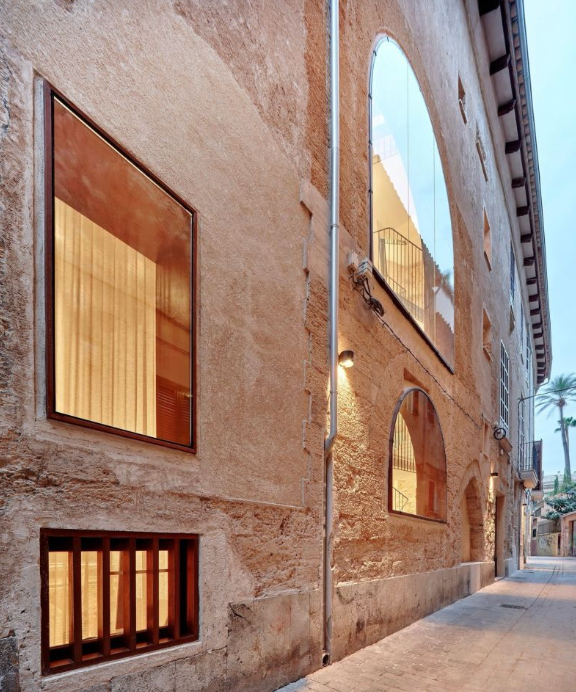
The project follows a clear conservation strategy in which contemporary additions are intentionally distinguishable from the original structure. New circulation elements and structural insertions are executed in blackened steel, creating a subtle contrast with the historic stone while remaining fully reversible. This approach protects the integrity of the façade and allows future adaptations without damaging the existing fabric.
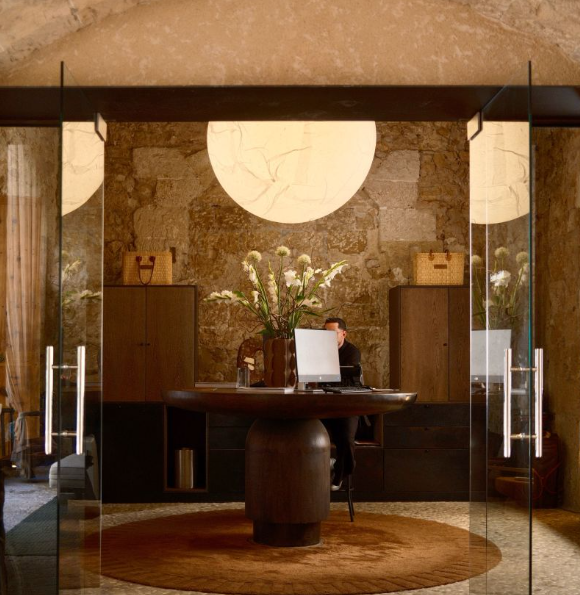
Glass interventions are deliberately restrained yet highly effective. Instead of introducing permanent partitions that would alter protected interiors, guestroom bathrooms are enclosed within freestanding steel-and-glass volumes. These transparent elements preserve the perception of the original spaces while providing modern functionality, allowing historic walls, vaulted ceilings, and architectural details to remain visually dominant. 
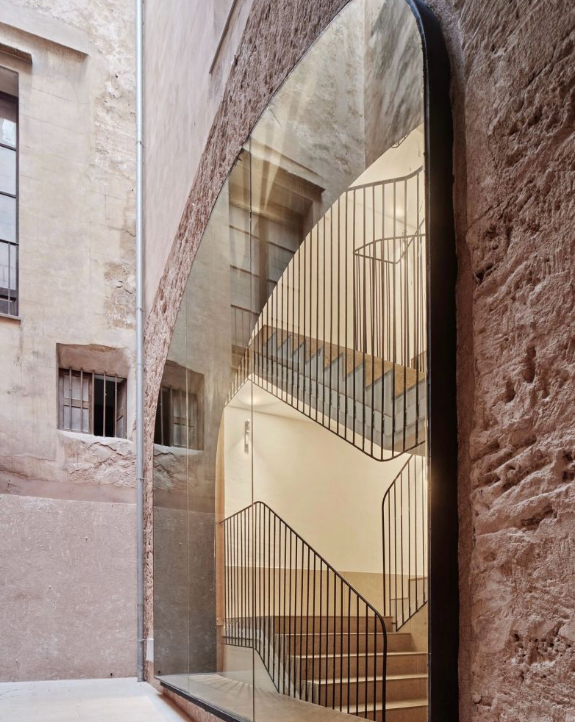
Natural daylight also plays a key role in the renovation. Carefully positioned courtyards introduce light deep into the building while limiting excessive solar gain, improving comfort without altering the historic envelope. Nobis Hotel Palma stands as an exemplary adaptive reuse project, demonstrating how sensitive façade conservation, minimal glass interventions, and contemporary design can successfully extend the life of a landmark building while preserving nearly 1,000 years of architectural heritage.
Source: Nobis Hotel with additional information added by Glass Balkan