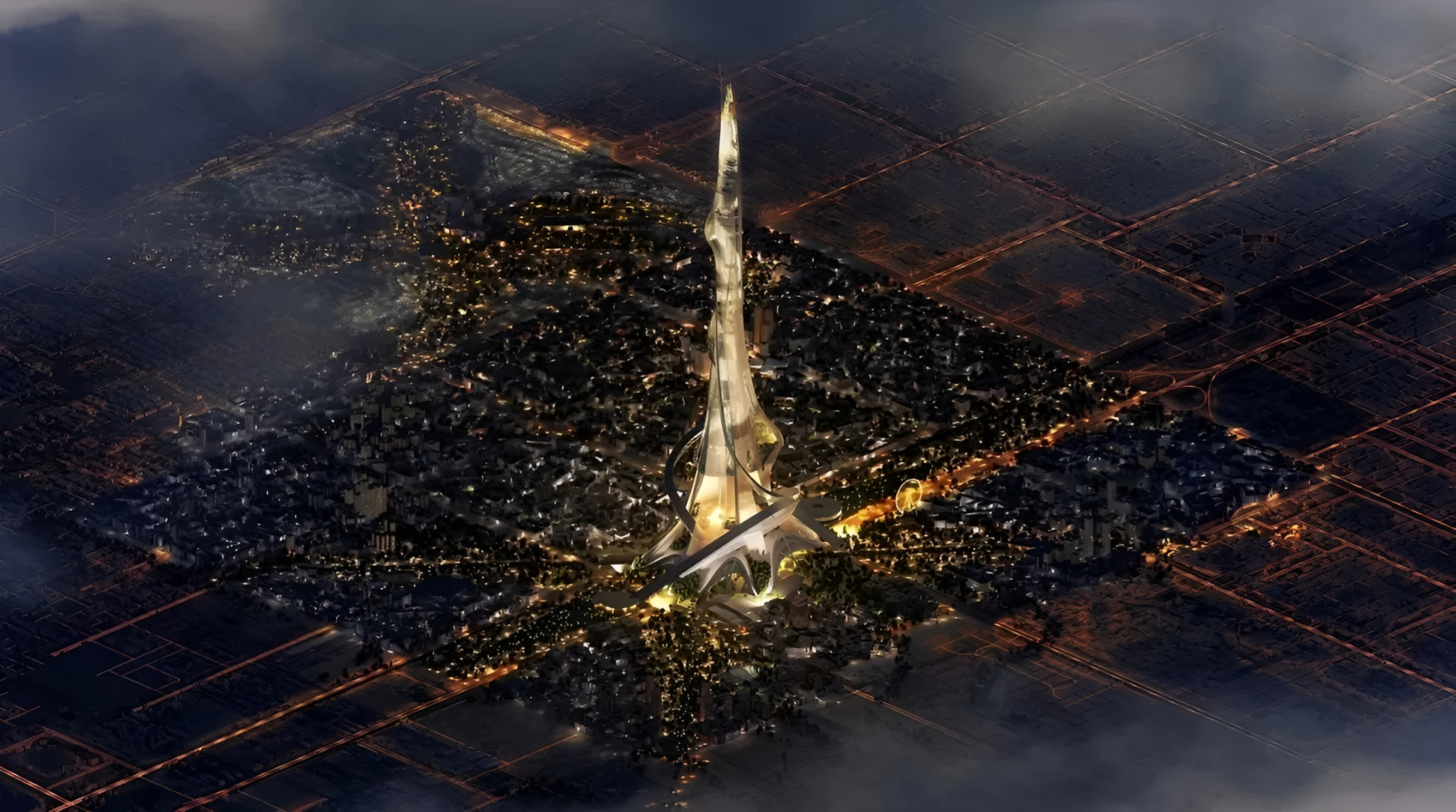
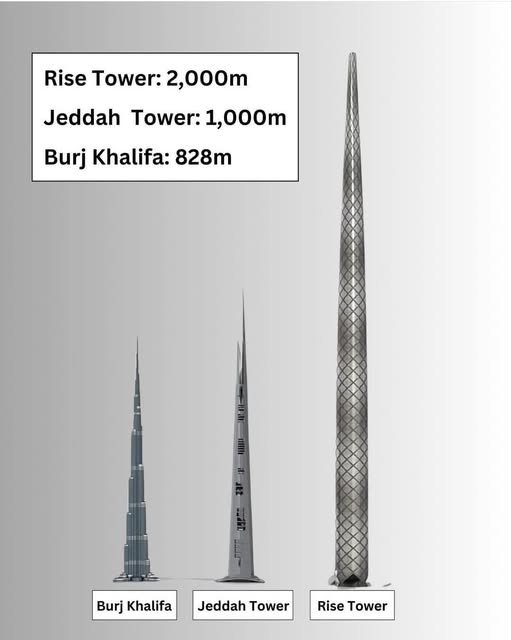
Saudi Arabia is once again positioning itself at the center of global architectural ambition with the proposed Rise Tower, a 2,000-meter megatall skyscraper planned for the northern outskirts of Riyadh. Envisioned as the centerpiece of the larger North Pole District development near King Khalid International Airport, the project represents one of the most ambitious architectural and engineering concepts ever proposed.
Backed by Saudi Arabia’s Public Investment Fund (PIF) and reportedly designed by Foster + Partners, the Rise Tower is intended to surpass all existing skyscrapers in both height and technological complexity. If realized, the structure would rise to approximately 6,562 feet, nearly twice the height of Dubai’s Burj Khalifa, fundamentally redefining the limits of vertical construction.
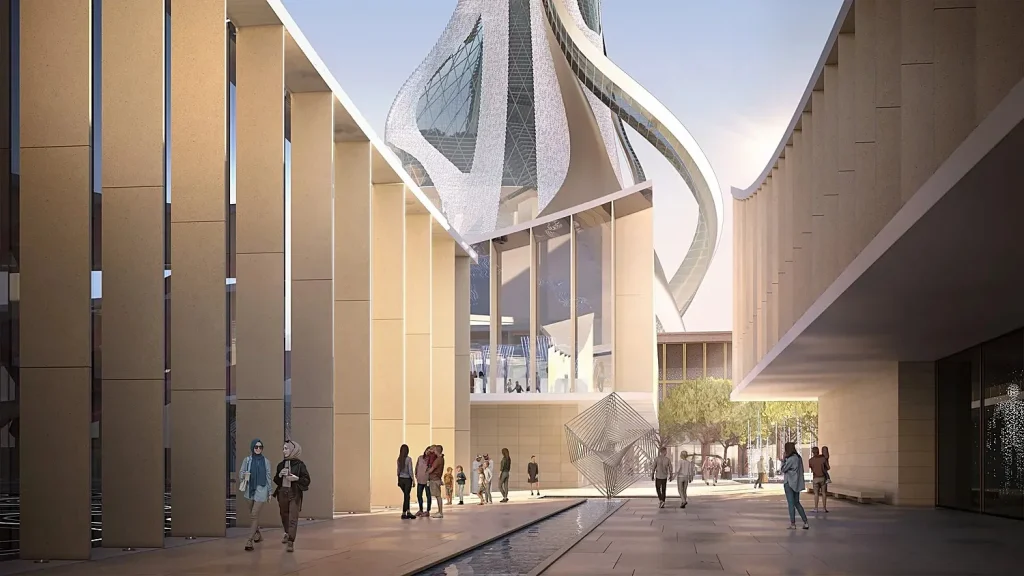
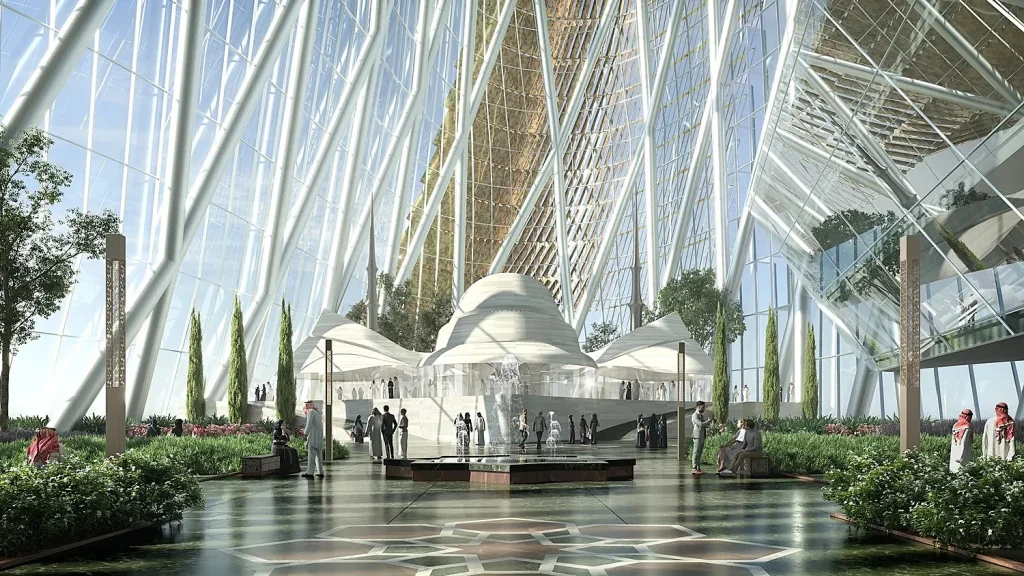
The tower is planned as a fully integrated mixed-use vertical city, combining luxury residences, premium office spaces, five-star hospitality, retail environments, fine dining destinations, cultural venues, observation decks, and entertainment facilities within a single structure. Rather than functioning solely as a skyscraper, the project is conceived as a self-sustaining urban ecosystem.
One of the project’s defining characteristics is its sustainability agenda. Current concepts indicate the integration of photovoltaic façade systems, embedded wind turbines, greywater recycling infrastructure, and AI-driven energy management systems designed to support net-zero operational ambitions. In Riyadh’s extreme desert climate, the building is also expected to incorporate advanced passive cooling strategies, solar shading technologies, and high-performance façade engineering to reduce thermal loads and energy consumption. 
However, the project also presents unprecedented technical challenges. At a height of 2 kilometers, conventional structural systems, elevator technologies, and wind-resistance strategies become insufficient. Engineers would need to address complex aerodynamic forces, structural sway, pressure variations, and vertical transportation systems on a scale never before attempted. Experts anticipate the tower would require multiple sky lobbies, segmented structural zones, and entirely new approaches to high-altitude building performance.
As of April 2026, the project remains in the conceptual and tendering phases, with construction reportedly targeted to begin in 2026 and completion envisioned around 2030. Nevertheless, no formal groundbreaking ceremony or final construction contracts have yet been publicly confirmed, leading many industry observers to approach the timeline cautiously.
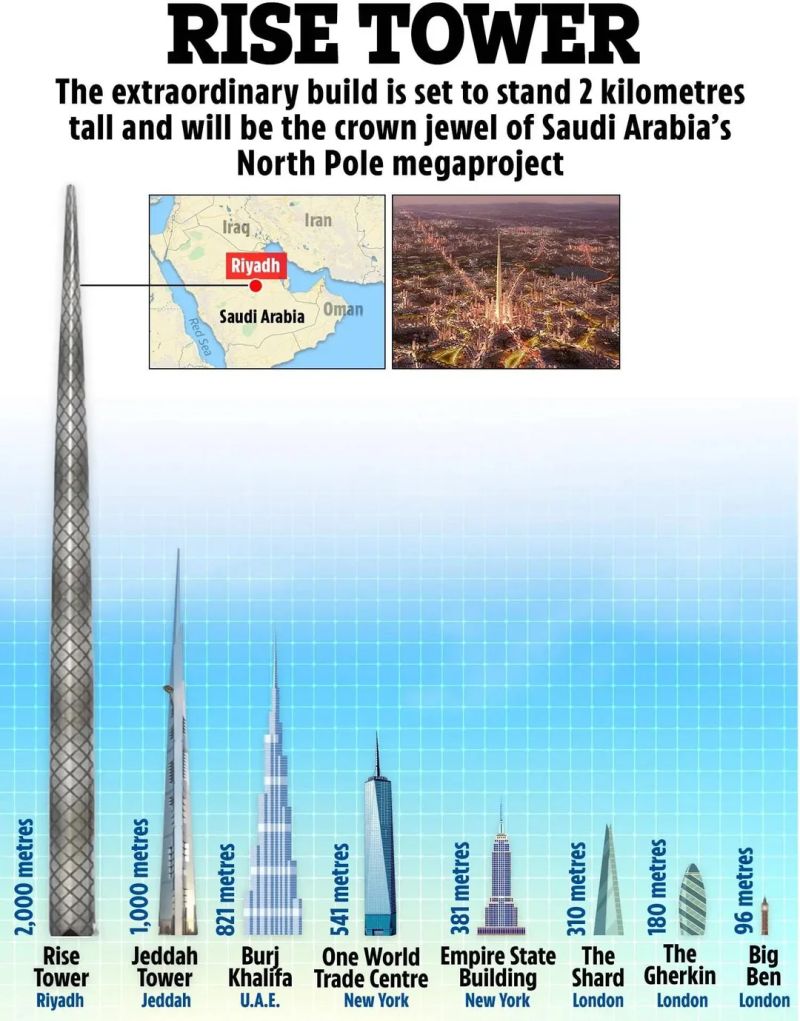
Beyond the tower itself, the broader North Pole District is expected to cover approximately 306 square kilometers, forming a next-generation smart city development focused on technology, mobility, finance, tourism, and innovation. The scale and ambition of the district align with Saudi Arabia’s wider Vision 2030 strategy, which seeks to diversify the national economy while establishing the Kingdom as a global center for design, infrastructure, and future urbanism.
Source: Glass Balkan