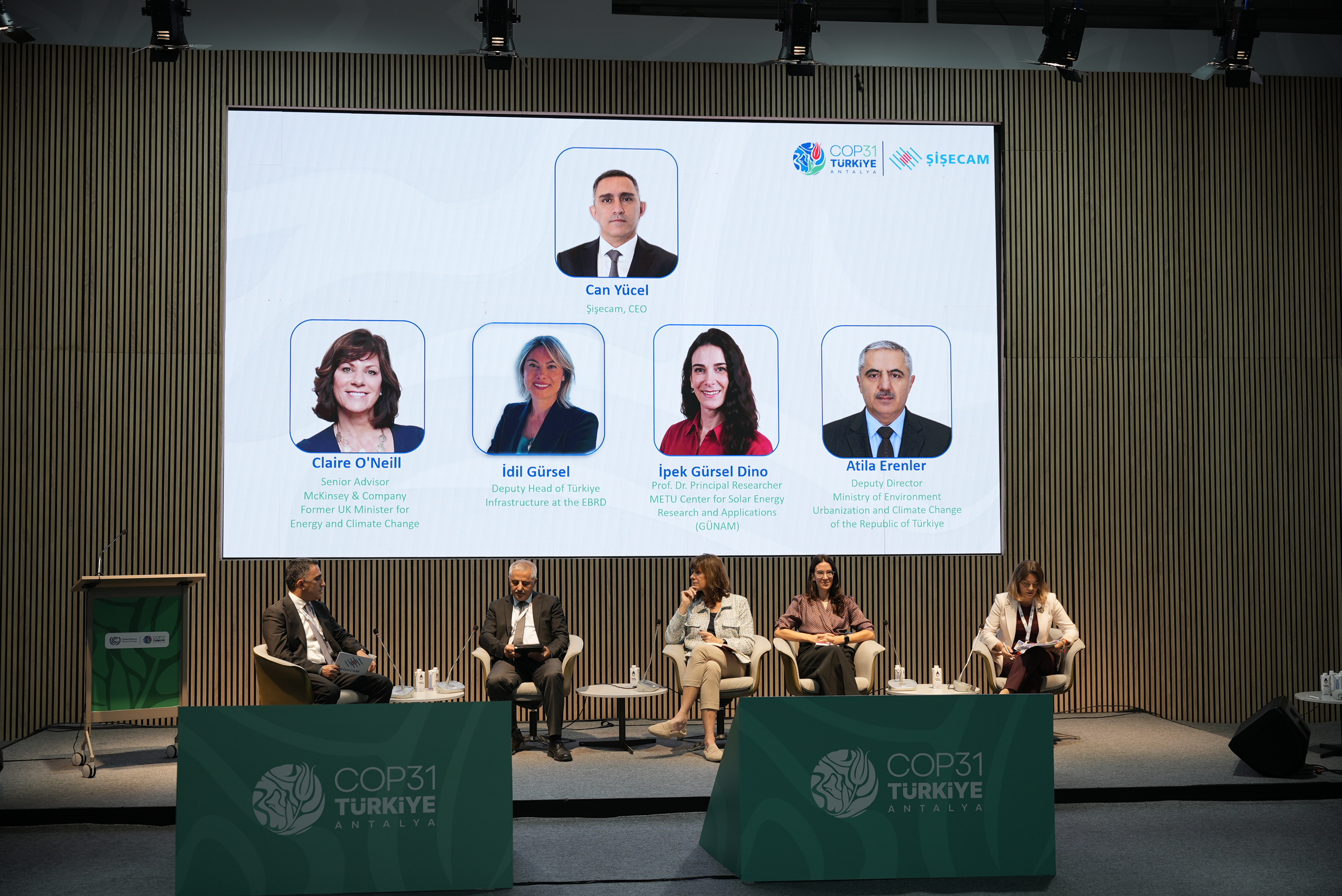
Şişecam presented new research demonstrating the contribution of high-performance glass to urban decarbonisation at COP31, held in Antalya, Türkiye, from 9 to 20 November 2026. Participating as a Climate Supporter, the company also hosted an international panel titled “The Strategic Role of Glass in Climate-Resilient Cities”.
Moderated by Şişecam CEO Can Yücel, the session brought together international experts, including International Energy Agency (IEA) Executive Director Dr. Fatih Birol, former UK Energy and Climate Change Minister Claire O’Neill, representatives of the European Bank for Reconstruction and Development (EBRD), and academics from Middle East Technical University (METU).
A key focus was research conducted jointly by Şişecam and METU’s Solar Energy Research and Applications Center (METU-GUNAM). The findings indicate that widespread adoption of high-performance coated glass in Istanbul’s residential buildings could prevent 13.1 million tonnes of carbon emissions by 2050. The estimated cost of carbon reduction could be as low as €11 per tonne, highlighting the potential economic benefits of energy-efficient building renovation.
The study also projects that cooling-related energy demand in Istanbul could increase by 60–75% by 2050 as temperatures rise. The potential emissions savings from high-performance glass installations are equivalent to the emissions of approximately 231,000 households over 25 years or 2.8 million passenger cars in one year. 
The findings underline the importance of upgrading existing building stock through performance-oriented renovation, supported by appropriate financing, incentives and public policies.
Through its participation at COP31, Şişecam highlighted the role of advanced glazing technologies in reducing building energy consumption and supporting cities’ long-term climate targets.
Source: Şişecam with additional information added by Glass Balkan