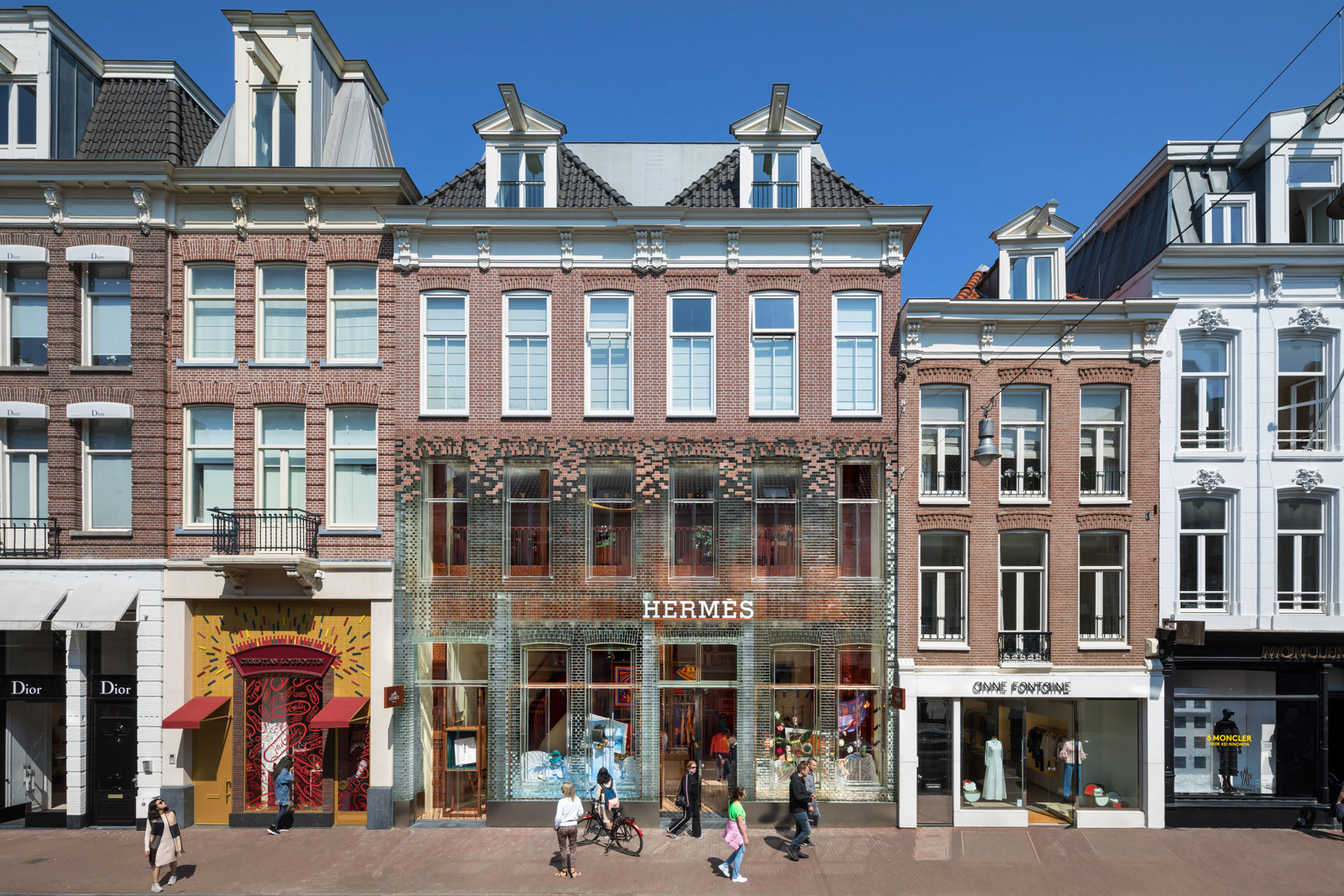
Located on Amsterdam’s prestigious P.C. Hooftstraat, Crystal Houses represents one of the most ambitious applications of structural glass in contemporary architecture. Designed by MVRDV and completed in 2016, the project transformed a traditional retail property into a transparent flagship store while preserving the historic character of one of the city’s most recognizable luxury shopping streets.
The mixed-use development comprises 840 m² of floor area, including 620 m² of retail space and 220 m² of residential accommodation above. Developed for client Warenar, the project addressed a growing challenge facing historic city centres: how to accommodate the large, transparent storefronts demanded by international luxury brands without sacrificing local architectural identity.
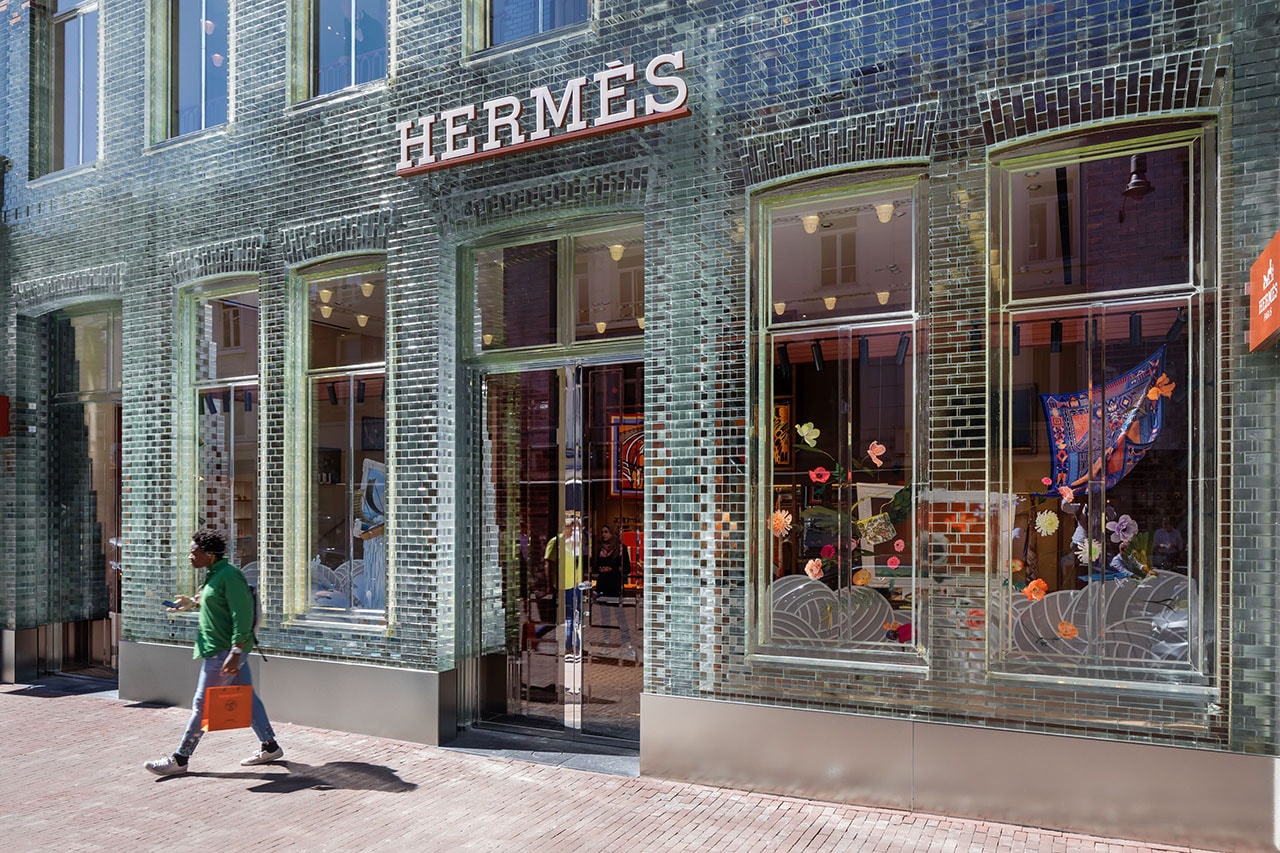
Rather than replacing the original façade with a conventional glass curtain wall, MVRDV recreated the traditional Amsterdam brick façade using almost entirely transparent materials. The lower section of the building consists of solid glass bricks, glass window frames and glass architraves that precisely replicate the proportions and detailing of the original nineteenth-century structure. As the façade rises, the glass gradually transitions into conventional terracotta brickwork, creating the visual impression that the historic upper façade floats above a crystal-clear base.
The project required extensive research and collaboration between architects, engineers, material specialists and academic institutions. The solid glass bricks were individually cast and manufactured by Poesia in Italy, while structural research was conducted by Delft University of Technology in partnership with engineering firm ABT and contractor Wessels Zeist. 
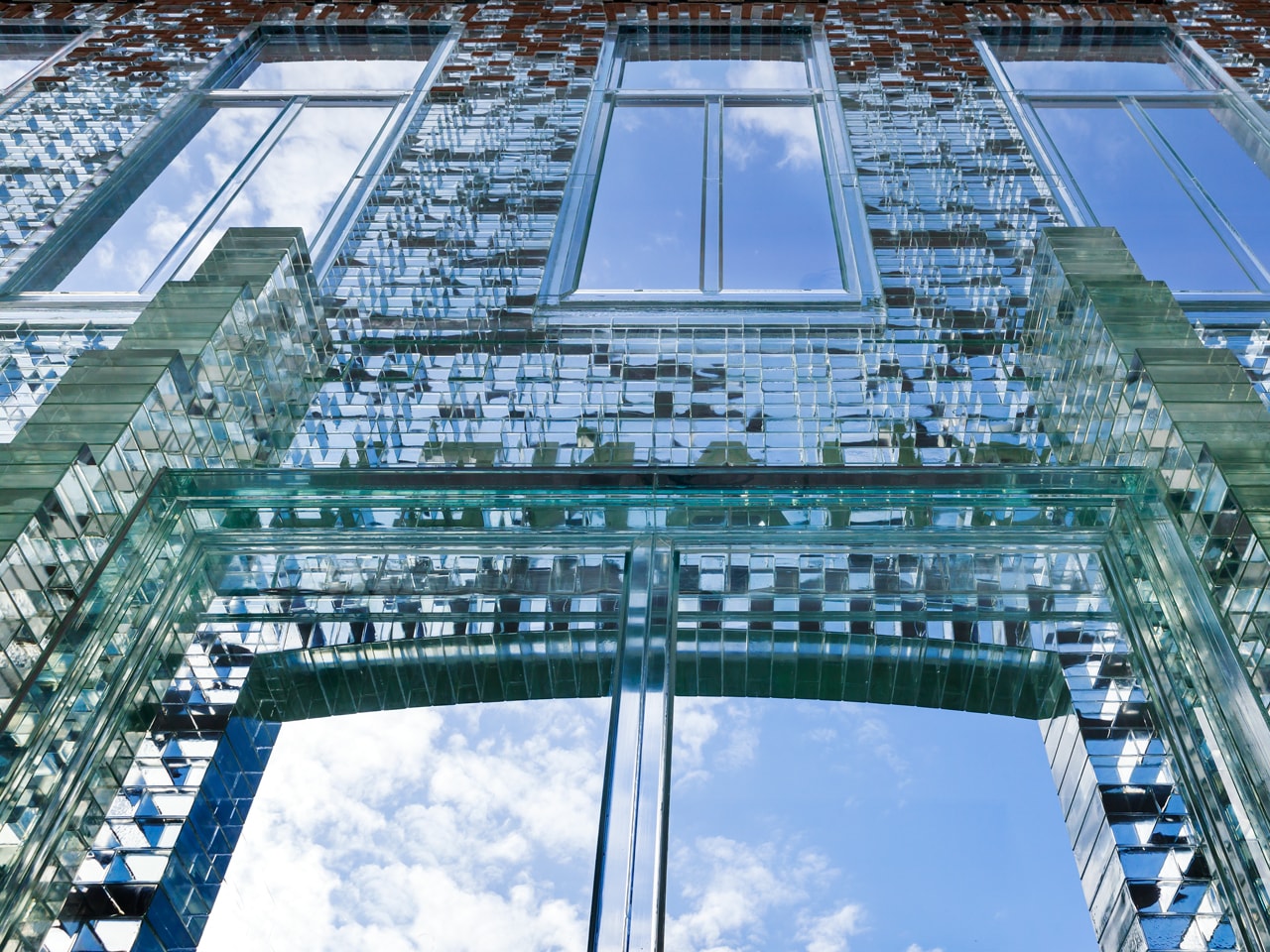
A key innovation was the elimination of traditional mortar joints. Instead, the glass bricks were bonded using a high-strength UV-cured transparent adhesive developed by DELO Industrial Adhesives in Germany. This solution allowed the joints to remain virtually invisible, creating the appearance of a seamless glass structure while maintaining structural integrity.
The façade construction demanded an extraordinary level of precision. Between six and ten specialists worked daily for nearly a year to assemble the glass masonry system. The construction site operated more like a laboratory than a conventional building project, utilizing high-precision laser measurement systems and industrial UV-curing equipment throughout the installation process.
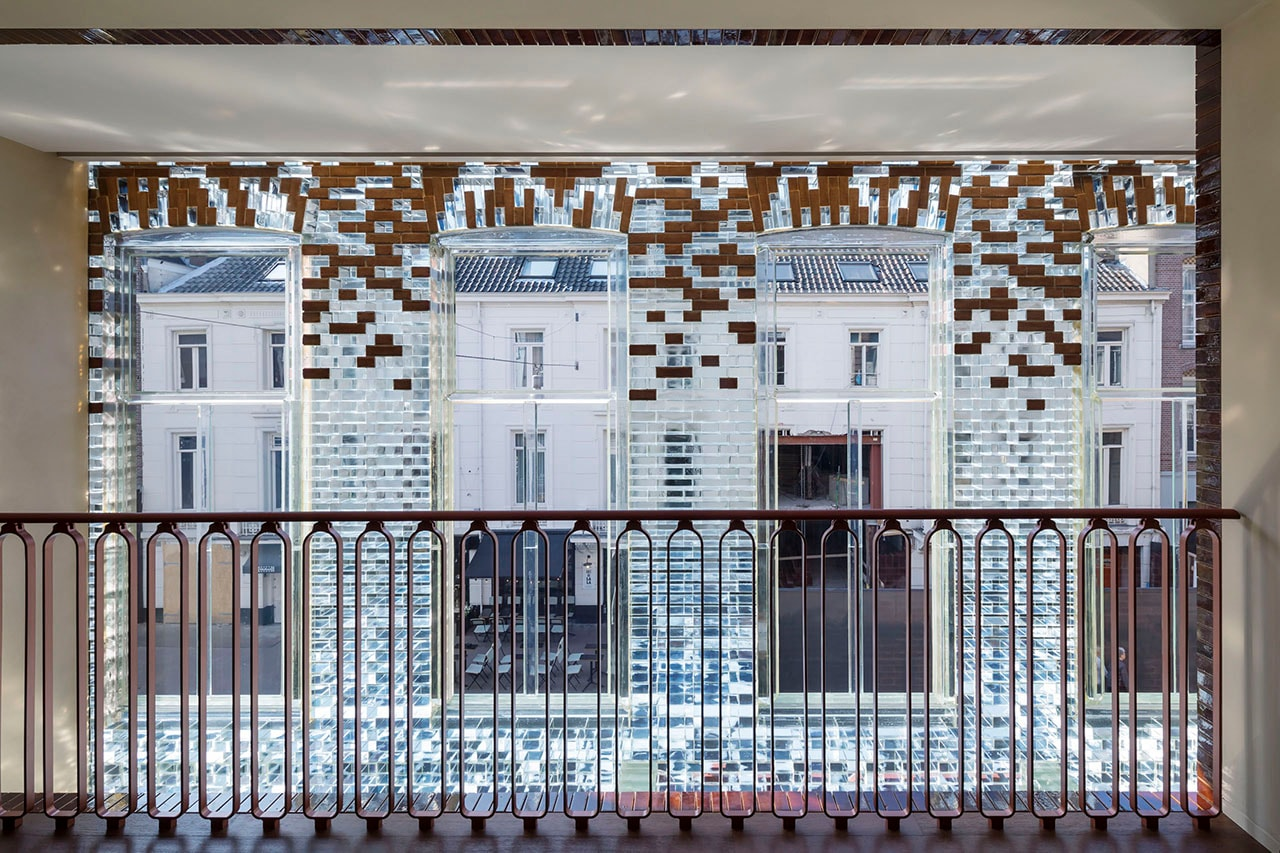
Despite its delicate appearance, the structural performance of the glass elements exceeded many expectations. Testing carried out by Delft University of Technology demonstrated that several components exhibited strength characteristics comparable to traditional concrete construction. The full-glass architrave, for example, was capable of resisting loads of up to 42,000 Newtons, equivalent to approximately two full-sized SUVs.
Sustainability also played a significant role in the project’s development. All glass components were designed to be fully recyclable. Manufacturing waste, including defective bricks, could be melted down and reprocessed into new components. At the end of the building’s lifecycle, the façade itself can be dismantled, recycled and reintroduced into future construction applications.
Crystal Houses received international recognition for its architectural and technical achievements, including the Best of the Best Architecture Award at the Iconic Awards 2017 and a Special Prize at the Prix Versailles 2017. More than a retail flagship, the project demonstrates how advanced glass technology can successfully reconcile heritage preservation with contemporary commercial requirements, establishing a new benchmark for transparent architecture in historic urban environments.
Source: MVRDV with additional information added by Glass Balkan